Did the Knicks Win? Here's How Victor Wembanyama Exposed the Myth of Invincibility
Spurs' Victory Highlights Knicks' Vulnerability in NBA Finals
To hear the Knicks tell it, desperation is not a flaw. It is a requirement.
'Got to keep playing desperate and be the more desperate team,; Mikal Bridges said before NBA Finals basketball returned to New York for the first time since 1999. It came from experience as much as motivation.
He had been part of the Phoenix Suns team that led 2-0 in the 2021 Finals before losing four straight. The warning was simple enough: control slips fast when certainty creeps in.
🎲 Only 5 teams have come back to win the NBA Finals after being down 0-2. The 2021 Milwaukee Bucks were the last team to do it against the Phoenix Suns.
— Gambly (@gambly) June 8, 2026
The Spurs are +340 on @FDSportsbook to make a comeback and win the NBA Finals. pic.twitter.com/JWgj7M1ZqJ
A day later, head coach Mike Brown echoed the same idea in more measured terms. The Spurs, he said, would bring urgency to Madison Square Garden. The Knicks would need to match it.
In New York, that kind of language is routine. But it sits on a fine line. Urgency is discipline. Desperation is something closer to fear dressed up as focus. And for a franchise shaped by decades of disappointment, the difference has never really mattered. The feeling has always been the same.
A Run That Felt Unbreakable
Game 3 at Madison Square Garden was never going to feel ordinary.
It was the first NBA Finals game at the venue since 1999. The building was packed with celebrities, former players and political figures, all aware of the weight of the moment rather than just the basketball.
The Knicks arrived with a 13-game playoff winning streak. They had not lost in over a month. Each victory had reinforced the same impression: this team did not just win games, it absorbed pressure without consequence.
At times, it looked like they had stopped behaving like a team that could lose at all.
Then the game started to tilt.
Wembanyama Changes the Tone
The Spurs' 115–111 win did not end the Knicks' season. But it ended the sense that the series was drifting in one direction only.
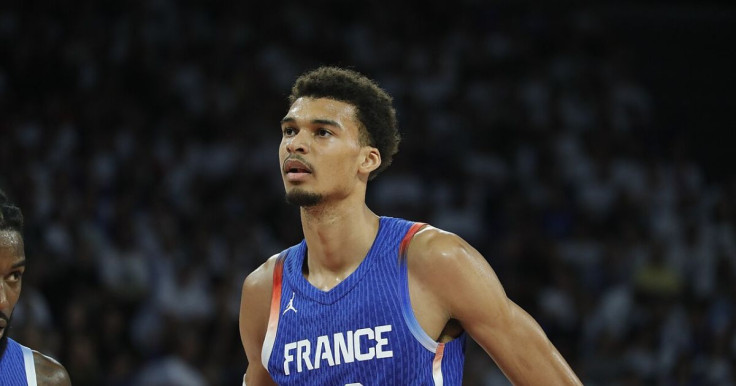
Victor Wembanyama delivered the kind of performance that does not just show up in numbers. He finished with 32 points, eight rebounds and six assists, but the timing of those contributions mattered more than the total.
The Spurs didn't lose three straight all season and Victor Wembanyama ensured that didn't happen Monday, as his 32 points ensured San Antonio picked up their first win of the NBA Finals. @chengwesley, @HelloooJack & @JevohnShepherd break down Game 3: https://t.co/XZD4Q0W0HF pic.twitter.com/Lr6JuhkSqD
— SportsCentre (@SportsCentre) June 9, 2026
When New York pushed, he answered. When momentum threatened to settle, he broke it. A long-range three stretched the floor at a crucial moment. Late free throws closed the door. A key defensive sequence in the final minutes halted the Knicks' last real surge.
It was not explosive dominance. It was control under pressure, repeated often enough to matter.
Margins Decide It
The Spurs did not win by overwhelming New York statistically. They won by being more stable when the game tightened.
San Antonio finished with 28 assists on 39 made field goals and limited themselves to eight turnovers. The Knicks had 13.
The latest Knicks vs Spurs Game 3 stats highlight San Antonio's elite ball movement, ending New York's 13-game win streak despite 41 points from Brunson. Game changer or hype? #NBAFinals #Spurs #Knicks pic.twitter.com/Xp1JouNoJa
— Ongoing Now (@OngoingNowX) June 9, 2026
Those differences shaped everything that followed.
New York still controlled the glass and still generated enough looks. But after a strong second quarter, their offensive rhythm faded once San Antonio adjusted defensively. They scored 47 points in the second half after leading 64–57 at the break.
The effort did not drop. The clarity did.
Invincibility Meets Resistance
The Knicks did not lose their identity in Game 3. What they lost was the sense that nothing could interrupt it.
For weeks, they had played like a team protected from collapse. Every challenge had been met with an answer. Every game had reinforced a growing belief that they were beyond volatility.
That is how streaks begin to feel permanent.
Wembanyama did not dismantle that belief in full. He interrupted it long enough to show it was not fixed.
And in a Finals series, that interruption is enough to change the atmosphere.
A Series Reopens
There will be no sweep. There will be no straight line to a title.
Instead, there is a series again.
For San Antonio, Game 3 is proof the gap is not closed. For New York, it is a reminder that control in a Finals run is never permanent, no matter how convincing it looks.
The Knicks still lead. The narrative still favours them. But the certainty has thinned.
And once that happens in June, it rarely returns in the same shape again.
© Copyright IBTimes 2025. All rights reserved.
- Recommended For You