Pope Leo XIV Blasts World 'Filled With Self-Interest and Profit' in Radical Call to Heal 'Ailing Humanity'
Pope Leo XIV challenges Christians to prioritise selflessness over profit during his visit to Madrid.
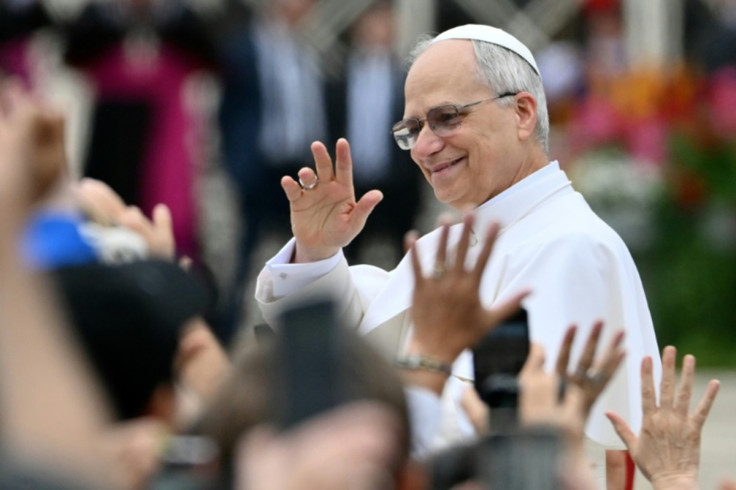
Pope Leo XIV on Tuesday closed the first leg of his Apostolic Journey to Spain in Madrid, telling hundreds of volunteers that a world 'filled with self-interest and the search for profit' needs Christians to act as a 'leaven of selflessness' and help heal what he called 'our ailing humanity.'
The gathering brought together men and women who had spent weeks and, in some cases, months preparing for Pope Leo XIV's visit to Spain. Church organisers had appealed for help with liturgies, crowd management and charity initiatives around the papal events.
According to the Pope's own account, the response was overwhelming, with more people offering their time than the logistics team could actually deploy.
Pope Leo XIV Warns of World Driven by Profit
Pope Leo XIV's remarks to the volunteers were warm, but there was an unmistakably sharper edge running through his diagnosis of the wider world.
He thanked them for their readiness to serve and underlined that their work, from the most visible to the most mundane tasks, had been done 'out of love for the Lord, the Church, and the Pope.' Many had taken leave from their jobs, while others had effectively worked full-time for several months to organise the Madrid leg of the journey.
'Each of you gave what you could, offering your heart, hands, ideas, talents and smiles,' Pope Leo XIV said, inviting God to 'reward you as only He knows how.' It was a simple line, but in the setting of a Europe wrestling with economic uncertainty and fraying social trust, it landed as something closer to a quiet rebuke of a culture that monetises almost everything.
He contrasted the volunteers' gift of time with what he cast as a prevailing mentality of self-advancement. In a world, he said, that is too often governed by self-interest and the pursuit of financial gain, Christians are called to think and live differently, working for what he described as 'integral human development' even when there is no chance of being repaid.
The Vatican did not immediately release commentary expanding on those economic or social criticisms, and there was no detailed policy prescription in his address. What Pope Leo XIV offered instead was a spiritual framework, one that leans heavily on Christian tradition rather than on technocratic fixes.
'Leaven of Selflessness': Pope Leo XIV's Vision for Christians
At the heart of the Pope's appeal was a single image drawn from the Gospel, yeast mixed into dough.
Recalling Jesus' parable, Pope Leo XIV told the volunteers that their quiet, often unseen work in Madrid showed how believers can 'leaven the dough of society' with care for others. Selflessness, he argued, is like the leaven that allows a community's 'human, ethical, and spiritual dimensions' to grow. He went further, describing it as a defining feature of what Saint Augustine once called the 'City of God.'
There was a distinct firmness in the way he framed this. The Pope did not present generosity as a personal lifestyle choice, but as a counterweight to what he sees as a distorted social order. When Christians choose to give without expecting anything back, they challenge the logic of transaction that dominates so much of public life.
From there, Pope Leo XIV linked the volunteers' work in Madrid to the broader Christian story.
Jesus, he told them, brings 'the kingdom of heaven into our world like a leaven,' healing humanity's wounds through his sacrifice and 'the fire of His Holy Spirit.' After his death and resurrection, the Pope continued, Christ sent his disciples 'with the power of the same Spirit' to act as signs and instruments of a kingdom marked by 'love, justice and peace.'
That mission is still the measure by which Christian communities should judge themselves. The kingdom of God, Pope Leo XIV said, is spread not only by preaching but 'especially through our way of life that conforms to the Gospel.'
In other words, the credibility of Christian witness, in his view, rests less on homilies and more on how people behave when there is no audience and no reward.
Before leaving Madrid, the Pope circled back again to the volunteers themselves. Their service, he said, had helped the Spanish capital 'grow closer to the kingdom of God.' He refused to attribute that impact to organisational prowess or papal charisma, insisting instead, 'It is all His grace!'
He then quoted the words attributed to Jesus in the Acts of the Apostles, 'It is more blessed to give than to receive.' For Pope Leo XIV, that line appeared to function both as a personal thank you and as a quiet provocation to a wider culture that rarely believes it.
In his final encouragement, he asked the volunteers not to treat the past days as a one-off high point, but to carry the same spirit of service back into ordinary routines, lived 'with humility, firmness of faith, and generosity in service.'
Nothing in those closing words was controversial in strictly doctrinal terms. Yet in an era of polarised politics and anxious economies, Pope Leo XIV's insistence that the measure of a healthy society is how much it values what cannot be bought or sold sounded less like a pious footnote and more like a deliberate challenge.
© Copyright IBTimes 2025. All rights reserved.
- Recommended For You