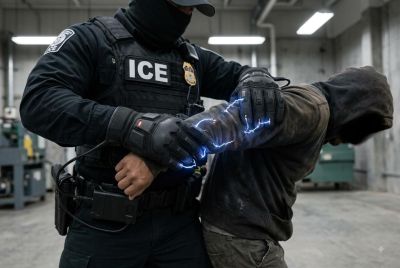
ICE Detains Injured Ecuadorian Mother and Daughter From Florida Emergency Room After Surviving Car Crash
Arrest of Ecuadorian nationals in Florida hospital raises questions about immigration enforcement policies

Immigration agents handcuffed an injured mother still in her hospital gown and led her out of a Florida emergency room on Friday, just hours after a car crash nearly killed her. Her 19-year-old daughter, who suffered a seizure watching it happen, was detained alongside her.
Grace Calero, 39, and Giulianna Carriel, 19, both Ecuadorian nationals, had been rushed to HCA Florida Poinciana Hospital in Kissimmee after another vehicle veered into their lane and flipped their car. Video of their arrest, filmed by a family member, has since circulated widely online, prompting condemnation from immigrant rights groups and renewed scrutiny of enforcement policy inside hospitals.
A Crash, Then Handcuffs
Calero and Carriel were travelling on a Florida highway when an oncoming vehicle lost control and struck their car, causing it to overturn. Emergency responders took both women to HCA Florida Poinciana Hospital, where Calero was fitted with a cervical collar for neck injuries and Carriel was treated for acute emotional distress.
While the two remained in the emergency department, agents entered the treatment room and took them into custody. Footage shared online shows Calero handcuffed and escorted through the hospital in her gown, past staff and other patients, as family members can be heard pleading with officers in Spanish. Carriel's family says she suffered a seizure during the confrontation, brought on by witnessing her mother's detention.
Gia Calero, Grace's sister, told regional media that both women were still receiving treatment when agents arrived. She has said the family was not told where Grace was taken after the arrest.
Conflicting Accounts of Immigration Status
According to the Polk County Sheriff's Office, investigators determined that both women had been living in the United States unlawfully after their visas had expired several years earlier. Neither faced criminal charges at the time they were transferred to county custody. The sheriff's office maintains a formal cooperation agreement with ICE, under which deputies flagged the women's documentation as suspicious before contacting federal agents.
The family disputes that account. Relatives say Calero had a pending asylum application and a valid work permit, and that Carriel held a visa which family members describe as valid through 2030. IBTimes UK has not independently verified those claims against government records, and neither ICE nor the Department of Homeland Security had issued a public statement on the case at time of writing.
The dispute over paperwork sits at the centre of the case: one side citing an active asylum claim as protection from removal, the other citing expired visas as grounds for detention. Immigration attorneys note that a pending asylum application does not, on its own, shield someone from arrest or deportation proceedings.
Why a Hospital Is No Longer Off-Limits to Ice
The arrest was possible because the Trump administration revoked long-standing federal guidance in January 2025 that had discouraged immigration enforcement at hospitals, schools, and churches. Before that reversal, such locations were generally treated as protected from routine ICE activity.
Immigration lawyers and advocacy groups have argued that enforcement inside emergency rooms creates a chilling effect, deterring undocumented people from seeking urgent medical care after accidents or emergencies for fear of arrest. The Calero-Carriel case has become a flashpoint in that argument, precisely because the women were victims of a crash rather than suspects in one, and were detained mid-treatment rather than after discharge.
The arrest comes amid separate friction between Polk County Sheriff Grady Judd and federal immigration authorities over how ICE has handled local enforcement cooperation. Judd, whose office carried out the arrest under its cooperation agreement with ICE, has separately voiced frustration this year over how federal agencies have approached local deputies on immigration matters. His office has not commented specifically on the Calero-Carriel detention beyond confirming the women's alleged unlawful status.
Calero and Carriel's case adds to a run of ICE detentions involving Ecuadorian nationals that have drawn attention in 2026, including that of Chantal Morales, who was arrested and later released. Ecuadorian community organisations in Florida say the pattern reflects intensified enforcement activity targeting their community over the past 18 months.
Neither woman had appeared before an immigration judge at the time of writing, and their current custody status has not been publicly confirmed.
© Copyright IBTimes 2026. All rights reserved.
- Recommended For You