'450,000 Deaths in Next Six Months': Massive El Niño Threat Prompts Global Humanitarian Red Alert
The Climate Impact Lab projection covers September 2026 to February 2027 and identifies Africa's Sahel as the worst-affected region
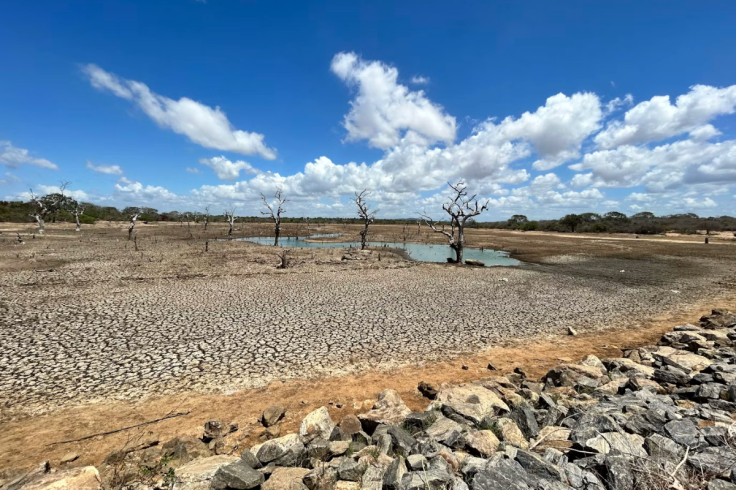
More than 450,000 people could die from additional heat associated with the current El Niño over the next six months, according to a new analysis by climate scientists.
The estimate of 451,000 excess deaths covers September 2026 to February 2027 and comes from researchers at the University of Chicago's Climate Impact Lab. The findings were reported by the Guardian and Reuters on Wednesday, 23 September 2026.
The figure covers deaths associated with heat and does not attempt to count mortality caused by other El Niño hazards such as flooding, drought or wildfires. It is presented as an incremental burden on top of mortality risks already associated with the planet's underlying warming.
What the Projection Says
The figure is a modelled estimate of additional deaths rather than a forecast of total mortality. The Guardian reported that the period ends in February because that is where current temperature forecasts stop.
Prof Michael Greenstone, co-founder of the Climate Impact Lab and a co-author of the report, urged readers not to let the scale obscure who is counted.
'The estimate of 451,000 people is such a large number that it can be numbing, but it is made up of parents and children, grandparents and neighbours, people going to work, caring for families, and living their lives,' he said.
The deaths are not expected to stop at the cut-off date. Elevated heat mortality could continue beyond February, potentially until June or July 2027, according to the researchers, who note that parts of the Northern Hemisphere, including India and Pakistan, would be especially vulnerable during their summer months if the event persists.
Where the Deaths Are Expected
The burden falls heavily on a handful of countries. Nigeria is projected to see the most excess heat deaths at 31,400, followed by Indonesia with 19,300 and Sudan with 17,600, according to Reuters.
Africa's Sahel is projected to be the worst-affected region. Heat across the belt that includes Niger and Chad, as well as Nigeria and Sudan, is projected to cause an additional 66,800 deaths over the six-month period, while the Philippines, Vietnam, Thailand and Cambodia are expected to record around 19,400 between them.
Wealthier countries are not exempt. The United States is projected to see roughly 3,500 additional heat deaths over the same period, showing that the projected impact extends beyond the tropics even if the heaviest toll is expected elsewhere.
Aid agencies were already tracking the event before the mortality projection appeared. An inter-agency Global ENSO Analysis Cell report published in September assessed humanitarian risks linked to El Niño, while the United Nations has issued a Southern Africa preparedness alert and the World Meteorological Organization and other bodies have been stepping up early-warning work.
The Event Behind the Numbers
The El Niño now under way is exceptional by the standards of the phenomenon. On Monday, the temperature anomaly in the heart of the El Niño region reached 3.05C, surpassing the previous record of 3.02C set in November 2015, the Guardian reported, several months before the event is expected to peak.
The WMO classifies it as a very strong El Niño. 'Super El Niño' is media shorthand rather than an official category.
The descriptions have been unusually dramatic. Climate scientist Zeke Hausfather called the projected intensity 'mind-blowing', while others have described the event as 'Godzilla-level'.
The mechanism is well understood. El Niño begins when surface waters in the tropical Pacific become much warmer than normal, which shifts atmospheric circulation and alters weather patterns worldwide, producing drought in some regions and flooding in others. It is a natural phenomenon, although global heating can amplify the temperatures and impacts experienced during an event.
It is also occurring on an already hot planet. August 2026 was the warmest August in the record kept by the US National Centers for Environmental Information, which extends back to 1850.
How the Estimate Was Built
The method draws on established research. The team applied mortality-temperature relationships developed in peer-reviewed work across 24,378 regions, roughly comparable in population to American counties, then combined them with seasonal temperature forecasts for the El Niño period and average heat mortality from 1996 to 2025.
The new analysis itself has not yet been through peer review. The researchers say the full details of this seasonal mortality projection will appear in a forthcoming peer-reviewed journal publication.
The regional breakdown is the point, the authors say. They present the projections as a tool for targeting emergency measures rather than as a fixed prediction of how many people will die.
A projection is not a death certificate. The researchers say targeted emergency action, including better heat forecasting, cooling centres and additional medical staffing during extreme heat, could save lives.
© Copyright IBTimes 2026. All rights reserved.
- Recommended For You