'You Are Loathed Far More Than I Am': Elon Musk Attacks Economist Editor in Tense Video Interview
Elon Musk tells Economist editor Zanny Minton Beddoes journalists are 'hated far more' than he is, despite polls showing mixed views.

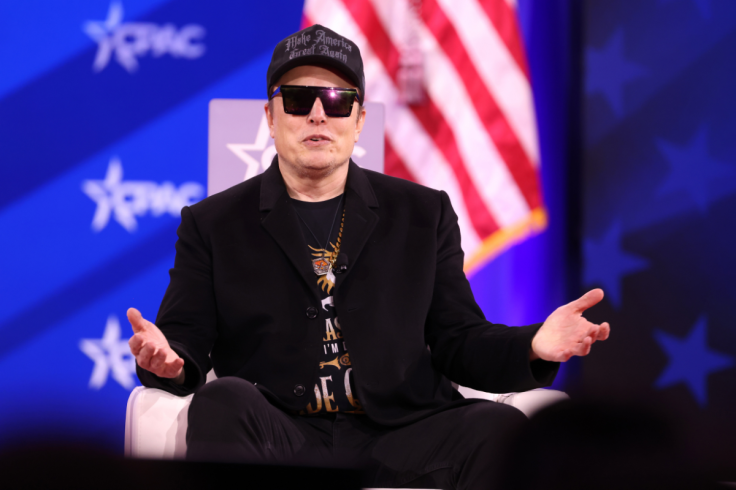
Elon Musk used a combative video interview with The Economist in London this week to accuse the media of being 'despised,' telling editor-in-chief Zanny Minton Beddoes on Thursday 23 July that journalists are 'hated far more' than he is, after she suggested some people 'loathe' him and see his politics as harmful to Western democracy.
For context, the 90‑minute conversation, published online by The Economist, was billed as a wide‑ranging look at the world's first trillionaire, his ownership of X, and his growing political influence. Instead, one of the most striking exchanges turned into a real‑time argument over who the public hates more, as Musk tried to flip a question about his own polarising reputation back on to the press.
Minton Beddoes had put it to Musk that there are people who 'do loathe' him and who think his use of social media is 'not helpful for Western democracy.' Musk, 55, barely paused.
'Maybe some people do loathe me, and that's probably true, I don't care,' he replied, before immediately reaching for his follower count. He pointed out that 'a quarter billion people' follow him on X, which he took as proof that 'a lot more people actually like me than don't.'
Then he pivoted.
Musk Turns Fire on the Media in Economist Interview
From there, Elon Musk launched into a broader attack on the media, insisting that journalists were the ones with a real trust problem.
'Do you realise the media is despised?' he said, addressing Minton Beddoes directly. 'Do you realise that journalists, the view of journalists, it's like, a favourable view of journalists is like 15 percent. So the shoe is on the other foot. They hate you. They hate you far more than they hate me.'
Musk did not cite a specific poll for the 15 per cent figure during the exchange. However, Minton Beddoes quickly acknowledged that faith in news outlets has fallen in recent years. She pointed to survey data showing that trust in journalism is near historic lows, adding that mistakes made by newsrooms had contributed to that slump.
Her defence came with a sting. The Economist editor argued that hyper‑polarised online platforms, including X, are part of the problem rather than the cure.
'I think there is certainly [a] loss of trust in journalism. I think, in part, there have been mistakes by journalists and journalism, I totally acknowledge that,' she said. 'But I think the kind of polarised environment, particularly on social media fostered by the kinds of things you're pushing on X, actually helps this, makes it worse.'
Musk flatly rejected that claim.
𝐄𝐋𝐎𝐍 𝐌𝐔𝐒𝐊 𝐓𝐎 𝐓𝐇𝐄 𝐄𝐂𝐎𝐍𝐎𝐌𝐈𝐒𝐓'𝐒 𝐄𝐃𝐈𝐓𝐎𝐑: “𝐌𝐎𝐑𝐄 𝐏𝐄𝐎𝐏𝐋𝐄 𝐇𝐀𝐓𝐄 𝐘𝐎𝐔 𝐀𝐍𝐃 𝐓𝐇𝐄 𝐌𝐄𝐃𝐈𝐀 𝐓𝐇𝐀𝐍 𝐘𝐎𝐔 𝐑𝐄𝐀𝐋𝐈𝐙𝐄”
— M.A. Rothman (@MichaelARothman) July 25, 2026
𝐄𝐥𝐨𝐧 𝐌𝐮𝐬𝐤 (@elonmusk) sat down with 𝘛𝘩𝘦 𝘌𝘤𝘰𝘯𝘰𝘮𝘪𝘴𝘵 editor-in-chief Zanny Minton Beddoes at Tesla's… pic.twitter.com/8yMlujpWnz
'I don't think so,' he said. 'I think you're the problem, the media, and, um, speaking of loathing, you are loathed far more than I am and you don't seem to even realise that.'
Minton Beddoes pushed back on a more practical point, noting that very few people even know who she is compared with Musk.
'I think very few people know who I am relative to you,' she said. 'So I don't think I play in the same game.'
Musk refused to narrow his target.
'The media collectively,' he shot back. 'Um, so, I mean, you're hated.'
It was an oddly personal turn in a conversation that was meant to examine Musk's power, but this is often how his confrontations with the press go. When criticised, he tends to go on the offensive, not simply against one outlet, but against journalism as an industry.
Polls on Elon Musk Suggest a More Complicated Picture
The data on Elon Musk's own standing with the public is more nuanced than his confidence in the interview might suggest.
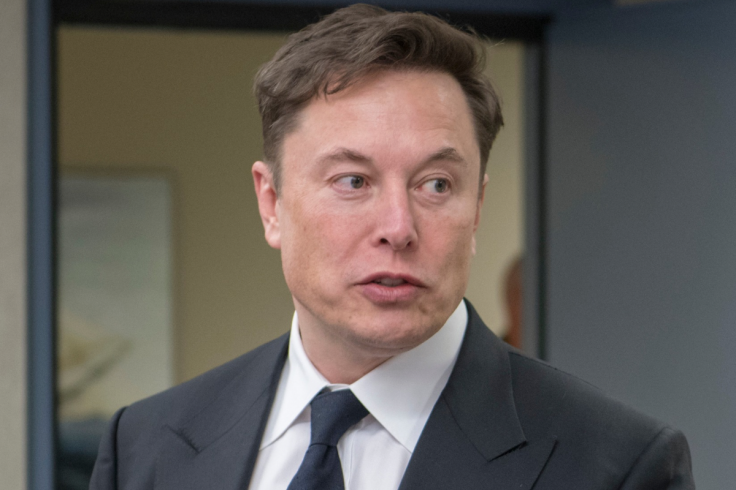
According to a Pew Research Center survey carried out between 27 January and 2 February 2025, 54 per cent of Americans reported an 'unfavourable' view of Musk, including 36 per cent who said they had a 'very unfavourable' opinion of him. The findings suggest that while Musk commands huge reach online, that does not automatically translate into warmth offline.
On trust in the media, Gallup reported in October 2025 that only 28 per cent of Americans said they had a 'great deal' or 'fair amount' of trust in newspapers, television and radio to report the news accurately and fairly. That is hardly comforting for editors, but it is also nearly double the 15 per cent figure Musk tossed into the conversation.
What the clash between Musk and Minton Beddoes exposed, more than anything, is a standoff between two embattled institutions, one corporate and one civic. Musk sees himself as a tribune of 'the people,' fuelled by his follower count and by years of online cheering sections. Legacy media sees itself as imperfect but essential infrastructure, now under attack from politicians, tech platforms and, yes, some of its own past failures.
Into that tension steps a figure whose private behaviour keeps generating headlines of its own.
A Trillionaire Under Constant Scrutiny
To recall, Elon Musk's tenure in public life has been saturated with controversy that goes far beyond his media feuds.
The X owner, who now has 14 children with four different women, has been repeatedly criticised over deeply personal disputes with the mothers of his children. His anti‑trans remarks, including comments directed at his own trans daughter, Vivian Jenna Wilson, have prompted particular backlash, not least because they cut directly against the kind of 'free speech' and inclusion many of his fans once claimed to see in him.
Politically, his relationship with President Donald Trump has drawn sustained scrutiny. Musk briefly served in the now‑defunct Department of Government Efficiency, known as DOGE, a body whose significant cuts to US foreign aid, according to prior reporting, were linked to an estimated 700,000 deaths worldwide. Those numbers sit heavily beside each other, and critics have argued that Musk cannot simply wave them away as someone else's spreadsheet.
This wider record matters because it shapes how his latest showdown with the press will be read. For supporters, his swipes at a high‑profile editor will look like long‑overdue pushback against an establishment that has lost its way. For opponents, they are yet another attempt to dodge accountability by shooting the messenger.
In the interview with The Economist, those two narratives collided in real time. Musk cast himself as more loved than loathed, the media as more hated than they dare admit, and the rest of us are left parsing polls, personalities and an increasingly mad information ecosystem where everyone insists the other side is the real problem.
No one on that stage seemed especially inclined to concede the point.
© Copyright IBTimes 2025. All rights reserved.
- Recommended For You