Jesse Jackson Cause of Death: Remembering the Impassioned Civil Rights Servant Who Helped Barack Obama Win
Reflecting on the life and impact of Reverend Jesse Jackson, a key figure in civil rights and American politics.
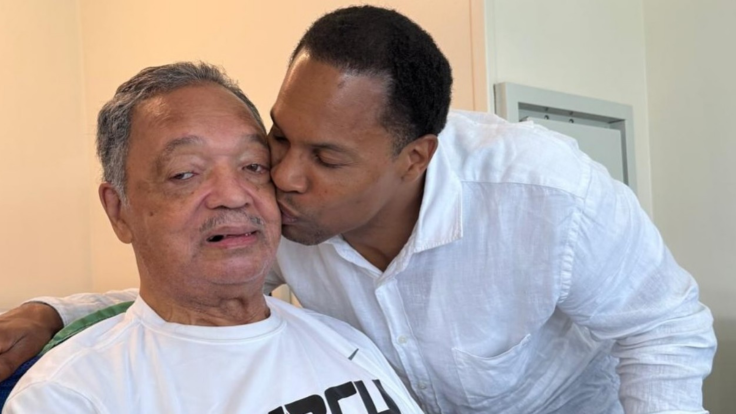
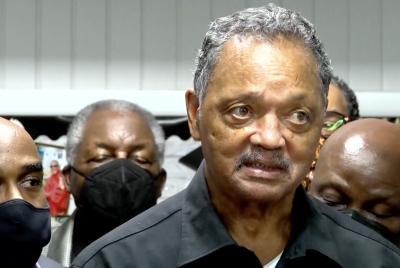
Reverend Jesse Jackson, the US civil rights leader and former presidential candidate, has died at the age of 84, his family confirmed on 17 February 2026.
A precise cause of death has not been publicly disclosed. Jackson had faced prolonged health challenges in recent years, including Parkinson's disease and progressive supranuclear palsy (PSP), a rare neurological disorder affecting movement and balance.
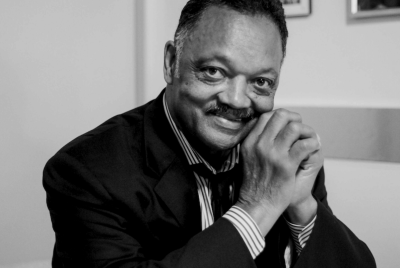
Jackson remained one of the most recognisable figures in American civil rights activism and Democratic Party politics. His career spanned more than six decades, encompassing grassroots organising, national advocacy campaigns and presidential bids that reshaped elements of US political life.
Early Activism And Civil Rights Leadership
Born in 1941 in Greenville, South Carolina, Jackson grew up during racial segregation in the United States. He became involved in civil rights activism as a student and later studied at the Chicago Theological Seminary, where his political and social engagement deepened.
Jackson emerged as a close associate of Martin Luther King Jr. during the Civil Rights Movement. He was present in Memphis in 1968 when King was assassinated, an event that profoundly influenced his subsequent work and public role.
Following King's death, Jackson founded Operation PUSH in 1971, focusing on economic opportunity, educational access and political participation, according to The Guardian. He later established the Rainbow Coalition, which sought to build alliances across racial and social groups. The organisations eventually merged to form the Rainbow/PUSH Coalition.
Health Challenges In Later Years
Jackson publicly disclosed a diagnosis of Parkinson's disease in 2017. In subsequent years, his condition was further complicated by progressive supranuclear palsy.
The neurological disorders increasingly affected his mobility and public appearances. Despite declining health, Jackson remained engaged in advocacy work and continued to comment on political and social issues.
His family stated that he died peacefully, surrounded by relatives.
Pouring one out for The Reverend Jesse Jackson. A giant and a champion for civil rights and equality.
— Danny Deraney (@DannyDeraney) February 17, 2026
But can anyone read Green Eggs and Ham better? No. pic.twitter.com/iHPbK1UJYm
Reverend Jesse Jackson, our Profound Leader and Champion of Justice.
— Samuel L. Jackson (@SamuelLJackson) February 17, 2026
May we all join together and keep Reverend Jackson's Hope Alive. pic.twitter.com/HBs3739Yij
Reverend Jesse Jackson was one of America’s greatest patriots. He spent his life summoning all of us to fulfill the promise of America and building the coalitions to make that promise real.
— Kamala Harris (@KamalaHarris) February 17, 2026
A son of Greenville, South Carolina, Reverend Jackson first rose to the national stage as… pic.twitter.com/yLHr9N6hDy
Presidential Campaigns And Political Influence
Jackson's political prominence expanded during the 1980s through two campaigns for the Democratic presidential nomination.
In 1984, he secured more than 18 per cent of the primary vote, mobilising large numbers of Black voters and broadening participation among younger and progressive constituencies. Jackson campaigned again in 1988, winning multiple primaries and caucuses.
Although he did not secure the nomination, his campaigns influenced Democratic Party processes, including delegate selection rules. The bids were widely seen as expanding the party's electoral coalition and altering perceptions of Black political leadership.
Legacy And Impact On US Politics
Jackson's influence extended beyond electoral politics. He was involved in international diplomacy efforts, including negotiations for the release of Americans detained abroad.
His advocacy addressed a wide range of issues, including voting rights, economic inequality, education access, HIV/AIDS awareness and corporate accountability. His work positioned him as a recurring presence in debates over representation and social justice.
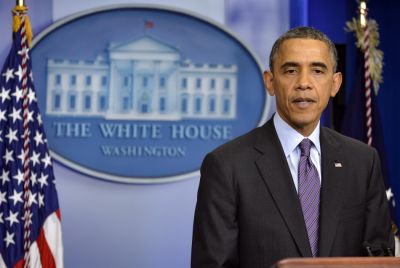
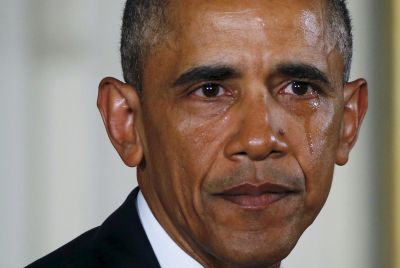
When Barack Obama was elected president in 2008, he acknowledged Jackson's role in expanding opportunities for Black political leadership. Tributes following Jackson's death reflected that long-standing recognition.
Michelle and I were deeply saddened to hear about the passing of a true giant, the Reverend Jesse Jackson. We will always be grateful for Jesse's lifetime of service, and the friendship our families share. We stood on his shoulders. We send our deepest condolences to the Jackson… pic.twitter.com/Q68r4IJt9U
— Barack Obama (@BarackObama) February 17, 2026
Continuing Historical Significance
Jackson's career spanned a period of profound political and social change in the United States, from the Civil Rights Movement through to the election of the country's first Black president. His campaigns, activism and public advocacy positioned him as a persistent voice in debates over race, representation and economic equality.
While assessments of his political legacy varied, Jackson's influence on voter mobilisation, coalition-building and civil rights discourse remained a consistent feature of American public life. His work shaped conversations that extended well beyond electoral politics, touching on social justice, diplomacy and community organising.
In later years, his public appearances became less frequent as his health declined. Even so, his presence within US political and civil rights history remained firmly established.
© Copyright IBTimes 2025. All rights reserved.
- Recommended For You