

Kennedy Family Fights Trump's Arch as Analysis Finds JFK's Eternal Flame Could Be Shaded 18 Days a Year
The White House has rejected the family's intervention as an attempt to politicise the project
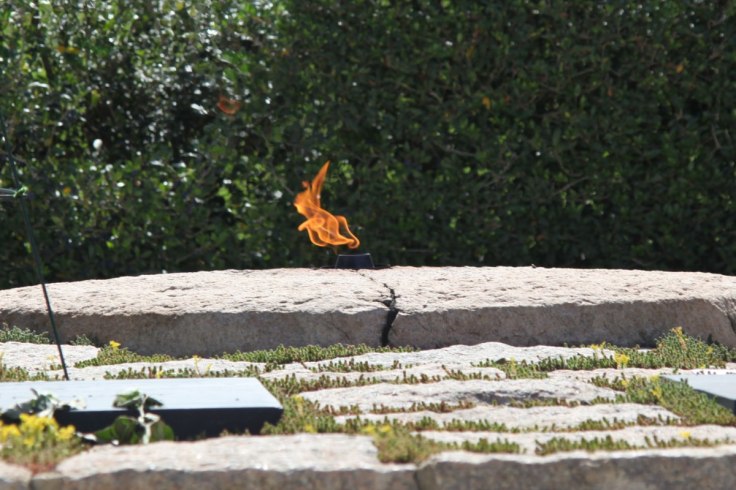
Nine Kennedy relatives asked a federal court in Washington, D.C., on Tuesday, 10 November, to halt President Donald Trump's arch. They applied to join two existing lawsuits challenging the proposed 250-foot monument near Arlington National Cemetery.
A Washington Post analysis found its shadow could briefly reach JFK's Eternal Flame on 18 days annually. The family also argues that the project would damage historic views of its gravesites.
The White House says the arch would honour military heroes.
The legal move followed a 5 November order by US District Judge Tanya Chutkan temporarily preventing construction for 14 days. Trump's proposed monument would stand at Memorial Circle, across the Potomac River from the Lincoln Memorial.
The administration says the arch would mark 250 years of American independence.
Trump's Arch Could Shade JFK's Eternal Flame on 18 Days
The three-dimensional modelling estimated that the arch would also shade Kennedy's memorial on 50 days each year. Its shadow could reach burial sites elsewhere in Arlington on 284 days. Those figures count days when a shadow touches a location, not continuous periods of darkness.
Most of the projected shadows would disappear before the cemetery opens at 8 a.m. On 26 days, however, the model indicated that shadows could remain on parts of the cemetery after opening.
The Interior Department offered a narrower assessment. It said designers had calculated that only a small section of the cemetery would be affected after opening on fewer than two weeks annually.
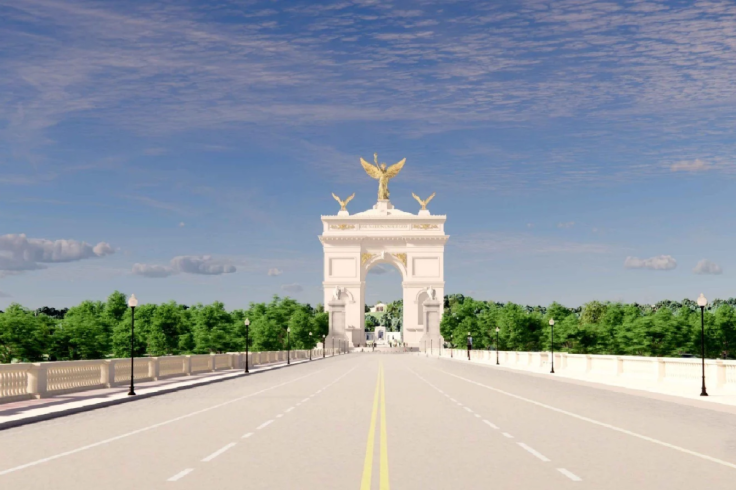
'That period is less than an hour after sunrise,' the department said, adding that shadows would overlap with those of trees.
The two assessments do not use identical measures. One counts projected contact with burial sites across a full day, while the other concentrates on a limited area after opening hours.
Kennedy Family Says Trump's Arch Would Alter Graveside Visits
Nine Kennedy relatives say the proposed arch could cast morning shadows over the family's graves at Arlington National Cemetery and affect views between the graves, Arlington Memorial Bridge and the Lincoln Memorial.
In their proposed complaint, the relatives say they often visit the graves before the cemetery opens to maintain privacy. They argue that the arch's shadows would be particularly noticeable during those visits.
The applicants include seven children of Robert and Ethel Kennedy, former congressman Joe Kennedy III and Edward Kennedy Jr. President John F. Kennedy, his brothers Robert and Edward, and Ethel Kennedy are buried at Arlington.
The proposed complaint says the sightlines between the graves, the bridge and the Lincoln Memorial were deliberately preserved when the memorials were designed. It argues that the arch would alter the setting of the graves and the commemorations of other people buried at the cemetery.
'Americans from every corner of the country visit Arlington to honor those who served and sacrificed for our nation,' Rory Kennedy and Maxwell Kennedy said in a statement. They said the project would undermine safeguards intended to protect the burial ground.
White House Defends Trump's Arch as Judge Halts Work
The White House has defended President Donald Trump's proposed arch after a judge issued a temporary restraining order barring construction-related activity covered by the ruling while legal challenges proceed.
Spokesman Davis Ingle rejected criticism from the Kennedy family. 'The judiciary should not be abused to politicize a structure designed to unite our nation,' he said. He said the project was intended to honour military personnel buried at Arlington National Cemetery.
The National Capital Planning Commission approved the plans on 5 November. US District Judge Tanya Chutkan issued the restraining order shortly afterwards. It remains in place for 14 days while the court considers requests for longer-term restrictions.
The existing cases were brought by Washington, DC, Virginia, Vietnam War veterans and a preservation advocate. The Kennedy relatives have asked to join them as plaintiffs.
The relatives argue that construction requires congressional authorisation and that the government's approval process breached federal law. The administration disputes those claims, saying earlier congressional authority supports the project.
Chutkan has expressed preliminary doubts about the administration's position but has not issued a final ruling on the project's legality. The temporary order does not resolve the wider lawsuits.
The Kennedy relatives' proposed complaint asks the court to overturn the project's authorisation and block work until applicable legal requirements are met. It also challenges the government's consideration of alternative locations and designs.
The family objects to the proposed monument's location between Arlington's graves and the Lincoln Memorial, arguing that it would affect views and visits to the cemetery.
© Copyright IBTimes 2026. All rights reserved.