

Oceans Absorbed 40 Times the World's Energy Use in 2025 as 84% of Coral Reefs Hit Bleaching Heat
Copernicus report finds record ocean warming as coral reefs face unprecedented heat stress worldwide
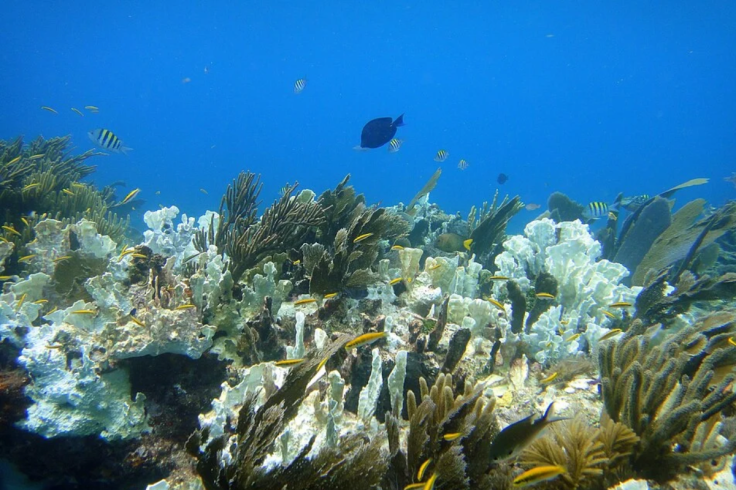
The world's oceans absorbed a record 23 zettajoules of additional heat in 2025, almost 40 times the energy humanity used that year, according to the 10th Copernicus Ocean State Report. Produced by Mercator Ocean International with contributions from more than 100 scientists, the report was published on 30 September.
It was the ninth consecutive year of record ocean heat accumulation, and the overall rate of ocean warming has doubled over the past 20 years. Global sea levels rose by 3.8mm a year between 1999 and 2025, accelerating to 4.2mm a year between 2012 and 2025, while the ocean became roughly 17% more acidic between 1985 and 2025 as it absorbed carbon dioxide.
Reefs Recorded the Highest Heat Stress on Record
Data from NOAA Coral Reef Watch shows that bleaching-level heat stress affected about 84.4% of the world's coral reef area between 1 January 2023 and 30 September 2025. Mass bleaching was documented in at least 83 countries and territories.
The previous record was 68.2%, recorded during the third global bleaching event between 2014 and 2017. NOAA's figure measures reef area exposed to heat stress capable of causing bleaching, rather than the number of corals that died.
The Copernicus report states that coral reefs can account for more than 20% of GDP in some Small Island Developing States, where they support fisheries, tourism and coastal protection. It also found that nearly 28% of the combined exclusive economic zone area of these states contains vulnerable, endangered or critically endangered reefs, and that 65% of that area has faced accelerating sea-level rise since 1999.
'The ocean is transforming before our eyes: warming, rising seas and ecosystem degradation are interconnected signs of significant and long-term change,' said Pierre Bahurel, director general of Mercator Ocean International. Karina von Schuckmann, director of the report, said ocean change was 'an economic, development and security challenge today' for island countries.
Mediterranean and Black Seas Hit Record Heatwaves
The report found that the Mediterranean and Black Seas recorded record-breaking marine heatwaves in 2024. Some lasted more than 30 days, with temperatures more than 4.6°C above normal in some areas.
The Mediterranean recorded its highest number of marine heatwave days in two decades, with conditions most extreme in the eastern basin. Over the period from 1982 to 2024, the sea as a whole warmed by 0.32°C per decade, and average sea surface temperatures in 2024 reached 1.23°C above the 1982–2024 baseline.
'These sudden episodes of heat are not occurring in isolation,' said Blanca Fernández-Álvarez, a researcher at the Mediterranean Institute for Advanced Studies. 'They are taking place against a backdrop of sustained ocean warming that is changing the conditions marine ecosystems face.'
🌡️ The ocean has absorbed 90% of the world’s excess heat trapped as a result of human-caused greenhouse gas emissions, according to a new report - leading to a saltier, more acidic ocean, accelerated sea level rise & record marine heatwaves 1/2🔽https://t.co/PUHNeyJ9KY
— Oceana UK (@OceanaUK) October 1, 2026
Arctic Ice Loss Exposes Coastlines
The report said Arctic sea-ice extent fell by roughly 490,000 square kilometres per decade between 1979 and 2025, an area almost as large as Spain. The loss of ice has led to more wind and waves, leaving around 60% of Arctic coastal infrastructure vulnerable to erosion and sea-level rise.
Arctic sea surface and ice surface temperatures rose by 4.2°C between 1982 and 2024, several times faster than the global ocean average of 0.12°C per decade.
Bleaching Events and Extreme Coastal Events
In June, the Global Coral Reef Monitoring Network said the fourth global bleaching event had likely ended in mid-2025. It noted that every strong El Niño since 1998 had coincided with a global bleaching event.
During the first global event in 1998, 21% of the world's reefs experienced bleaching-level heat stress. The network also cited NOAA's assessment that reefs are entering an era of near-annual bleaching, while the report said El Niño is intensifying in the Pacific and appears likely to become the strongest ever recorded.
The report also examined disruptive coastal events, including Storm Louis, which drove waves of about eight metres onto parts of Spain's Atlantic coast in 2024. The storm caused power cuts, damage to structures and loss of life.
On 21 November 2024, an intense storm drove the measured sea level in Bothnian Bay, in Finland, to a record low of 153cm below the reference level, which suspended ferry services for 18 hours. Forecasting systems predicted the event three to four days in advance. 'It is our responsibility to build the permanent capacity to anticipate this transformation,' Bahurel said.
© Copyright IBTimes 2026. All rights reserved.