Grok Deepfake Victims Left Without Justice as X Fails To Hand Over Information on Users Who Generated Images
Cases involving Jess Davies and other women share difficulties tracing anonymous users, securing information from X and pursuing suspects overseas
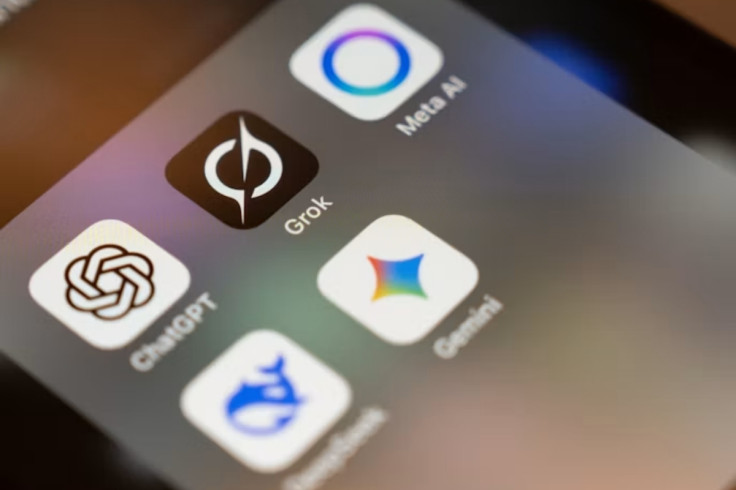
Police investigations into Grok-generated deepfake images have failed to identify or prosecute suspects in several cases examined by The Bureau of Investigative Journalism, after officers struggled to obtain information from X and faced difficulties involving anonymous accounts and overseas suspects.
Among those affected is presenter and campaigner Jess Davies, whose complaint was closed after police were unable to identify the person behind an account that had used Grok to create a sexualised image of her.
Davies reported the image to South Wales Police on 2 January, shortly after seeing an anonymous X user ask Grok to place her in a bikini made from cling film.
The chatbot generated the image using her profile picture. Davies says the experience was particularly distressing because she had been speaking publicly about the growing problem of AI-generated sexual abuse.
The scale of Grok's image generation became a major concern around the turn of the year. Research by the Center for Countering Digital Hate estimated that about three million photorealistic sexualised images were generated by Grok over 11 days from 29 December 2025 to 8 January 2026.
The estimate included almost two million images depicting women and more than 23,000 that appeared to depict children. The research could not establish how many of the images were created without consent.
Grok Deepfake Cases Expose Difficulties for Police
Correspondence seen by TBIJ shows that police requests to X for information about some accounts went unanswered. In Davies' case, the account remained visible, but the person behind it was not identified, despite a posting history that included other requests to undress women's photographs.
Davies says she was not invited to give a statement until March, two months after making her report. She also says an officer told her that police had not heard back from X, with the case eventually closed after investigators concluded they had exhausted their available line of inquiry.
South Wales Police said an investigation had been launched, that Davies was kept informed and offered victim support services, but that investigators were unable to identify a suspect despite their efforts.
There was also uncertainty over which offence was being considered.
Davies says she was told the case might be pursued under malicious communications law and that there was a six-month prosecution limit. Current legislation does not impose that six-month limit on the present Section 1 offence, according to Crown Prosecution Service guidance and legislation.
Davies' complaint also came before a new offence took effect on 6 February 2026. The legislation now makes it an offence to intentionally create, or request the creation of, a purported intimate image of an adult without consent. At the time Davies reported her case, sharing certain non-consensual intimate images, including deepfakes, was already criminalised.
Davies says police were reluctant to pursue the existing sharing offence because they believed there could be uncertainty over whether responsibility rested with the user who requested the image or the service that generated and automatically posted it.
That account has not been established as a legal finding, and the current law separately criminalises requesting the creation of such images.
Professor Clare McGlynn, a law professor who researches technology-facilitated abuse, said police can struggle when dealing with emerging AI systems. 'All sense seems to go out of the window when we're talking about the use of a chatbot or Grok,' she said. 'Police are rubbing up against tech that they don't understand.'
Victims Are Turning to Civil Action
Davies is now in pre-action legal correspondence with SpaceXAI, formerly xAI, alleging misuse of her private information and breaches of data protection law and the Equality Act.
The company rejected the suggestion that its failure to assist police had aggravated her distress, saying it had not been possible to investigate communications with South Wales Police within the time available.
Her lawyer, Ravi Naik of AWO, described the response as 'astonishing', pointing to the 15 days it took the company to respond.
Other women have reported similar difficulties. Broadcaster Narinder Kaur says anonymous users posted about 300 images and videos depicting her during the Grok scandal. The Metropolitan Police said that despite exploring all viable lines of inquiry, no suspect could be identified.
Labour MP Jess Asato has taken a different route. She says police were able to trace the person who created one threatening video involving her, but that prosecution was not possible because the individual was outside the UK. Asato subsequently brought a High Court claim against xAI, alleging misuse of private information and breaches of data protection law.
Meanwhile, Ofcom's deadline for platforms to implement measures aimed at detecting and preventing the spread of illegal intimate images, including explicit AI-generated deepfakes, falls on 30 September.
Platforms that fail to comply with their legal duties could face fines of up to 10% of global annual revenue.
Ofcom is also investigating X, although it has said it is currently unable to investigate the creation of illegal images by the standalone Grok service because of how the Online Safety Act applies to chatbots. The regulator said its investigation into X was being treated as a matter of the 'highest priority'.
For Davies, the distinction between the technology and the person using it remains difficult to accept. 'Grok can't do this itself. It's a chatbot,' she said. 'It's the person requesting it.'
© Copyright IBTimes 2026. All rights reserved.
- Recommended For You