

MAGAs Float 'Martial Law' and Seizing Voting Machines if November Midterm Results Are Called Into Question
Legal experts say the president lacks authority to seize state election materials or override election laws, while officials have provided no evidence the midterms will be rigged
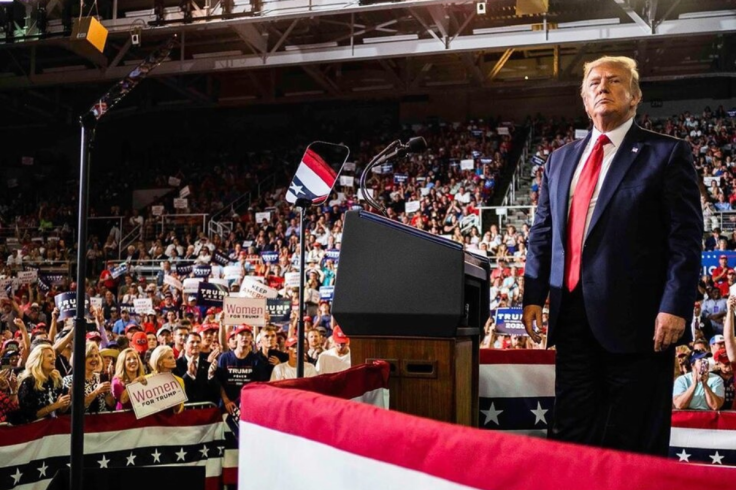
Allies of Donald Trump in the election denial movement are openly discussing martial law and the seizure of ballots and voting equipment if they judge November's midterm elections to be rigged.
The remarks came during a livestreamed activist call and in later interviews, led by Peter Ticktin, a lawyer and childhood friend of the president. Legal experts say the president lacks the authority to seize state election materials or override election laws in the way proposed.
There is no evidence supporting claims that the November midterms will be rigged.
'There Would Have To Be Martial Law'
Ticktin, who attended New York Military Academy with Trump and now represents former Colorado election clerk Tina Peters, told a MAGA election activist call streamed on Rumble on 30 September that 'there would have to be martial law in the event... [of] another rigged election', Axios reported.
He later told Axios that officials would 'probably need to be commandeering of ballots and election equipment'.
Ticktin has gone further elsewhere. He told the conservative podcaster Joe Oltmann that Peters' idea was to 'grab, get control over the ballots as soon as the machines spit them through' and recount them, Newsweek reported.
He said Trump 'is not going to relinquish control again' if he believes the results are rigged, and that if there were 'a civil war of any sort', it should be 'martial law with our side in control of the armaments'.
Gregory Stenstrom, who testified about alleged voting irregularities in Pennsylvania after the 2020 election, said on the same call that he most wanted the election paused over security concerns.
He also proposed that Trump invoke the National Emergencies Act to force states to change how they run elections, a use of the law that legal experts dispute. Axios said it could not reach him. The call's host, Steve Stern, directs viewers to sign up through the Republican Party as poll workers and observers. He declined an interview.
Tina Peters and the White House
Peters, the former Republican clerk of Mesa County, was convicted in August 2024 on seven counts, four of them felonies, over allowing an unauthorised person to access and copy election system data in 2021. She was sentenced to nine years in prison.
In April 2026, the Colorado Court of Appeals upheld her convictions but overturned the sentence and ordered resentencing. Governor Jared Polis commuted the sentence before a new hearing took place, and she was paroled in June.
According to Axios, Peters visited the White House in June and met Trump earlier this month. Newsweek, citing ABC News and unnamed sources, reported that the October meeting concerned election integrity. The White House declined to confirm it. 'We do not comment on private meetings that may or may not have happened,' spokesperson Lauren Bis told Newsweek. Peters did not respond to requests for comment.
Her published proposal, promoted as 'the Tina Plan', calls for hand-marked paper ballots, protection of voting systems and poll books, and audits and recounts. It urges Homeland Security Secretary Markwayne Mullin and the Cybersecurity and Infrastructure Security Agency to issue a national risk declaration.
The published version calls for hand counts of federal contests only 'where feasible', a narrower position than the one Ticktin described. Newsweek found no evidence that Peters had asked Trump to seize ballots.
Some figures who disputed the 2020 results now hold or advise on government roles. Heather Honey, who previously disputed the 2020 results in Pennsylvania and Arizona, is now a deputy assistant secretary for election integrity at the Department of Homeland Security, and White House adviser Peter Navarro continues to promote his report alleging mass fraud in 2020, Axios reported.
'Not a Blank Check'
Election law experts say the proposals have no legal footing. Derek Tisler of the Brennan Center for Justice told Axios that emergency powers do not give the president a blank cheque. Congress sets the dates of federal elections, states choose their voting systems, and martial law would not allow Trump to seize election materials or override election laws, he said.
A Brennan Center analysis in January reached the same conclusion, finding that neither the president nor the federal government has blanket authority to seize ballots or equipment. Federal agents can seize ballots as part of a lawful criminal investigation, subject to warrants and other limits.
In January 2026, the FBI seized more than 600 boxes of Fulton County, Georgia's 2020 election records under a federal search warrant. In May, a federal judge denied the county's motion seeking their return. The case involved a specific warrant and does not establish any wider federal power over election materials.
David Becker of the Center for Election Innovation and Research noted that the administration has been in office for 21 months and has not done the work it now says is needed to secure elections.
In a statement to Axios, Bis said: 'Americans deserve elections that are safe, secure, and transparent to ensure full confidence in the results.'
Election Day is 3 November, when voters will choose the entire House of Representatives and about a third of the Senate.
© Copyright IBTimes 2026. All rights reserved.