Trump Ally Bill Bennett Under Renewed Scrutiny Over Remarks That Black Abortions Would Lower Crime Rate
Former Reagan Official's Remarks on Race Resurface, Stirring Controversy

Twenty years after they first detonated across American political life, comments made by conservative commentator William J. Bennett on his nationally syndicated radio programme, in which he said aborting every Black baby in the United States would reduce crime, are back in circulation, prompted by his continued proximity to the Trump White House.
The original remarks were transcribed and published by Media Matters for America, which flagged the broadcast at the time. A caller had suggested that because abortion had reduced the number of future taxpayers since Roe v. Wade, Social Security was now underfunded.
Bennett cautioned against utilitarian arguments on abortion, then volunteered his own hypothetical: 'I do know that it's true that if you wanted to reduce crime, you could — if that were your sole purpose — you could abort every Black baby in this country, and your crime rate would go down. That would be an impossible, ridiculous, and morally reprehensible thing to do, but your crime rate would go down.'
The Original 2005 Controversy: What Bennett Said and What Followed
The full transcript of the 28 September 2005 broadcast, as published by Media Matters, confirms that Bennett called the proposition 'morally reprehensible' within the same breath. His defenders at the time argued he was explicitly rejecting the idea, not endorsing it.
Bennett told ABC News he was extrapolating from Steven Levitt and Stephen Dubner's book Freakonomics, which had proposed a hypothesis linking abortion access to falling crime rates decades later. However, Levitt himself later stated publicly that his own analysis was never race-based: in the original Slate debate Bennett cited, Levitt had written 'None of our analysis is race-based because the crime data by race is generally not deemed reliable.'
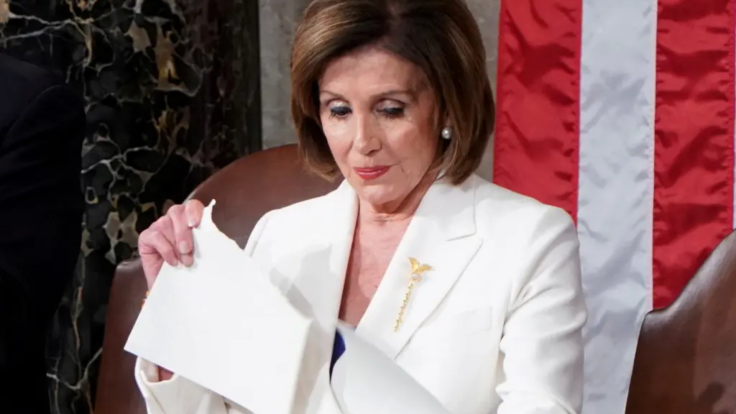
The political response was swift. Senate Minority Leader Harry Reid demanded an apology. Senator Ted Kennedy called the remarks racist. House Minority Leader Nancy Pelosi said they were shameful. In a letter to the Salem Radio Network, Representative John Conyers Jr. and 56 fellow members of Congress demanded the suspension of Bennett's programme, writing that his statement was 'insulting to all of us and has no place on the nation's public airwaves.'
The White House, then under President George W. Bush, also issued a rebuke, calling the comments 'not appropriate.'
Within days, Bennett resigned from the board of K12 Inc., the education technology company he had co-founded in 1999. According to Education Week's reporting at the time, K12's executive committee convened an emergency board meeting to discuss his position, though he stepped down before any formal decision was reached.
In his resignation statement, he said: 'Given the controversy surrounding the remarks I made on my radio show, I am stepping down from my positions at K12, so that neither the mission of the company, nor its children, are affected, distracted, or harmed in any way.' He maintained throughout that his comments had been distorted and taken out of context.
Despite the furore, Bennett never issued an apology. When CNN asked him whether he owed one, he replied, as reported by Slate, that 'I don't think I do. I think people who misrepresented my view owe me an apology.' CNN nonetheless hired him as a political analyst months later, in early 2006.
Bennett's Current Role and Ties to the Trump Administration
The renewed interest in Bennett's record is partly explained by his position. His official biography, listed on the Federalist Society's website and on the speaker bureau site Big Speak, describes him as a member of the Trump Leadership Council, a private citizen advisory group to the president.
He is not a Senate-confirmed appointee; no formal government title has been publicly assigned to him under Trump's second term. His role is advisory and informal, though it situates him in the circle of those with acknowledged access to the administration.
On 3 July 2025, Bennett registered as a foreign agent with the US Department of Justice under the Foreign Agents Registration Act (FARA), disclosing that he had taken on the role of senior education advisor to the Embassy of Qatar.
According to his FARA filing, as reported by the Daily Caller News Foundation, he is compensated £23,800 ($30,000) per month by the Qatari government. His stated duties include communications to US political officeholders, op-eds, radio and television appearances, and lobbying Congress. His specific brief, as cited in the filing itself, is to 'publicise the fact that Qatari higher education efforts do not support radical Islamicist movements or positions.'
This is not Bennett's first encounter with Qatari money. A separate, entirely different individual, lobbyist Barry Bennett (no relation), entered into a Deferred Prosecution Agreement with the Justice Department in January 2024 for FARA violations involving undisclosed work for Qatar through his firm Avenue Strategies. The two men share a surname only; there is no reported connection between them.
A man whose 2005 remarks were condemned by both parties, prompted his resignation from a corporate board, and drew a White House rebuke continues to hold a self-described advisory position within the current Trump orbit, while simultaneously receiving £23,800 ($30,000) per month from a foreign government. The public record on all those points is documented, verifiable, and unreported in sufficient depth.
The remarks Bennett made in 2005 were never retracted — and the man who made them has spent the intervening two decades closer to power, not further from it.
© Copyright IBTimes 2025. All rights reserved.
- Recommended For You