'Deranged and Irresponsible': Trump Slammed for Defending Iran After Minnesota Water Cyberattack
President Trump dismisses federal intelligence, blames Minnesota governor for cyberattack on water systems, sparking outrage.
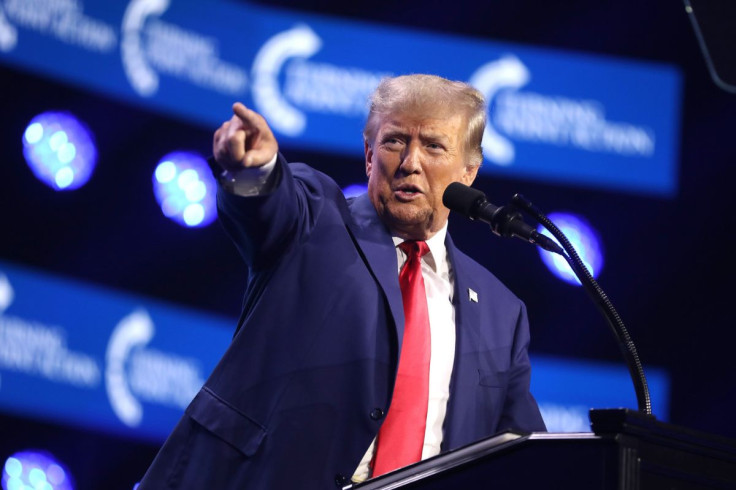
US President Donald Trump is facing criticism after rejecting federal intelligence assessments pointing to Iranian cyber threats and instead blaming Minnesota Governor Tim Walz for a cyberattack that disrupted dozens of water treatment facilities across the state.
The remarks, made during a Friday Cabinet meeting at Camp David in Maryland, came as federal agencies continue investigating a series of cyber intrusions affecting more than 30 water and wastewater systems in Minnesota.
While authorities have not publicly identified those responsible for the attacks, the FBI and the Cybersecurity and Infrastructure Security Agency (CISA) recently warned that Iranian cyber actors are actively targeting US critical infrastructure, including water treatment facilities.
Trump's comments immediately drew criticism from political opponents and cybersecurity experts, who argued that dismissing ongoing intelligence assessments before investigations conclude risks undermining public confidence in national security agencies.
Trump Rejects Federal Assessments
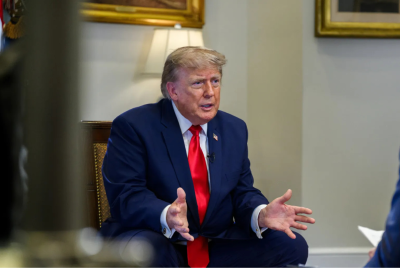
Speaking during the Cabinet meeting, Trump questioned reports that Iran may have been responsible for the attacks.
'I just want to mention, we heard in Minnesota there was a cyberattack and they blame it on Iran,' Trump said.
'I don't think so. I blame it on Minnesota because they're grossly incompetent. There was a cyberattack at 30 water plants and I blame it on Minnesota and the corrupt governor of Minnesota.'
The president did not provide evidence supporting his claim that state officials were responsible for the incident, nor did he explain why he rejected existing federal warnings regarding Iranian cyber activity.
When reporters later sought clarification, the White House referred questions back to Trump's remarks without offering additional evidence or explanation.
Trump's comments came only days after the FBI and CISA issued a joint cybersecurity advisory warning that Iranian government-linked hackers were actively targeting US critical infrastructure.
According to the advisory, water and wastewater facilities are among several sectors facing elevated cyber threats, alongside energy, transportation and other operational technology systems.
The agencies urged operators to strengthen cybersecurity protections, noting that foreign threat actors continue probing American infrastructure for vulnerabilities.
Although investigators have not publicly attributed the Minnesota attacks to Iran, federal officials have acknowledged that the methods used are consistent with the types of infrastructure intrusions they continue to monitor.
Authorities have also emphasised that the investigation remains ongoing.
Iran Has Previously Targeted US Infrastructure
Cybersecurity experts note that Iran has a documented history of targeting American infrastructure through cyber operations.
In 2016, the US Department of Justice charged several Iranian hackers over cyber intrusions involving a small dam near New York City, highlighting Tehran's longstanding interest in critical infrastructure.
Since then, US intelligence agencies have repeatedly warned about Iranian cyber capabilities, particularly during periods of heightened geopolitical tension between Washington and Tehran.
While previous incidents do not establish responsibility for the Minnesota attacks, they provide important context for why federal agencies continue to monitor Iranian cyber activity closely.
Walz Pushes Back Against Trump's Claims
Governor Tim Walz responded quickly on social media, rejecting Trump's accusations.
Writing on X, Walz said the president 'knows exactly who is responsible for this attack' and argued that Minnesota was not the only state affected by recent cyber activity.
The governor characterised the incident as part of a broader national security challenge rather than a state-level political failure.
Walz also criticised the administration's handling of cybersecurity preparedness, arguing that staffing reductions within federal agencies had weakened America's ability to defend critical infrastructure.
He pointed specifically to the Department of Government Efficiency, saying cuts had reduced resources available for cybersecurity and left vital systems more exposed.
Political Debate Overshadows Cybersecurity Concerns
Trump's remarks quickly became a focal point of political debate.
Critics argued that dismissing federal intelligence assessments before investigators complete their work risks politicising national security matters.
Several cybersecurity analysts also cautioned against attributing responsibility before forensic investigations are complete, noting that cyber attribution is often complex and can require weeks or months of technical analysis.
Others defended the president's scepticism, arguing that investigations should not reach conclusions until evidence has been fully examined.
At present, no federal agency has publicly announced a definitive attribution for the Minnesota cyberattacks.
The cyberattacks, which affected more than 30 water treatment facilities, remain under active investigation by federal and state authorities.
Officials have not publicly disclosed whether customer water supplies were compromised, although early reports indicate that plant operators and employees were able to prevent more serious disruptions through manual intervention.
For now, the central dispute extends beyond the technical investigation itself.
On one side are federal agencies warning of continued cyber threats from Iranian actors targeting critical infrastructure. On the other is a president publicly rejecting those warnings while assigning political blame to a state governor without presenting supporting evidence.
Until investigators identify those responsible, the precise source of the Minnesota attacks remains officially unresolved. What is clear, however, is that the incident has once again highlighted the growing vulnerability of America's critical infrastructure to cyber threats, and the increasingly political debate surrounding how those threats should be interpreted and addressed.
© Copyright IBTimes 2025. All rights reserved.
- Recommended For You