

Melania Appears to Dodge Trump's Kiss in Awkward Rose Garden Moment as Viewers React 'She Gave Him the Cheek'
A women's health order brought the first lady's policy role into focus, alongside scrutiny of the couple's public interaction
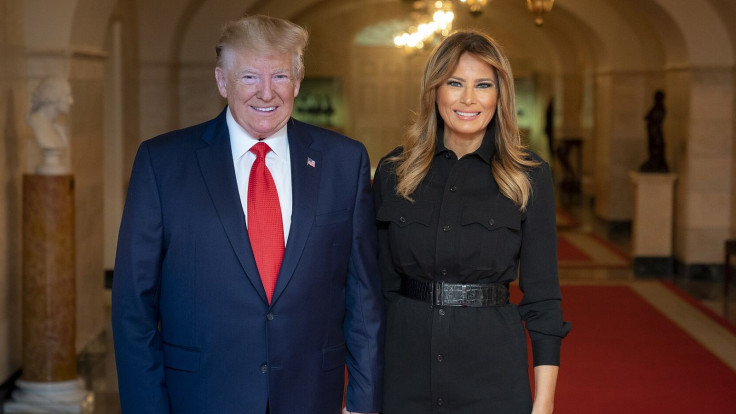
Melania Trump appeared to turn her face as Donald Trump leaned towards her for a kiss during a White House Rose Garden ceremony on Monday, 19 October.
The brief exchange followed the signing of an executive order on women's health research, an initiative the first lady helped shape, according to the White House. It drew comments online about the couple's body language, though they were later seen kissing. A brief public exchange does not establish either person's intentions or the state of their private relationship.
Trump shakes Melania's hand and then gives her a very awkward kiss on the cheek pic.twitter.com/eNq3cEdLf9
— Headquarters (@HQNewsNow) October 19, 2026
What Happened After the Signing
The first lady spoke about prioritising women's health research and easing taboos around discussing health problems before the president delivered his remarks.
After the signing, the couple handed pens to women in the audience and posed for a photograph.
As Trump leaned towards his wife, she appeared to turn her face, and he kissed her cheek before holding and patting her hand.
Online Response to the Trump Exchange
The Irish Star reported that one X user called the hand pat 'just, just awkward'. Another wrote: 'She gave him the cheek'. A third, using a grimacing emoji, wrote that it was 'just how a husband and wife show affection for each other'.
Other commenters read the exchange as a sign of tension. Those reactions are individual opinions from social media users, not evidence about the couple.
The exchange came at the end of an event devoted to a policy the first lady has championed, and the order itself sets out several concrete changes.
What the Signing Actually Changes
The executive order directs the creation of a Women's Health Division within an appropriate institute or centre at the National Institutes of Health (NIH) within 90 days.
The division will work with the existing NIH Office of Research on Women's Health rather than replace it.
Its responsibilities include coordinating research, improving understanding of sex-specific health outcomes and increasing the inclusion of women and girls in clinical trials. It must also help translate scientific discoveries into clinical practice and strengthen collaboration across research disciplines.
Research Priorities and Federal Leadership
The order identifies cardiovascular disease, cancer, stroke, Alzheimer's disease, osteoporosis, mental health, endometriosis, infertility, maternal health and menopause among areas needing further research. It names these as examples within a broader remit covering women's health needs throughout life.
A new White House Women's Health Task Force will be co-chaired by Health Secretary Robert F. Kennedy Jr and the president's chief of staff, Susie Wiles.
Its membership includes senior officials responsible for education, veterans' affairs, environmental protection, food and drug regulation, disease prevention and federal health research.
Funding and the Next Steps
The order sets no specific research-spending target, and implementation is subject to available appropriations, leaving the scale of any additional research funding unspecified.
It separately requires the Department of Health and Human Services to provide funding for the task force's administrative costs. The task force may seek expert input through hearings, meetings and roundtables.
The order also revokes a March 2024 executive order and a November 2023 presidential memorandum on women's health research.
The new NIH division has 90 days to be established, and the order sets no funding target. How far it changes women's health research will depend on what Congress appropriates and how the NIH carries the order out.
© Copyright IBTimes 2026. All rights reserved.