Trump Pushes 'Irresistible Offer' for Greenland Purchase as Denmark Upholds 'Shoot First' Invasion Policy
Donald Trump is actively pursuing the purchase of Greenland, with warnings that an offer Denmark can't refuse is on the table amid military options.
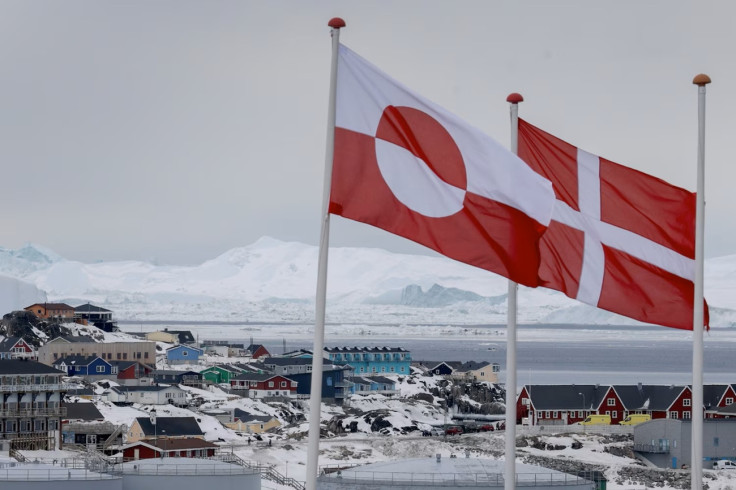
President Donald Trump's renewed interest in acquiring Greenland has ignited international concern, with the White House confirming ongoing discussions regarding a potential purchase.
Concurrently, Danish officials have affirmed a long-standing defense policy, known as 'shoot first,' which authorises immediate counteraction against any invasion without requiring prior authorisation.
During a press briefing at the White House on Wednesday, Press Secretary Karoline Leavitt disclosed that President Trump and his national security advisors are actively exploring strategies to gain control of the strategically significant island.
Leavitt emphasised Greenland's critical role in deterring potential Russian and Chinese aggression in the Arctic region. She stated that military action remains a viable option, underscoring the perceived urgency for United States national security interests.
Denmark, which is responsible for Greenland's foreign policy, has unequivocally rejected any proposal to sell the territory. Greenland's own government has similarly dismissed the notion as preposterous. However, Danish Member of the European Parliament, Hendrik Dahl, has cautioned that the United States might present an 'irresistible offer,' potentially including the promise of independence for Greenland and substantial financial incentives.
The Allure of an 'Irresistible Offer' and Diplomatic Maneuvering
In a recent interview, Dahl elaborated on this possibility, suggesting that such a proposal could sway the Greenlandic population, who possess the constitutional right to self-determination. 'If they make an offer that Greenland can't refuse, then it will be up to the people of Greenland,' he stated to The Times Radio.
Rubio is scheduled to meet with Danish officials next week to address matters concerning the territory. While he has sought to reassure European allies, including France, that an invasion is not being considered, the rhetoric emanating from the White House continues to suggest that military options remain on the table.
The United States initially contemplated the acquisition of Greenland in 1867; at the same time, it pursued the purchase of Alaska. In 1946, President Harry Truman made a formal offer of $100 million, an amount whose details were declassified in 1991.
Denmark's 'Shoot First' Doctrine Amid Invasion Fears
Denmark's military directives, in place since 1952, stipulate that military personnel must engage an invading force immediately, even in the absence of a formal declaration of war. The Danish Ministry of Defence has reiterated the steadfastness of this Cold War-era policy, emphasising its readiness to confront any aggressor.
European leaders are actively coordinating their responses to the evolving situation. French Foreign Minister Jean-Noël Barrot stated that allied nations are unified on the matter and warned that any unilateral action by the United States would be detrimental to the North Atlantic Treaty Organisation (NATO). Barrot underscored the importance of collective action following Rubio's assurances that an invasion is not contemplated.
Germany and the United Kingdom are also engaged in the diplomatic efforts. A German source confirmed close collaboration with Denmark on the issue. British Prime Minister Keir Starmer has reportedly discussed the matter directly with Trump. Former French Prime Minister Dominique de Villepin has characterised any potential invasion as a direct affront to European sovereignty, which could lead NATO member states to perceive the United States as an adversary.
Broader Geopolitical Ramifications and Expert Perspectives
The United States already operates the Thule Air Base on the island under a 1951 treaty, affording it considerable access and influence. Danish Prime Minister Mette Frederiksen has urged Trump to cease his 'threats,' asserting that the existing agreement is adequate.
The Arctic Institute has suggested that Denmark might feel compelled to agree to further defense investments, such as establishing additional US military bases, as a means of appeasing Trump. They predict concessions that could include substantial financial commitments to Arctic capabilities, such as the acquisition of F-35 fighter jets and advanced surveillance aircraft.
Some Republican voices have distanced themselves from the administration's approach. A bipartisan group of lawmakers has asserted that the United States must honor its treaty obligations, even when Denmark expresses reservations. They have described President Trump's strategy as demeaning to allies and lacking in tangible benefits.
Greenland's Prime Minister has firmly rejected the concept of a sale. The territory, with a population of approximately 56,000, highly values its autonomy. While discussions within the White House are ongoing, the European opposition to any potential sale remains resolute.
Recent Developments and Future Prospects
As of Thursday, no formal offer to purchase Greenland has been publicly disclosed, yet underlying tensions persist. Rubio's upcoming meeting with Danish officials presents an opportunity for diplomatic engagement, though the underlying military rhetoric continues to resonate. The New York Times has pointed out that the existing 1951 treaty already gives the US significant leverage, raising questions about the need for further escalation.
Now, in the wake of recent geopolitical developments in Venezuela, allied nations are expressing concern about a potential increase in the United States' assertiveness.
Denmark has committed over $6 billion to bolster its defenses, but further demands may arise. As diplomatic talks loom, the international community awaits the outcome to discern whether Trump's vision for Greenland will materialise or remain an unfulfilled proposition.
© Copyright IBTimes 2025. All rights reserved.
- MOST POPULAR IN World