

US to Livestream First Military Execution in 65 Years as Pete Hegseth Says He Likes WWII 'Win' Mentality
Pentagon confirms firing squad execution at Fort Hood will be public on 3 December
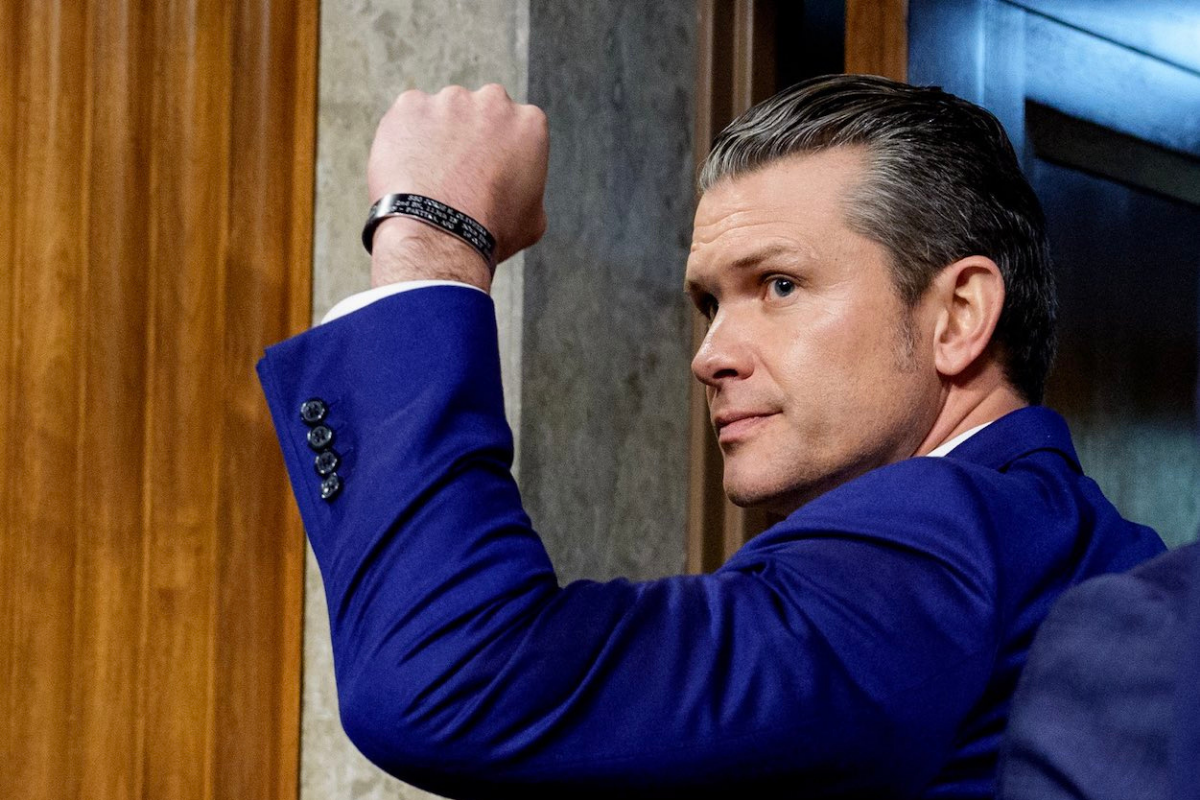
The US military will livestream the firing squad execution of Nidal Hasan, the former Army major convicted of killing 13 people in the 2009 Fort Hood shooting, in a public killing with no modern precedent in the country. It would be the first US military execution in 65 years.
Hasan is scheduled to die at Fort Hood, near Killeen, Texas, at 1:00 p.m. local time on 3 December.
Acting Army Secretary Adam Telle set the date and signed the execution order on 6 October. President Donald Trump approved the death sentence on 2 October on the recommendation of Defense Secretary Pete Hegseth, Pentagon spokesperson Sean Parnell said, writing that judgment day for Hasan had finally come.
Hegseth Points to a World War II Mindset
Hegseth confirmed the public nature of the event in an interview with the conservative outlet Real America's Voice, where he cast it as a message about consequences. He said Hasan is, in his words, 'gonna get a firing squad of soldiers. As it should be.'
He then described the mechanics and the point he wanted them to carry. 'It's going to be soldiers with rifles executing the firing squad. It hadn't been since World War II, since we've done that,' Hegseth said. He added that he likes the mentality the country held during that war, which he reduced to a single word: 'win.' Officials would make sure people could watch, he said, because the public needs to understand there are serious consequences for this kind of crime.
The Pentagon has confirmed the execution will be livestreamed but has not said where. Army regulations updated in 2023 require at least two news media representatives to witness the execution.
A Method the Army Has Not Used Since 1945
The last US military execution of any kind came in 1961, which accounts for the 65-year gap. The last Army execution carried out specifically by firing squad reaches back further still, to January 1945, when Private Eddie Slovik was shot in France for desertion. Of an estimated 50,000 American deserters during World War II, Slovik was the only one put to death.
The firing squad's return fits a wider Trump administration push to restart executions. The administration added the method as a permissible federal option earlier this year, alongside gas asphyxiation and electrocution. Only Idaho, Mississippi, Oklahoma, South Carolina, and Utah authorize firing squads at the state level, according to the Death Penalty Information Center, and South Carolina carried out the nation's first such execution in 15 years in 2025.
⭕️ Defense Secretary Pete Hegseth excitedly explained the decision to livestream the firing-squad execution of Nidal Hasan, the former U.S. Army major who killed 13 people in the 2009 Fort Hood shooting, in an interview with Real America's Voice:"It's going to be soldiers with rifles executing the firing squad. It hadn't been since World War II, since we've done that. … I kind of like the mentality we had in World War II, which was 'win.'"Hasan is scheduled to be executed on Dec. 3 at Fort Hood. The US military last used a firing squad in 1945, and its last execution of any kind was in 1961.Human rights groups have documented public executions in recent years in only a handful of countries, including Iran, Afghanistan, Somalia and North Korea. U.S. ally Saudi Arabia, which executed a record 345 people in 2024, has long beheaded prisoners in public squares.
— Drop Site (@DropSiteNews) October 9, 2026
The public component is rarer still. The country has not held a public execution since 1936, when Rainey Bethea was hanged in Owensboro, Kentucky. Human rights groups have documented public executions in recent years in only a handful of countries, among them Iran, Afghanistan, Somalia, and North Korea. Saudi Arabia, a US ally, executed a record 345 people in 2024 and has long carried out beheadings in public squares.
The 2009 Attack and the Fight Over What to Call It
Hasan, now 56, was an Army psychiatrist stationed at Fort Hood when he entered the Soldier Readiness Processing Center on 5 November 2009. Witnesses said he shouted 'Allahu akbar', Arabic for 'God is great', then opened fire with a handgun. Twelve soldiers and one civilian were killed, and more than 30 other people were wounded. A responding officer shot Hasan, leaving him paralyzed from the waist down, and he now uses a wheelchair.
At his 2013 court-martial, Hasan represented himself and mounted almost no defense. He told the military judge that the soldiers were deploying to what he called an illegal war and that he acted to keep them from going to Afghanistan to kill fellow Muslims. A military jury convicted him on 13 counts of premeditated murder and 32 counts of attempted premeditated murder, and sentenced him to death. He had exchanged communications with Anwar al-Awlaki, the US-born al-Qaeda cleric later killed in a 2011 drone strike, before the attack.
For years the government classified the rampage as workplace violence rather than terrorism, a label that infuriated survivors and victims' families and blocked many from combat-related benefits and the Purple Heart. That changed in 2015, when Congress expanded Purple Heart eligibility to attacks by assailants in contact with and inspired by a foreign terrorist organization. The Army found Hasan met that standard, and the medals were awarded.
Hasan has spent the years since on military death row at Fort Leavenworth, Kansas, one of four condemned inmates held there. The Supreme Court declined to review his court-martial conviction in 2025. Even now, he could still delay the execution, potentially for years, by filing a habeas corpus petition in the civilian federal courts. It also remains unclear whether he will sit or be strapped upright before the firing squad, a detail the Army has not addressed.
© Copyright IBTimes 2026. All rights reserved.