US Takes Over Venezuela, Is Greenland Next? Trump Inner Circle Posts Cryptic Note 'Soon'
US strikes Venezuela, detains Maduro; online post suggesting Greenland annexation prompts diplomatic response

The United States has carried out a military operation in Venezuela that resulted in the capture of President Nicolás Maduro and his wife, and prompted an unofficial, ambiguous post referencing Greenland that has raised diplomatic eyebrows.
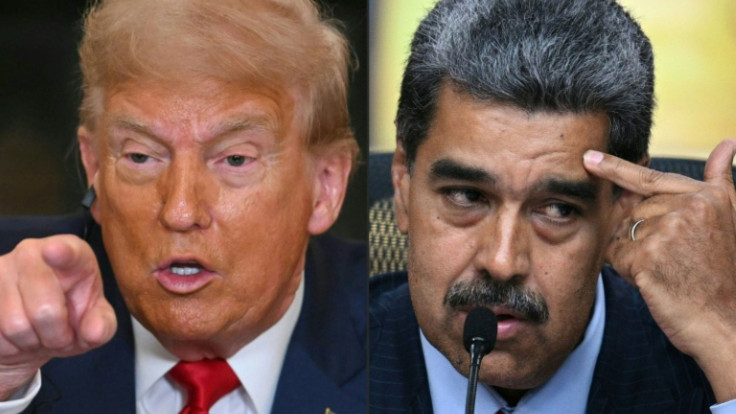
In the early hours of Jan. 3, 2026, US forces executed a large-scale strike and raid on Venezuelan military targets, culminating in the detention of Maduro and Cilia Flores, who were flown to New York to face charges in federal court. President Donald Trump declared that the United States will 'run' Venezuela temporarily in the aftermath of the operation.
US Action in Venezuela: Capture and Control
US President Donald Trump announced that elite American forces had launched a military operation that saw Venezuelan President Maduro and his wife taken into custody and transported to the United States to face criminal charges, including allegations of drug trafficking and narco-terrorism.
Law enforcement sources in the US unsealed indictments against Maduro and Flores, naming them among six defendants in a federal criminal case. The charges include conspiracy to distribute narcotics and ties to gangs that the US government has designated as terrorist organisations.
Hours after the strike, aerial bombardments and helicopter insertions were reported across Caracas, targeting major military facilities. Venezuelan defence complexes, including Fort Tiuna and La Carlota airbase, were hit, with local reporters observing fire and smoke rising from multiple sites.
After being subdued, Maduro and Flores were taken aboard the USS Iwo Jima and then flown to New York's Stewart Airport to face judicial proceedings. The US government's position is that Maduro will be prosecuted under US law for narcotics and terrorism-related offences.
Trump declared that the United States would 'run' Venezuela until a 'safe, proper and judicious transition' of authority is possible, implying a form of temporary governance by US officials or proxies. This marks a historic departure from typical US foreign policy in Latin America.
Cryptic 'Greenland Soon' Post by Trump Ally Stirs Diplomatic Response
On the same day that the Venezuela operation unfolded, a social media post by Katie Miller, wife of senior White House adviser Stephen Miller, drew significant attention. The post featured an image of Greenland overlaid with the US flag and the word 'SOON,' with no official context or clarification.
SOON pic.twitter.com/XU6VmZxph3
— Katie Miller (@KatieMiller) January 3, 2026
Greenland is an autonomous Danish territory with strategic military significance and is a member of the North Atlantic Treaty Organisation (NATO) through the Kingdom of Denmark.
The post quickly prompted a response from Denmark's ambassador to Washington, who emphasised the importance of respecting the territorial integrity of the Kingdom of Denmark and its constituent parts, including Greenland.
Just a friendly reminder about the US and the Kingdom of Denmark: We are close allies and should continue to work together as such. US security is also Greenland’s and Denmark’s security. Greenland is already part of NATO. The Kingdom of Denmark and the United States work… https://t.co/CboKnlKgJL
— Jesper Møller Sørensen 🇩🇰 (@DKambUSA) January 4, 2026
There is no official US government announcement or documented policy asserting plans to annex or militarily occupy Greenland. Longstanding speculation about US interest in Greenland has existed in political discourse, but any suggestion of imminent action remains unsubstantiated in official statements or diplomatic communications.
The ambiguous nature of the 'SOON' post has nonetheless heightened diplomatic sensitivity around US–Denmark relations and Arctic geopolitics, with commentators noting the potential implications for NATO unity and regional security cooperation.
Regional Implications and Strategic Stakes
Venezuela holds the world's largest proven oil reserves, positioning it as a critical geopolitical asset in global energy markets. Control or influence over Venezuela's oil infrastructure could have far-reaching economic and strategic consequences.
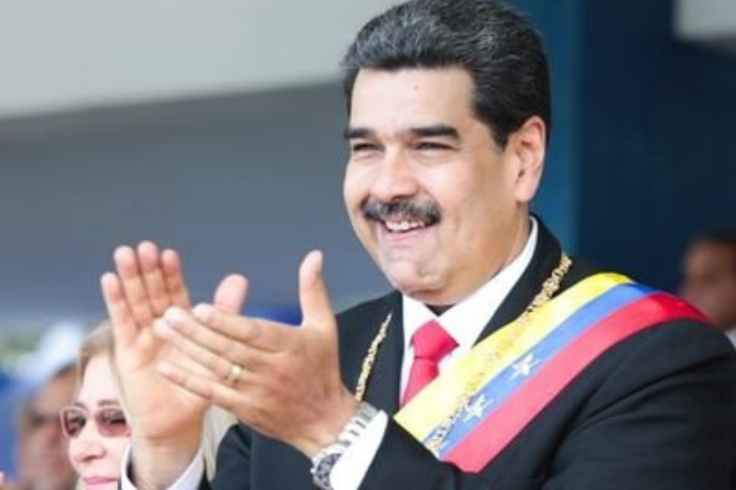
The US has framed its intervention as part of a broader campaign against what it terms 'narco-terrorism,' citing the Venezuelan government's alleged cooperation with organised crime groups such as the Cartel of the Suns. US authorities designated the organisation as a Foreign Terrorist Organisation in November 2025 and have pursued multiple indictments against Maduro and senior officials.
As Venezuelan forces and civil society face uncertainty, global powers are closely monitoring further developments. Discussions over the legality of the US operation, its long-term governance strategy for Venezuela, and the regional implications of American military intervention are set to dominate diplomatic and legal forums in the coming weeks.
The 'Greenland' post remains officially unexplained, yet it adds an unexpected layer to an already complex moment in global geopolitics.
The world watches as unprecedented shifts reshape sovereignty and the rules governing international conflict.
© Copyright IBTimes 2025. All rights reserved.
- MOST POPULAR IN Trending