Walmart Tells 2M Workers AI Won't Take Their Jobs—But Falling Headcounts and Rushed Rollouts Tell a Completely Different Story
Store workers warn that a rushed rollout creates unrealistic timelines, burnout, and safety hazards


Walmart executives have taken to the stage this month to reassure their massive 2.1 million global workforce that the company's aggressive new automation rollout is meant to upgrade their roles, not eliminate them.
However, behind the scenes of the retail giant's latest technological pivot, a starkly different reality is beginning to surface. As internal shifts and corporate data paint a far more unsettling picture, employees are left wondering what their future on the shop floor truly holds.
Walmart is heavily pitching a comforting message to its 2.1 million employees, insisting that artificial intelligence is here to upgrade their daily work rather than replace them entirely. As America's biggest private employer, the retail giant is fully committing to automation, weaving the technology into everything from fashion design to lorry logistics.
Top executives drove this message home to thousands of workers gathered at the Arkansas headquarters campus a few days ago, capping off the event with the announcement that any US staff member can now get officially certified in OpenAI tools, according to a report by the Financial Times.
Automation Fears and Displaced Roles
The retail giant's aggressive shift towards automation lands at a time of widespread anxiety over whether the technology will make human roles obsolete. This fear is backed by recent workplace trends, with outplacement firm Challenger, Gray and Christmas reporting that artificial intelligence was cited as the primary driver behind American corporate lay-offs for three consecutive months.
At the supermarket chain's annual general meeting on Thursday, investors failed in their bid to force management to produce an official report detailing how automation will impact the workforce. The push for internal transparency follows an announcement just last month that hundreds of roles are being cut across the corporate behemoth's technology and product design departments, though bosses stopped short of blaming artificial intelligence for the downsizing.
However, executives at the company's Associates Week gathering—a tradition stretching back to employee picnics hosted by founder Sam Walton—sketched out a vision where automation alters the nature of everyday tasks, rather than shrinking the payroll.
'Technology will power our future. But our associates will lead it.' Donna Morris, Walmart's chief people officer, told a thunderous rally inside a basketball arena on Friday.
The Massive Financial Cost of Tech Innovation
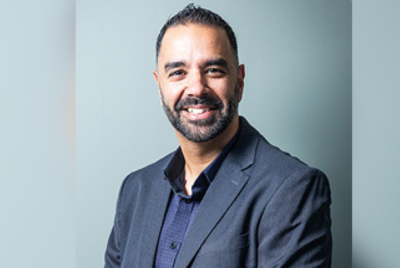
The supermarket chain picked up its automation pace last year by recruiting Daniel Danker from grocery technology firm Instacart. Stepping into the role of executive vice-president for AI acceleration, product and design in August, he received a $44 million (£33.02 million) package last year, inclusive of restricted stock. This substantial payout meant his total compensation surpassed that of outgoing chief executive Doug McMillon.
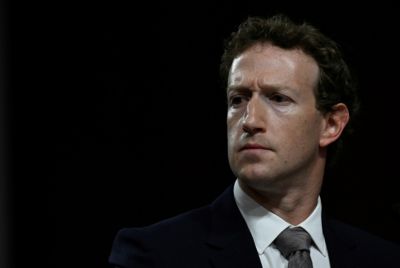
McMillon passed control of the company to incoming chief John Furner, remarking that his successor possessed the unique capability required to guide the business through its technological transition. On Friday, Furner presented an award to a pair of internal engineers who developed a 'vibe coding' system now deployed corporate-wide, a platform allowing hourly workers to write software to resolve operational issues.
'The chorus, the part we come back to time and time again, is that our people make a difference that matters,' Furner told the arena before playing a guitar he had pretend-ordered through Sparky, the company's automated shopping chatbot.
The multinational's global workforce has shrunk marginally over the last five years, a decline that contrasts sharply with a $151 billion (£113.32 billion) surge in revenue to $713 billion (£535.07 billion) in 2025. Addressing the shift, a spokesperson remarked, 'We don't know what the future holds, but we've been a large employer and will continue to be one.'
Operational Rollouts From Logistics to Shop Floor
Management highlighted several areas where the business has already integrated automation into its operations. Lo Stomski, the company's chief talent officer, commended a logistics manager who developed software designed to match drivers with optimal freight loads as they approach the end of their weekly shift.
'It reduces empty miles. It saves the company money, and it helps keep Walmart's commitment to getting drivers home,' Stomski said.
During an interview, Danker explained that automation could transition inventory management, product bundling, and shipping from a reactionary system to a predictive model capable of anticipating sudden spikes in customer demand.
The scope of this rollout stretches from design studios to the shop floor. Management detailed plans to use automated systems to scan customer feedback for product development, while also introducing self-checkout tills sophisticated enough to recognise un-barcoded fresh produce on sight.
Market Success and Worker Backlash
Wall Street's obsession with artificial intelligence has supercharged Walmart's shares, driving the company's valuation past the $1 trillion (£0.75 trillion) milestone—a historic first for a high street retailer. Optimistic market analysts believe this technological edge will allow the business to pull even further ahead of its smaller high-street rivals.
However, that momentum has recently slowed, with the shares retreating after the latest financial update revealed rising overheads for both fuel and staff healthcare.
The defeated investor resolution was backed by United for Respect, a labour advocacy group with a long history of challenging the company's treatment of its workforce. Speaking for the group, Ava Williams—a store worker from Washington state—argued that a rushed deployment of automated tools was forcing staff into unrealistic schedules, leading to compromised standards, workplace injuries, and burnout.
'We are not asking Walmart to stop using technology,' Williams said. 'We're asking for technology that works for us, not against us.'
However, staff members put forward by management offered a starkly different perspective. Darlene Lane, a 43-year veteran of the business who recalled meeting the founder personally, remarked: 'I think anybody who has read anything about Mr Sam knows that he was an innovator and a maverick, and I think he would embrace this 110 percent.'
© Copyright IBTimes 2025. All rights reserved.
- Recommended For You