The $145 Billion Lie? Zuckerberg's Leaked Town Hall Audio Exposes Massive AI Failures After Mass Layoffs
Leaked audio from a Meta town hall exposes AI challenges and credibility issues following mass layoffs.

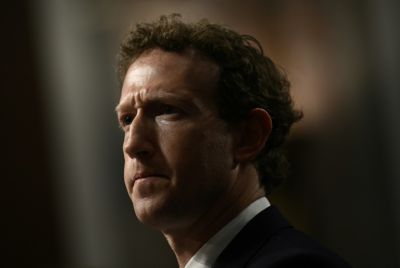
Mark Zuckerberg told employees at a closed-door town hall in California on 2 July 2026 that Meta's AI push 'hasn't really accelerated in the way that we expected' in the past four months, according to leaked audio of the meeting, exposing what critics now call a $145 billion AI lie built on mass layoffs and brutal internal restructuring.
The admission came less than two months after Meta laid off around 8,000 staff and reoriented the company around artificial intelligence, with Zuckerberg declaring in a May memo that 'AI is the most consequential technology of our lifetimes' and that the firms that lead would 'define the next generation.' He framed those cuts as the painful but necessary price of winning the AI arms race. Now the leaked audio suggests the promised acceleration has, at best, stalled.
In the recording, Zuckerberg told remaining staff that Meta's AI agent work over the preceding four months had not sped up as leadership had hoped. He conceded the sweeping reorganisation that followed the layoffs was not as 'clean' as planned and that Meta's new structure and bets 'haven't come to fruition yet.' He did try to steady nerves, saying he still expected 'meaningful benefits' within three to six months.
AI Failures and the $145 Billion Question
The company has guided capital expenditure for 2026 in a range of $125 billion to $145 billion, more than double the roughly $72.215 billion it spent in 2025. The bulk of that is pointed straight at AI.
In April, Meta signed an expanded AI infrastructure deal with cloud specialist CoreWeave worth about $21 billion through 2032. That followed a separate tie-up in February around a 6‑gigawatt AMD GPU buildout, giving Meta a firehose of compute to train and run its models.

On paper, that should be rocket fuel. The company is now preparing to rent out some of that capacity to others, in a move likened to SpaceX flogging spare launch slots. Bulls argue that this is a smart way to monetise excess infrastructure and keep options open, especially if AI workloads fluctuate.
If Meta can afford to rent out large chunks of compute, they argue, it may mean the company cannot yet productively deploy the resources it already has on Instagram, Facebook and WhatsApp. That raises an awkward question about diminishing returns, if AI 'hasn't really accelerated,' what exactly is $145 billion buying?
Investors are not thrilled. Meta shares hover around $584, down roughly 11.5% year to date and about 18% over the past 12 months, underperforming many other megacap tech names. The leaked town hall audio exposes not just AI failures in execution, but a widening credibility gap between the swagger of the May layoff memo and the reality inside the building.
Layoffs, Protected AI Teams and The Human Cost
It can be recalled that in May 2026 Meta notified around 8,000 employees, roughly 10% of its then 80,000 strong workforce, that their jobs were gone. According to reports from May, teams in integrity, cybersecurity, content design and Reality Labs were hit hardest. AI infrastructure, foundation models and AI monetisation units were largely protected.
On top of the cuts, about 7,000 staff were reshuffled into newly created AI‑focused groups and another 6,000 planned hires were cancelled. As Zuckerberg told staff at the time, 'Success isn't a given.' Chief financial officer Susan Li added on the first-quarter earnings call that executives 'don't really know what the optimal size of the company will be in the future.'
In the United States, laid-off workers received 16 weeks of severance plus two additional weeks for every year of service, along with 18 months of extended health cover. On paper, that looks relatively generous. It has not stopped the mood souring.
One Meta policy employee told Wired that US staff felt they were 'being used to train the AI models that will replace them.' Internal review site Blind shows Meta's employee rating down about 25% from its peak in the second quarter of 2024, with culture scores sliding 39% and median total compensation dropping by almost $30,000.
They suggest something more corrosive, the sense that the people who built Meta's empire are being swapped for machines and a smaller pool of highly prized AI specialists, and that the trade might not even be paying off yet.
Meta's AI Defence and a Bet on 'Watermelon'
Meta's own AI leadership is pushing back on the idea that the leaked audio proves a systemic failure. Chief AI officer Alexandr Wang, who has become the public face of the company's AI push, took to X to argue that Zuckerberg's remarks were being ripped out of context.
Wang said the CEO had been talking about the broader industry's progress on 'agentic' AI, a buzz phrase for systems that can autonomously carry out tasks. While he acknowledged Meta had lagged some rivals, he teased a major update to the company's Muse Spark model, promising 'big improvements in coding and agentic capabilities' and saying these would make it more competitive with other leading systems.
He also talked up Meta's next large model, code‑named Watermelon, and claimed it would be roughly on par with OpenAI's 5.5 model.
Those comments have not been independently verified. If accurate, closing that performance gap would help ease investor nerves that Meta is burning insane amounts of cash to remain a step behind the true frontier labs.
For now, though, Zuckerberg's own words remain more memorable than Wang's defence. When a CEO who has just justified mass layoffs on the altar of AI acceleration admits that acceleration 'hasn't really' materialised, people notice.
Wider Tech Layoffs and a Risky Clock
Meta is not alone in wielding the axe while trumpeting AI. Layoffs.fyi has counted about 110,000 job cuts across 137 tech firms so far in 2026, following around 125,000 in 2025. Goldman Sachs estimates that AI‑related automation is contributing to more than 16,000 payroll cuts a month across the industry.
Cisco reportedly cut about 4,000 roles in the same week Meta swung its own hammer. Microsoft has offered buyouts to around 7% of its US workforce. The difference is that Zuckerberg's leaked audio appears to be one of the first times a major tech boss has openly conceded that the supposed AI acceleration is not keeping pace with the rhetoric or the restructuring.
Reality Labs, the division behind its metaverse and hardware dreams, booked a $4.03 billion loss in the first quarter of 2026. The core advertising engine still looks strong, with revenue rising 33.08% year on year, but expenses climbed even faster at 35%.
All of which leaves Meta running against the clock it set for itself. Zuckerberg told staff he expected meaningful benefits from the AI reorganisation within three to six months. If that window slips, the company will still be on the hook for enormous capital commitments, a bruised workforce and a stock that has already given back roughly a fifth of its value.
At this point, the question is not just whether the $145 billion AI story was a lie, but how many more people will be asked to pay for it.
© Copyright IBTimes 2025. All rights reserved.
- Recommended For You