3I/ATLAS Interceptor: How Starship Boosters Could Reach the Edges of Our System
To chase 3I/ATLAS, scientists are asking space agencies to embrace a blistering, sun-skimming sprint and the long patience that comes with it.

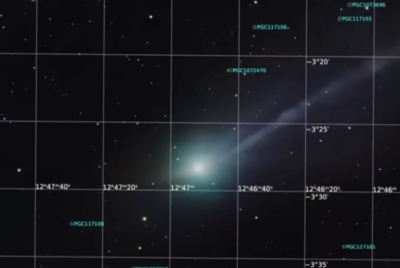
The picture is almost absurd: a probe falling toward the sun, diving into the corona, then lighting solid-rocket boosters at its closest approach on purpose. It is the kind of mission profile that sounds like a dare until you notice the math underneath it, and the name of the prize: 3I/ATLAS, the interstellar comet already fleeing our neighborhood.
Here is the gist, without the hand-waving: researchers argue a launch in 2035 could still catch 3I/ATLAS by 2085, roughly 732 astronomical units from the sun about 68 billion miles (109 billion kilometers) from our star, or 732 times Earth's distance. Voyager 1, after a comparable stretch of flight time, sits around 170 AU, which is a useful reminder of how brutally large the outer solar system really is.

Chasing 3I/ATLAS After the Bird Has Flown
The engine trick at the heart of this plan is the Oberth effect, a staple of spaceflight that reaches extreme levels when performed near the sun. It is named after Hermann Oberth, an Austro–Hungarian rocket scientist who later became a naturalised German and worked for the Nazis; he outlined the concept in 1929 in his book Wege zur Raumschiffahrt.
In simple terms, a spacecraft falls deep into a gravity well, gains speed, and then fires its engines at periapsis (closest approach), so that the same propellant produces a greater change in velocity (delta‑V) than it would elsewhere. T. Marshall Eubanks, a former NASA scientist now chief scientist at Space Initiatives Inc. and coauthor of the new paper, told Space: 'Pretty much every launch uses the Oberth effect... however, I cannot find a record of a straight-out Oberth manoeuvre of the type we propose, which is a major rocket burn at closest approach in a flyby.'
The sun is the ultimate gravity well, but it is not a forgiving venue. To achieve at least 5.1 miles per second (8.4 kilometres per second) of delta‑V, the plan calls for a solar Oberth manoeuvre at 3.2 solar radii from the Sun's centre, with the Sun's radius given as 432,450 miles (696,000 kilometres), equivalent to roughly 0.015 AU from the sun.

NASA's Parker Solar Probe showed this neighborhood is not purely theoretical, reaching 0.04 AU on its closest approach in 2023, and enduring temperatures of 2,500–2,600°F (1,370–1,400°C). Adam Hibberd the lead author, an Initiative for Interstellar Studies member, and the creator of Optimum Interplanetary Trajectory Software points to a 2015 Keck Institute design study that used a carbon-composite heat shield (Parker-style) with added aerogel layers for extra insulation. 'In principle, a similar heat shield could be used for the mission to 3I/ATLAS,' Hibberd said.
Getting the trajectory right is where the plan becomes beautifully counterintuitive. Hibberd's simulations suggest 2035 is the sweet spot, and the route begins by going out to Jupiter first, using its gravity to shed enough speed to drop sunward for the close solar swing. The logic is blunt: any spacecraft leaving Earth inherits Earth's roughly 18.6 miles per second (30 kilometers per second) orbital motion, and that can make a direct fall toward the sun too fast to get properly close.
Parker solved that problem with seven Venus flybys over seven years, but 3I/ATLAS is not waiting politely; Space quotes it racing away at 38 miles per second (61 kilometers per second). So the interceptor would sprint to Jupiter in about a year, then turn back toward the sun for the do-or-die burn.
Why 3I/ATLAS Is Worth the Trouble
The proposed spacecraft mass is about 1,100 pounds (500 kilograms), roughly comparable to NASA's New Horizons, with the warning that the heat shield would eat into that mass budget (Parker's heat shield is cited at 160 pounds/73 kilograms). The real muscle comes separately: two or three solid-rocket boosters fired at perihelion, with the authors suggesting that several Starship Block 3 vehicles each with nine Raptor 3 engines could be attached in low Earth orbit before departure. Eubanks says the solar Oberth maneuver would make the interceptor the fastest spacecraft ever, 'by a good measure.'
Even then, the chase is measured in decades, not press cycles. With a delta‑V of 5.19 miles per second (8.36 kilometers per second), the mission could manage a 3I/ATLAS flyby after 50 years; push that to 6.43 miles per second (10.36 kilometers per second) and a rendezvous comes in 30 years, and Space notes NASA's Dawn spacecraft achieved 6.84 miles per second (11 kilometers per second) of delta‑V after separating from its booster. Because both target and probe would be screaming through space, the encounter would be a flyby, not an orbit.
And yes, there is an awkward question humming under the romance: why chase this particular object when better opportunities may be coming. Space notes astronomers expect the Rubin Observatory now beginning science operations in Chile to find, on average, one interstellar comet per year, a sharp jump from the three identified so far. 'We'll just have to see,' Eubanks said, musing that once a handful of interstellar objects are known, 3I might feel 'commonplace' or, perversely, 'different and unusual' enough to justify the obsession.
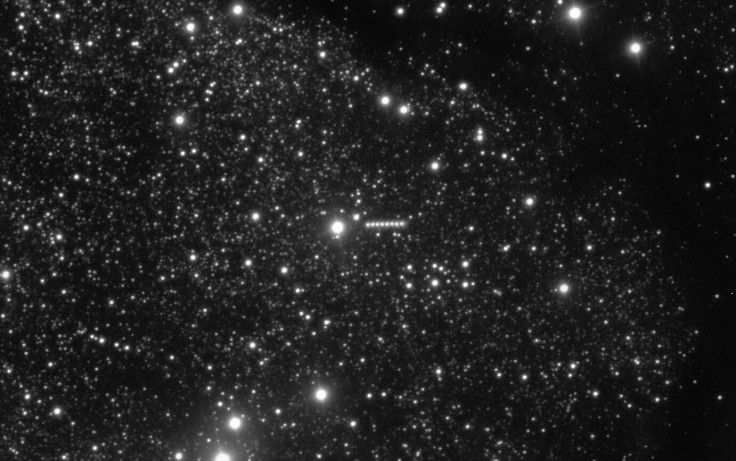
Hibberd, for his part, would rather have chased 1I/'Oumuamua, calling it the more puzzling object, and he is already developed an 'Oumuamua interceptor concept called Project Lyra though he thinks that window has closed. He is also refreshingly skeptical about using the sun-skimming maneuver as a default: 'For future interstellar objects, a solar Oberth maneuver should be avoided if possible... There are better mission architectures, using a probe already in orbit in space, which would intercept an interstellar object around perihelion in much less time, rendering an Oberth unnecessary.'
That, incidentally, is exactly the philosophy behind ESA's Comet Interceptor, which ESA says was adopted in June 2022 and is planned for a dual launch in 2028/29 before parking in a halo orbit around the L2 point to wait for a suitable target. ESA's own mission plan allows for waiting at L2 for up to five years, then cruising six months to three years to the eventual target whenever it shows.
Meanwhile, the Hibberd–Eubanks–Hein study sits as an arXiv preprint, unapologetically pitching a mission architecture designed for the messy reality of late discovery: catching 3I/ATLAS 'after the bird has flown.'
© Copyright IBTimes 2025. All rights reserved.
- Recommended For You