

Airbnb CEO Brian Chesky Warns 2 Types of Workers 'Will Not Survive' AI: Are You at Risk?
Chesky says managers should combine leadership with practical expertise, while employees who resist AI risk falling behind colleagues
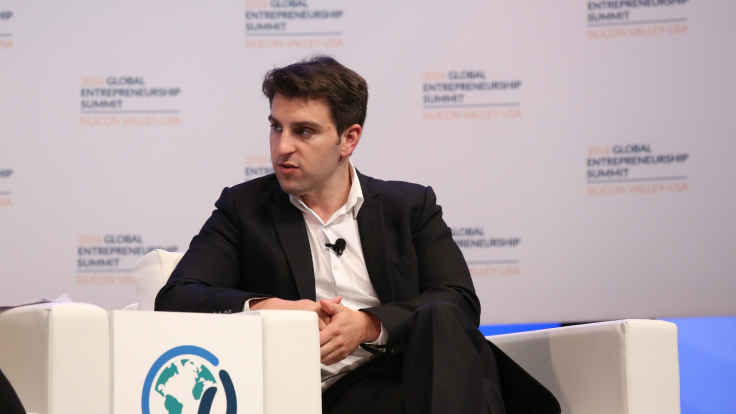
Airbnb chief executive Brian Chesky has warned that two types of workers face a growing risk in the age of artificial intelligence (AI): managers who only manage people and employees who refuse to adapt to new technology.
Chesky argued that workers who embrace AI could gain an advantage over those who resist it. His warning focused on adaptability and the changing role of managers, rather than predicting that AI alone would eliminate jobs.
His warning comes as technology companies reconsider traditional management structures. On 5 May 2026, Coinbase announced plans to cut about 14 per cent of its workforce and said every leader would also need to contribute as an individual contributor.
Block chief executive Jack Dorsey has separately said he would build a company with no management hierarchy if starting one today.
Chesky Says Managers Must Do More Than Manage
Chesky described 'pure' people managers as leaders who oversee headcount, run recurring meetings, conduct one-to-one check-ins or act as therapists for employees without contributing directly to the work. He said these managers would have little value going forward if they failed to bring practical expertise to their teams.
Instead, Chesky wants managers to become 'hybrid people managers' or 'manager ICs', combining leadership responsibilities with the work of individual contributors. That means staying involved in product development, technical decisions and the substance of projects rather than relying solely on supervision.
Chesky did not dismiss relationship-building or team support. Check-ins and team dinners still matter, he said, but managers must pair those activities with direct involvement in their teams' work.
Jony Ive Offers a Model for Hands-On Leadership
Chesky pointed to Jony Ive, Apple's former chief design officer, as an example of how technical expertise and people management can coexist. He said Ive combined deep design knowledge with leadership rather than treating the two as separate disciplines.
The approach reflects Chesky's view that managers should understand the work their teams produce, not simply oversee the people responsible for it.
Chesky also warned that employees who resist AI tools could be more vulnerable than those willing to learn. He argued that people with a growth mindset could adapt as AI tools become easier to use.
Airbnb said AI tools wrote about 60 per cent of the code its engineers produced in the first quarter of 2026. As AI takes on more coding tasks, developers' value increasingly depends on knowing what to build and how to use the tools effectively. Project leaders, meanwhile, may find it harder to justify roles focused on monitoring schedules and conducting routine check-ins.
Coinbase and Block Rethink Middle Management
The shift is already reflected in decisions at other technology companies.
Coinbase announced plans to eliminate all 'pure manager' roles while cutting its workforce by 14 per cent. Block chief executive Jack Dorsey has also argued that companies do not need a permanent middle-management layer, following layoffs at the payments firm.
Nvidia chief executive Jensen Huang has similarly argued that workers risk losing out to colleagues who use AI effectively. Netflix co-chief executive Ted Sarandos has described AI as a tool for creators, while arguing that good content still requires writers and actors.
© Copyright IBTimes 2026. All rights reserved.