'We Have To Dump the Fuel': Alaska Airlines Passenger Reveals Exactly What Happened During Mid-Air Emergency
Passengers recount emergency landing after mechanical issue prompts fuel dump over Atlantic
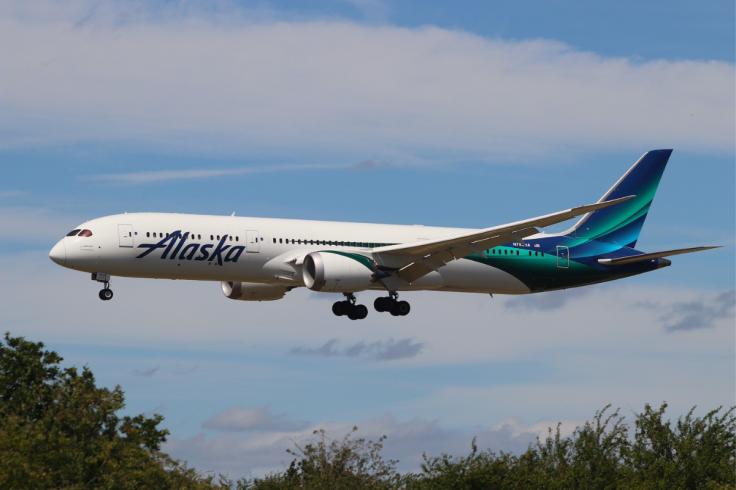
An Alaska Airlines flight packed with hundreds of passengers was forced to dump fuel over the Atlantic and turn back to Rome after declaring a mid-air emergency on Friday, 19 July, with travellers recalling crew telling them: 'We have to dump the fuel' as liquid streamed from the wings into the night sky.
Flight AS181, Alaska Airlines' daily long-haul service between Rome's Fiumicino Airport and Seattle-Tacoma International Airport, left Rome at about 16:22 local time on a Boeing 787-9 Dreamliner, registered N780HA.
Less than two hours after take-off, tracking platforms including FlightAware and FlightRadar24 recorded the aircraft executing a U-turn just off the south-west coast of England, then descending to around 25,000 ft.
The crew set the transponder to squawk 7700, the universal emergency code, before flying back over England and towards France on tracks consistent with a fuel-dump procedure.
'We Have To Dump the Fuel': Passengers Recall Onboard Announcements
Comment
by u/bobdersaufer from discussion
in flightradar24
One passenger said cabin crew gave a brief explanation: 'They said "you may have noticed we turned around, we are [having] a mechanical issue and are heading back to Rome. We expect to have a safe landing back in Rome."'
The same poster said crew later told passengers: 'If you look out your windows and see stuff coming out of the wings, it's just fuel and nothing is wrong,' with a flight attendant explaining, 'we have to dump the fuel over water, we cannot dump it over land.'
Comment
by u/bobdersaufer from discussion
in flightradar24
Another passenger said they were frustrated the jet did not land closer to their position, but added: 'any flight you can walk away from is a good one.'
A third traveller claimed there had been an issue with a 'rear compressor', which they said explained the descent to 25,000 ft and later to 20,000 ft near Nice 'to not take any risks.' These accounts are unverified, and Alaska Airlines has not confirmed the nature of the mechanical problem.
Comment
by u/bobdersaufer from discussion
in flightradar24
Twelve-Hour Flight Cut Short Before Atlantic Crossing
The 787-9, configured with around 300 seats, normally spends about 12 hours crossing Europe, the Atlantic and North America on this route. On this occasion it was in the air for just over five and a half hours, never starting its ocean crossing before the crew turned back.
The aircraft eventually returned to Rome Fiumicino, touching down at about 21:15 local time, with no injuries reported.
Aviation site AirLive reported, citing its own information, that the diversion was linked to engine vibrations and that the aircraft was parked on a remote stand away from the terminal. Alaska Airlines did not respond to questions sent and has yet to issue a detailed public explanation.
Recent Turnbacks Highlight Transatlantic Disruptions
The incident is part of a broader run of recent transatlantic flights turning back before crossing the ocean.
In March 2025, an American Airlines Boeing 737-800 diverted to Denver after reporting engine vibrations, then caught fire on the taxiway, prompting a Mayday call and evacuation that left twelve passengers with minor injuries.
On 13 July this year, Virgin Atlantic Flight VS135 from Heathrow to Orlando circled off the Irish coast for around two hours before returning to Heathrow due to what the airline called 'a minor technical issue.'
On 30 May, a London to Montego Bay flight made a U-turn over the Atlantic after an engine failure and diverted to Ireland, where 246 passengers and 13 crew were met by emergency services.
Why Long-Haul Jets Dump Fuel Before Emergency Landings
Long-haul aircraft are typically too heavy to land safely immediately after take-off with full tanks, so crews must burn or dump fuel to get below the Maximum Landing Weight, the limit above which the structure could suffer damage.
It is standard procedure, though watching fuel stream from the wing at 25,000 ft can be alarming for those on board. What caused the suspected engine vibration on AS181 is still to be fully explained.
© Copyright IBTimes 2025. All rights reserved.
- Recommended For You