

AI Bubble 'Bursting' in China's Stock Market, Tech Valuations Collapse Under Demand Concerns
The warning comes as China's STAR50 index falls 40% in under four months, while earlier discounts and rising memory costs show conflicting pricing pressures
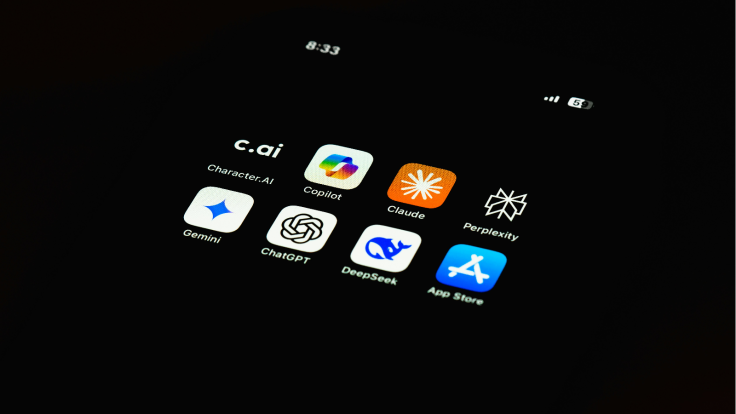
China's chipmakers and artificial intelligence (AI) suppliers face an eventual price war, a Shanghai fund manager has warned, as a sharp technology share sell-off intensifies concerns about an AI bubble.
'There's no exception,' said Wang Zhuo, a partner at Shanghai Zhuozhu Investment Management. 'All bubbles inevitably burst,' he added. Wang told Reuters that chipmakers and AI suppliers would ultimately face the same price competition as other Chinese manufacturers. His comments appeared in a report published on 26 October 2026.
Meanwhile, fund manager Dong Baozhen said that people now 'see the bubble bursting'.
China's Technology Sell-off Erases $480 Billion
According to the Reuters report, the mainland STAR50 index had fallen 40% in less than four months, wiping out approximately $480 billion (£359.71 billion) in market value.
The retreat interrupted a two-year rally and complicated Beijing's efforts to encourage households to invest in equities. China's blue-chip index had also fallen about 20% from its June high.
Traders cited expensive valuations, tax bills and fears that the US or other countries could restrict Chinese equipment in data centres. Reuters reported that there was no single clear trigger for the sell-off.
Even after the decline, the STAR50 traded at around 100 times trailing earnings, compared with nearly 250 at its peak. Reuters put the Nasdaq 100's corresponding multiple at about 30.
AI Services Already Have a History of Discounts
Competition over AI pricing predates the latest market reversal.
Reuters reported on 21 May 2024 that Alibaba and Baidu had reduced prices for large language models (LLMs), the systems behind many generative AI products.
Alibaba's cloud business cut prices by up to 97% across a range of Tongyi Qwen models. Baidu responded by making its Ernie Speed and Ernie Lite models free for business users.
ByteDance had also announced that its main Doubao model would cost business users 99.3% less than the industry average. Reuters reported that the competition threatened suppliers' margins as developers sought to earn revenue from business customers.
Those changes concerned access to AI models through cloud services. They provide an earlier example of suppliers competing on price, while Wang's warning extends to both AI suppliers and chip manufacturers.
Memory Shortages Have Pushed Some Chip Prices Higher
Recent chip pricing has also reflected supply constraints.
In a separate report on 10 September 2026, Reuters said Huawei and Cambricon had increased prices for AI processors as high-bandwidth memory (HBM) became more expensive.
HBM stacks memory chips vertically, allowing processors to access large amounts of data quickly. It is a key component in AI computing.
Sources told Reuters that Huawei's indicated price for its Ascend 950DT accelerator card had risen by 20% to 50% from quotations two months earlier, depending on contract terms.
Cambricon's planned next-generation processor had reportedly been repriced 20% to 30% higher. Smaller competitors MetaX and Iluvatar CoreX had made similar increases.
Reuters linked the increases to a worldwide memory shortage and Chinese manufacturers' efforts to build domestic alternatives to Nvidia's advanced processors.
That reporting describes higher hardware prices amid component-cost pressures. It does not contradict Wang's prediction: prices can rise when components are scarce, even as manufacturers face the prospect of stronger competition and lower margins in the longer term.
The central question is whether Chinese AI suppliers and chipmakers can sustain their profitability as competition intensifies. Wang's comments highlight that risk, but the timing and extent of any future price war remain uncertain.
© Copyright IBTimes 2026. All rights reserved.