Firm Deletes Receptionist Job to Burden 11 Workers Under Deceptive 'Shared Ownership' Label
A company's decision to distribute a receptionist's duties among 11 employees raises questions about workload and efficiency
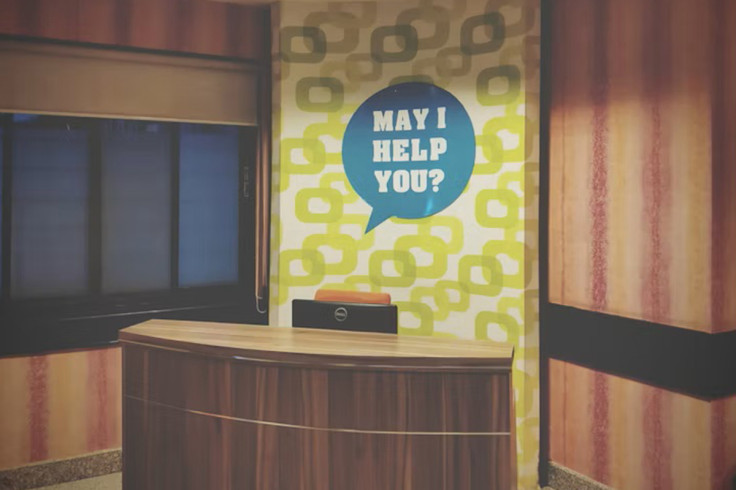
A company has sparked online debate after reportedly deciding not to replace a receptionist who quit, instead distributing the entire role among 11 existing employees under the seemingly polished label of 'shared ownership.'
The bizarre workplace arrangement was described by an employee who said management initially gave staff the impression that a new receptionist would eventually be hired. Instead, the company created an Outlook calendar titled 'front desk coverage' and divided the former receptionist's responsibilities between the team.
Receptionist's Entire Job Was Split Between 11 Workers
According to the employee, each of the 11 workers is now expected to cover the reception desk twice a week for around two hours at a time.
During those shifts, employees are responsible for answering the door, accepting deliveries, transferring telephone calls and dealing with visitors who arrive at the workplace.
The problem, the employee explained, is that none of their existing responsibilities disappeared when the additional duties were introduced. They continued to have the same workload, deadlines and expectations associated with their actual positions, while also being required to take turns performing reception duties.
The arrangement effectively means that a job previously handled by one person has been absorbed into the schedules of 11 other employees.
Employees Still Had Their Original Work To Complete
The employee admitted that there is often very little activity at the front desk. During their two-hour shifts, they said they would sometimes have a livestream playing on another monitor or play games on their phone while waiting for the occasional call, delivery or visitor.
That detail might make the arrangement sound harmless at first, but it also highlights the underlying issue.
Even if the reception desk is quiet for most of the shift, workers still have to remain available to perform the duties when something happens. They cannot simply leave the desk unattended because their primary jobs continue to demand their attention.
The result is a workplace system where 11 employees collectively provide coverage for a position that previously existed as a dedicated role.
Management Decided the 'Trial' Was a Success
The situation took an even more frustrating turn during a Friday meeting.
According to the employee, management congratulated the staff and announced that the arrangement had worked so well during its trial period that the company had decided the receptionist position no longer needed to be filled.
Management reportedly referred to the arrangement as 'shared ownership.'
For the employee who described the situation, however, the conclusion was obvious: the trial succeeded because 11 people had effectively absorbed one person's job.
What management viewed as evidence that the receptionist role was unnecessary could instead be interpreted as evidence that the workload could be distributed across a much larger group of workers without immediately disrupting operations.
What Does 'Shared Ownership' Actually Mean Here?
The phrase 'shared ownership' gives the arrangement a collaborative-sounding quality, but employees may reasonably question whether it represents genuine teamwork or simply a redistribution of labour.
A dedicated receptionist's responsibilities have not disappeared. Someone still needs to answer calls, receive deliveries, open the door and deal with unexpected visitors. The difference is that the company is no longer paying one person specifically to perform those duties. Instead, the cost is effectively spread across 11 existing employees in the form of their time and attention.
This type of arrangement can also be difficult to measure because the additional work may not appear on a traditional workload report. An employee spending two hours at reception twice a week may technically have the same job title and salary, even though some of their working time is now being spent performing another position's duties.
© Copyright IBTimes 2026. All rights reserved.
- Recommended For You