

The Only Place in the Caribbean Where the First People Never Left
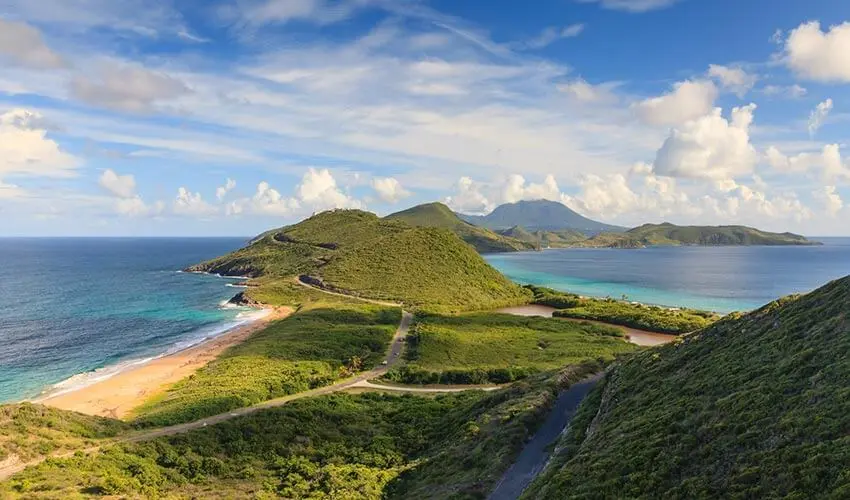
On Dominica's east coast, roughly 3,700 acres of communally held land make up the Kalinago Territory, home to one of the last surviving pre-Columbian Indigenous communities in the Caribbean.
The Kalinago elect their own chief, hold their land collectively rather than as individual private property, and govern eight villages spread across the territory's hills and coastline. In some parts of the Caribbean, Indigenous populations were displaced entirely or absorbed so thoroughly that communal, self-governing territory no longer exists.
Here, it still does.
A People Who Predate the Name of the Island They Live On
The Kalinago called this island Waitukubuli, 'tall is her body,' long before Christopher Columbus sighted it on a Sunday in 1493 and named it after the day of the week in Latin. That naming asymmetry says something about how the history usually gets told: the arrival gets the credit, the people who were already there become a footnote.
Dominica's Kalinago complicate that pattern simply by still being here, on land the British colonial government formally recognised as a reserve in 1903, after generations of resistance that made Dominica the last Caribbean island Europeans managed to fully colonise.
The territory today holds an estimated 3,000 people, a number that has fluctuated across different surveys and counts over the decades but has remained a real, living population rather than a historical remnant.
They elect a chief every five years, maintain their own council, and continue craft traditions (basketry, pottery, and canoe-building among them) that get passed down rather than reconstructed for display.
The Kalinago Barana Autê cultural village, built in the early 2000s, functions as both a working craft centre and a place where visitors can see those traditions practised.
Representation That Goes Beyond a Cultural Stop on an Itinerary
The Kalinago's presence in Dominica extends into the country's government as well.
Hon. Cozier Frederick, a Kalinago member and the elected representative for the Salybia constituency, which includes the territory, is currently the country's Minister for Environment, Rural Modernisation, Kalinago Upliftment and Constituency Empowerment.
Frederick has spoken publicly about his own Kalinago heritage as central to his environmental work, framing Indigenous stewardship of the land as inseparable from the island's broader push toward sustainability. It's a detail that matters for anyone tempted to treat the Kalinago Territory as a stop on a tour rather than a living, self-governed part of the nation.
That distinction is worth holding onto. It would be easy, and wrong, to describe the Kalinago Territory the way a lot of travel writing describes Indigenous communities: as scenery, or as a culturally enriching photo opportunity slotted between other stops on an itinerary.
The Kalinago are not a preserved artefact of pre-colonial Dominica. They are a governed, self-organising community holding land collectively in the twenty-first century, dealing with the same practical questions any small, rural population faces about economic opportunity, land use, and how much of their own story gets told by outsiders versus by themselves.
What the Territory Actually Represents
The reason the Kalinago Territory matters to Dominica's broader identity isn't primarily aesthetic. It's structural. Dominica can point to a living, communally governed Indigenous territory with its own elected leadership and a member of national cabinet drawn directly from that community.
That's not a detail that fits neatly into a 'hidden gem' framing, and it shouldn't be forced into one. It's a fact about how this specific island's history unfolded differently than its neighbours', and about a community that is still actively shaping what comes next rather than simply having survived what came before.
For a traveller drawn to cultural depth over curated experience, the honest version of this story isn't that Dominica offers access to an ancient culture. It's that the Kalinago never left, never stopped governing themselves, and are still deciding, in real time, what their own future on this land looks like.
That future includes real, ongoing questions. Economic opportunity within the territory remains limited compared to the rest of the island, and some Kalinago voices have said publicly that their community's concerns aren't always represented as fully at the national level as they should be, even with a Kalinago minister in cabinet.
Those are legitimate, unresolved conversations, not footnotes to a heritage story.
A visitor who spends time in the territory, at the cultural village or simply talking with people in one of the eight villages, where the greeting usually comes before the questions, is stepping into a community actively working through what self-governance and economic survival look like together, not observing a finished exhibit of how things used to be.
What Visitors Tend To Remember About the People
Something else stays with visitors longer than the rainforest photographs, and it is harder to put in a brochure. Dominicans are, as a rule, easy with strangers. Ask for directions in Roseau and you are likely to get the directions plus an opinion about which route is better at that hour, and sometimes a name to mention when you arrive.
Drivers lift a hand off the wheel to greet other drivers on the roads through the interior. In the Kalinago villages, people call out good morning to anyone walking past, visitor or not, because that is what you do when someone passes your house.
The effect is hard to stay neutral about. Politeness here is not a service standard somebody trained for; it is closer to a habit of attention, and it is catching.
Travellers who arrive brisk tend to leave slower, greeting shopkeepers they will never see again, thanking the person who held a door, asking after somebody's mother.
Plenty of destinations advertise friendliness. Dominica's version is the ordinary kind, offered without ceremony and without an angle, and it is the reason a good number of first-time visitors start planning a second trip before the first one ends.
© Copyright IBTimes 2026. All rights reserved.