

Donald Trump's Attacks Are a 'Confession' Masking His Own 'Delusional Framework', Niece Mary Claims
Mary Trump links her uncle's attacks on rivals to projection, family history and a failure to acknowledge his flaws
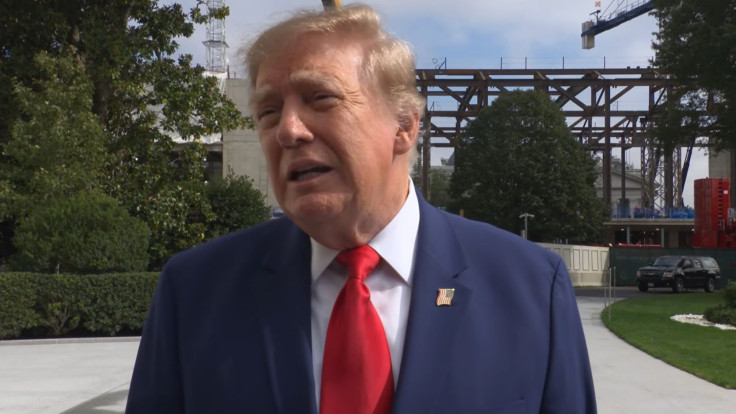
President Donald Trump's attacks on opponents amount to a 'confession' of failings he cannot acknowledge, his niece Mary Trump claimed in her Friday newsletter, arguing that his 'delusional framework' is intended to convince himself.
Trump has spent years describing opponents as crooked, stupid and criminal. Mary, a clinical psychologist and author of a bestselling book about her family, linked those attacks to a defence mechanism she believes has roots in his upbringing.
She argued that the president was not chiefly trying to persuade the country to accept his view of events. 'He is really just trying to convince himself,' she wrote.
Why Mary Calls Donald Trump's Accusations Projection
Mary described the behaviour as projection, in which people attribute to others characteristics they cannot accept in themselves. She distinguished it from hypocrisy because, she explained, the process usually occurs 'outside of conscious awareness.'
That distinction underpins her claim that 'every accusation Donald makes is really a confession.' In her interpretation, the insults reflect shortcomings he cannot recognise as his own.
'When Donald says that somebody is stupid, has a low IQ, or is corrupt, criminal, or traitorous, he is literally talking about himself,' she wrote. 'He just isn't aware of it because acknowledging those shortcomings in himself is unthinkable to him.'
Mary linked that inability to recognise personal failings to the qualities she argued he needs to believe he possesses. Accepting the accusations as descriptions of himself would threaten that view, she contended.
'To acknowledge them would be to admit that he is nothing he claims to be: smart, strong, sophisticated, and successful,' she wrote.
The Family History Behind Mary's View of Donald Trump
Mary traced the pattern to her grandfather Fred Trump's division of people into winners and losers. She wrote that he had 'deep seated contempt' for those he regarded as losers and placed her father, Fred Trump Jr., in that category.
Fred Trump Jr., Mary's father and Donald's brother, died in 1981 at the age of 42. Mary argued that Donald learned from his brother's treatment that any indication of weakness had to be concealed.
Revealing vulnerability, she wrote, 'could get him literally and metaphorically killed, because that is exactly what he watched happen to my dad.'
She presented that fear as an explanation for his reluctance to acknowledge shortcomings. In her telling, the behaviour was connected to a family environment in which being regarded as a loser carried consequences he had witnessed through his brother.
Donald Trump's Political Grievances Under Scrutiny
Mary also applied her argument to his political conduct, citing his refusal to accept his 2020 election defeat and repeated calls to jail rivals. She linked those disputes to his difficulty accepting an unfavourable view of himself, extending her argument from family history to his conduct as a politician.
'Donald, stop looking in a mirror when you say these things,' she wrote.
When Donald himself faces investigations, she wrote, 'it's the investigators who are criminals.'
'Donald can never be the bad guy in his own mind,' she wrote. 'He is full of grievance. He is the perpetual victim, and the rest of us can never, ever, ever be allowed to forget it.'
Mary named former special counsel Jack Smith, Hillary Clinton, Joe Biden, Barack Obama and New York Attorney General Letitia James among those she said Trump had accused of criminal wrongdoing or suggested should be jailed.
© Copyright IBTimes 2026. All rights reserved.