'My Father-in-Law Raped Me Every Day': Honour Killing Survivor Reveals Years of Abuse and Forced Marriage
Honour-based abuse survivor Nina Aouilk details her journey from alleged childhood abuse and forced marriage to escape and advocacy work.
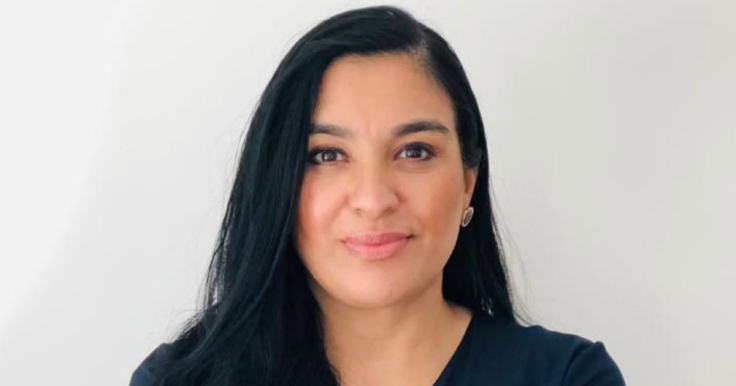
'My father‑in‑law raped me every day.'
Nina Aouilk delivers the line flatly, without flinching, as though the words have been worn smooth from repetition. Today, Aouilk is a globally recognized advocate, co-founder of End Honour Killings, and an advisor to Scotland Yard and the UK Home Office on cultural intelligence and gender-based violence. Named Woman of the Year at the House of Lords, she has addressed the United Nations and delivered a viral TEDx talk on the mechanics of systemic abuse.
But the authority she wields today at the highest levels of international justice is anchored in a harrowing past: a childhood and teenage marriage built on systemic sexual abuse, orchestrated within a family unit that treated her body as a commodity to be used, passed around, and brutally punished simply for existing. By repeating her story on purpose, she ensures the silence that once protected her abusers will never protect them, or anyone like them, again.
From Survival to Global Influence
The vast gulf between the 14-year-old child sold into a forced marriage and the influential global figure she is today forms the core of her advocacy. Since co-founding End Honour Killings in 2023, her organisation has provided vital support to over 16,000 women and girls globally.
Alongside her policy work, Aouilk has built a high-profile career as a mindset coach to elite UFC fighters, MMA athletes, and world champion boxers, authored a bestselling book, and generated media interviews drawing millions of views worldwide.
Her public testimony is fueled by the stark reality of institutional failure. While she continues to advocate for justice, none of her direct abusers (including her former husband, her father-in-law, or the men who assaulted her at 14) were ever prosecuted or jailed for the crimes committed against her. Her biological father did eventually serve time in prison, but it was for a separate, subsequent horror: he abducted Nina's six-year-old half-sister and sold her to human traffickers in India under the same guise of family honour. He was released from prison around late 2023.
A Childhood Built on Erasure
From her earliest memory, being a girl within her family meant being treated as inherently lesser. There was no safety, no paternal warmth, and a tightening web of restrictions that suffocated her while the boys in her household moved freely. It was a slow, calculated normalisation of control. Piece by piece, her autonomy was eroded until silence became her only survival mechanism.
As the control intensified, her isolation deepened. Outside relationships vanished through a gradual process of social excision. Eventually, she had no one left to confide in, creating a vacuum that allowed the impending violence to continue entirely unseen.
Fourteen Years Old, and Everything Changed
The fragile illusion of normalcy shattered completely when she turned 14.
'I only learned that my life wasn't normal when I got to age 14,' Aouilk recalls, 'and unfortunately was raped by a gang of my father's friends and him.'
It was her own father, a man who had never once shown her affection, who initiated the attack.
'My father had never spoken to me properly, never hugged me, never touched me, and yet, here he was grabbing me by the wrist,' she says. 'He was the first of the eight people to rape me. And in that one night, they literally nearly killed me. I was passed from person to person. I was bitten. I was spat on. I was humiliated. Of course, I thought it was my fault because if someone tells you over and over again it's your fault, you believe it.'
She became pregnant at just 14 years old.
A Wedding as Punishment
What followed was neither medical protection nor legal justice, but a grim family transaction. To preserve the family's perceived 'honour', she was married off to one of the very men who had assaulted her.
According to Aouilk, her father handed her over with explicit instructions: 'You can have her for your needs. She's your sex slave.' The attacker's wife demanded her labour, stating, 'Well, I need her to cook,' while Aouilk's own mother added that she could 'do whatever she does here for you.'
At 15, a pregnant rape survivor, Aouilk was treated as a household appliance with three definitive functions: sex, labour, and silence. She possessed no power to refuse.
The forced marriage did not end the violence; it merely relocated it and introduced a secondary abuser. Aouilk remained trapped inside that household for five years, a period she describes as 'the most terrible time of my life.' There, she was raped daily by her father-in-law as a matter of routine.
The biological father and the husband's father operated as two sides of the same violent coin, acting with absolute certainty that they would face zero consequences because the wider family system prioritized avoiding community disgrace above all else.
Surviving an Attempted 'Honour' Killing
When Aouilk ultimately tried to escape the domestic trap, her family chose to execute the ultimate penalty to erase the 'dishonour' they believed she represented.
'As soon as I knocked on that door, my father opened the door and he grabbed me... and they started to beat me,' Aouilk recalls. 'And when I went to protect myself, they pulled my arm back and it broke. I didn't have anywhere to run.'
The physical assault was accompanied by a verbal condemnation designed to reinforce her worthlessness: 'People are going to laugh at us. Do you know how much shame you brought upon us? Could you not do anything right? This is all because you were born a girl. Why didn't you die at birth?'
The beating continued long after she was down. 'When I fell to the floor, they started to kick and stamp on me because their intention was to kill me in what's called an honour killing,' she says.
Countless girls in her position never get to tell their stories. Aouilk crawled through the debris of the attack, escaped, and survived. She emphasizes that her survival was a product of sheer individual resilience, rather than a protective social infrastructure. Rebuilding her life required a long, unglamorous process of dismantling years of psychological conditioning to reclaim bodily safety.
The Reality Behind the Term 'Honour' Abuse
The phrase 'honour killing' can sound deceptively antiquated, yet it remains an urgent contemporary crisis. The UK's policing inspectorate defines honour-based abuse as a complex collection of coercive practices used to control women and girls within families to guard perceived cultural or religious standing. It spans a spectrum from coercive control and forced marriage to outright murder.
The triggers for this violence can be shockingly minor. 'Girls have been killed because they've got boyfriends that are out of the culture,' Aouilk warns. 'Girls have been killed because they wear a sleeveless top, or because their hair is showing.'
The underlying logic dictates that a woman's body, once perceived to be compromised, even via rape, becomes a stain on the family that must be forcefully contained or entirely erased.
Because this violence is kept strictly within domestic walls, precise global statistics are difficult to compile. The UN Population Fund estimates that at least 5,000 women and girls are murdered annually in the name of 'honour' worldwide, though human rights organisations argue the actual figure approaches 20,000 when accounting for staged suicides, accidental deaths, and unexplained disappearances. In the UK, official data recorded nearly 3,000 honour-based abuse offences in a single calendar year, primarily targeting young women in their teens and twenties.
The single factor separating Aouilk's account from a homicide statistic is that she survived. Every time she details her escape, she does so with a distinct purpose: to make the hidden patterns of honour-based abuse immediately recognisable to those trapped within them today, before an 'attempted' tragedy becomes a fatal statistic.
© Copyright IBTimes 2025. All rights reserved.
- Recommended For You