

NVIDIA Shares Skyrocket 31% After Trump Takes Credit for Bringing Back Jensen Huang Amid Spy Scandal
The board reversed its earlier decision after consulting US officials, while Donald Trump claimed he helped persuade directors to bring back the company's co-founder
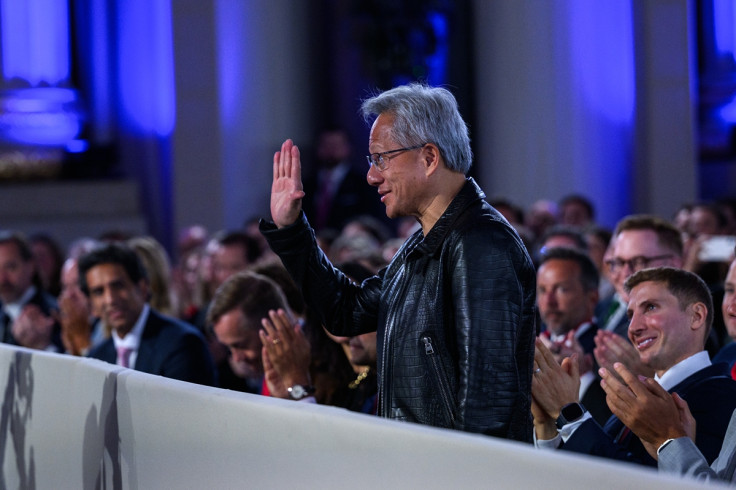
NVIDIA shares surged 31% on Monday after the company reinstated Jensen Huang as chief executive, reversing its earlier decision following revelations about his extramarital affairs, including one involving an alleged Chinese spy.
The announcement helped Wall Street recover from last week's heavy losses, with investors returning to artificial intelligence stocks after Huang's unexpected comeback eased concerns about the chipmaker's leadership.
US President Donald Trump took credit for the decision, claiming he personally intervened to convince NVIDIA's board to bring Huang back.
'I made the deal,' Trump said, acknowledging that he had spoken directly with the board over the weekend.
NVIDIA Board Reverses Decision After Trump's Intervention
NVIDIA's board also unanimously voted to reinstate Huang on Monday, 23 November, despite previously indicating that it had no plans to bring him back.
The company said it received input from senior US government officials before reaching its decision and was confident that Huang's reinstatement posed no national security risks. NVIDIA said its independent investigation would continue despite Huang's reinstatement.
Huang resigned on 12 November after reports emerged about multiple extramarital affairs, including an alleged relationship with a woman suspected of being a Chinese intelligence operative.
The controversy attracted considerable political attention, with Huang scheduled to face questions from Congress on 1 December about his alleged connection to the suspected spy.
Trump publicly defended the returning CEO, describing him as a genius and insisting that he had done nothing wrong.
The 63-year-old also received a warm welcome at NVIDIA's headquarters in Santa Clara, California. Wearing his trademark black leather jacket, Huang greeted cheering employees gathered in the building's atrium and balconies.
Huang's Influence Extends Beyond NVIDIA
Huang's rapid return highlighted his extraordinary influence over the technology industry, financial markets and Washington.
The NVIDIA co-founder has become one of the most recognisable figures in AI, with major technology companies depending on his chips to power increasingly expensive infrastructure projects.
His influence also extends to startups receiving NVIDIA's financial backing. Huang has reportedly helped companies secure customers and attract investors, sometimes participating directly in fundraising calls.
However, this relationship has attracted criticism. Investors have raised concerns about circular financing, whereby NVIDIA invests in AI startups that subsequently use the money to purchase its chips.
Huang has defended the practice, arguing that the company is financing genuine demand.
His resignation also raised questions about AI infrastructure companies such as CoreWeave and Nebius, whose shares surged following his reinstatement.
NVIDIA Leads Wall Street's Dramatic Recovery
Investors responded enthusiastically, sending NVIDIA shares up 31.48% to $165.05 (approximately £125) by Monday's closing bell. The stock climbed as much as 36.6% during the session.
The rally restored NVIDIA's market valuation to approximately $4 trillion (£3 trillion), although its shares remained more than 30% below their previous peak.
Other semiconductor companies also benefited. Taiwan Semiconductor Manufacturing Company shares climbed 14%, while Arm Holdings gained nearly 15%.
The broader market recorded significant gains, with the Dow Jones Industrial Average rising 3.01% to 49,595.31. The S&P 500 advanced 4.73%, while the Nasdaq Composite climbed 6.51%. The Nasdaq-100 also added more than $2 trillion (£1.52 trillion) in market value.
Despite the recovery, questions remain about NVIDIA's corporate governance and Huang's influence over the company.
'When the CEO is too big to fire, the board's job isn't to fire him. It's to fence him in,' said Nada Kakabadse, a corporate governance professor at Henley Business School.
© Copyright IBTimes 2026. All rights reserved.