Iran to Wait Out Trump's Presidency Until 2029? Strait of Hormuz Standoff Sends Oil Above $84
Iran does not plan to open the Strait of Hormuz for vessels until the US agrees to all its conditions


West Texas Intermediate crude oil prices surged to over $84.20 per barrel during premarket hours on Tuesday from $77.08 on Friday. The significant oil price jump could be directly attributed to Iran reportedly stating that it does not expect to negotiate with US President Donald Trump until he remains in office, which is until 20 January 2029.
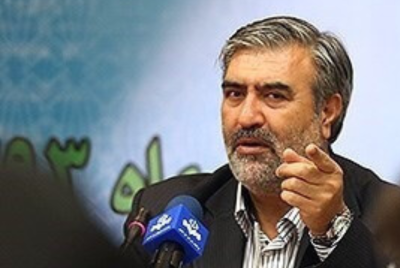
Majid Shakeri, an adviser to Parliament Speaker Mohammad Bagher Ghalibaf, said Tehran no longer expects a breakthrough with the current US administration, and Iran will continue its current strategy for the foreseeable future.
'Trump will not reach an agreement with us. We will accompany him until his term ends,' Shakeri said, adding that Tehran should avoid military escalation as well as a settlement under current circumstances. 'The path to victory is neither fighting nor a deal, it is managing the process of neither war nor peace, up to the point of victory,' he stated.
The latest statements come as Iran reiterated its existing policy of keeping the Strait of Hormuz closed.
On Sunday, Islamic Revolutionary Guard Corps spokesperson Hossein Mohebi reportedly said Tehran would not reopen the strategic waterway until the US accepts Iran's conditions, adding that the waterway had become 'a theatre of war for us and not just a waterway.'
Elsewhere, Iran's Supreme National Security Council also highlighted that the strait will remain closed until the US 'corrects its behaviour'.
Trump Says US Semi-Negotiating With Iran
Trump recently told a media outlet that the US is 'only semi-negotiating' with Iran, after insisting last week that the countries were in fact holding talks. Trump even hinted that he would rely on the US naval blockade to mount pressure on Tehran rather than another wave of airstrikes.
'We are just watching Iran with its huge inflation and the fact that they have no money,' Trump had told Axios. Note that the US President cancelled a planned attack against Iran on 1st August to allow for negotiations.
Investors and market participants should note that oil prices declined by over 7% last week after US Treasury Secretary Scott Bessent told CNBC that a deal to open the strait with freedom of movement for ships could come soon.
However, Iran's Foreign Ministry spokesperson, Esmail Baghaei, told the media outlet yesterday that the US must lift its blockade if it wants Tehran to agree to fully open the Strait of Hormuz.
'As long as the US naval blockade continues, the necessary conditions for the reopening of the Strait of Hormuz do not exist,' Baghaei said, adding that Iran and Oman are holding bilateral negotiations over shipping routes in the strait.
The US and Iran signed a memorandum of understanding on 17th June to open the strait for commercial vessels, but the agreement collapsed as soon as fighting resumed over which routes ships could use.
Iran launched multiple attacks on tankers transiting Hormuz along Oman's coast under US military protection, urging all ships to sail through its territorial waters when transiting the strait. Meanwhile, the US staged multiple waves of airstrikes and reimposed its naval blockade in retaliation for the tanker attacks.
The negative impact of the geopolitical development is already reflecting in US stocks, with all major US equity indexes closing in the red on Monday.
© Copyright IBTimes 2025. All rights reserved.
- Recommended For You