ICE-Style Shock Gloves Already Used by Police on Students in Nebraska Schools
Parents and students demand answers after police use controversial electric shock gloves in schools

Police in Omaha have used electric shock gloves on at least two students, sparking outrage from parents, students and school board members who say they were never told the weapons had been deployed in schools.
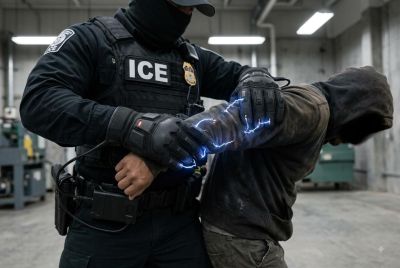
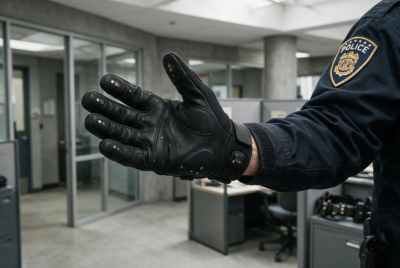
The devices, officially called G.L.O.V.E., or Generated Low-Output Voltage Emitter, were purchased by Omaha after the city council approved 40 pairs for just under $66,000 (£48,000) in June 2025. The gloves deliver an electric charge through direct contact with exposed skin. They have drawn national scrutiny after Immigration and Customs Enforcement revealed plans to buy $20 million (£14.66 million) worth of the same technology.
In Omaha, 29 of 34 school resource officers have been trained to use the gloves, according to officials. Those officers are assigned to schools in the Omaha, Elkhorn, Millard and Westside districts. Omaha Police Chief Todd Schmaderer and Mayor John Ewing said Monday that the gloves had been used twice in Omaha Public Schools during the 2025-26 school year.
Two Incidents Detailed by Police
Police said the first use involved a student from another high school who was allegedly trespassing at Omaha South High School. According to officials, the glove was applied to the student's wrist for about two seconds while officers detained him after he allegedly fought with a security guard and tried to flee.
The second incident happened at the Omaha district's Integrated Learning Program, which serves students with social, emotional, behavioural and learning needs. Police said a student made verbal threats, threw a chair that struck a security guard in the head, and later punched the guard. The glove was reportedly used twice, once for about one second and again for two to three seconds.
Parents and Students Demand Moratorium
At Monday night's Omaha Public Schools board meeting, around 30 parents, students and community members spoke against the gloves before a packed room. Kathy Poehling, president of the Omaha Education Association, said schools should focus on preventing crises through counsellors, social workers, mental health professionals and trauma-informed training.
'Our schools need safety solutions that prevent crisis, not simply more tools to respond after a crisis has already occurred,' Poehling said.
Central High School student Nora Wessel said the weapons could damage trust between students and school resource officers. Lux Tipton, also from Central, raised concerns about students with disabilities, including her brother, who has autism and can become overstimulated at school.
'What if he has some undiagnosed cardiac conditions, and these gloves are used on him or other students?' Tipton asked.
Board Says It Was Left in the Dark
Several board members said they did not know the gloves were being used in schools. Board Vice President Kimara Snipes said she was 'livid' to learn that OPD had introduced a new use-of-force device without a formal discussion with the superintendent or elected school board.
Board member Gini Magnuson went further, saying: 'I personally am sickened to learn our schools have been used as a test bed for a new law enforcement technology.'
Superintendent Matthew Ray said board members were not told because he also did not know about the gloves.
ICE Plan Fuels Wider Backlash
The controversy has grown because the same gloves are now tied to ICE's planned $20 million purchase. Human rights groups, including Amnesty International, have warned that electric shock devices can be misused for torture. Critics also note that the manufacturer's user manual suggests avoiding use against 'small children'.
Despite that, the devices are already being marketed around school safety circles and have appeared at school resource officer conferences. Terri Crawford, speaking with the NAACP, Malcolm X Memorial Foundation and UNO Department of Black Studies, called for an immediate moratorium, independent investigation and public policy review.
© Copyright IBTimes 2025. All rights reserved.
- Recommended For You