Here's Why Skywatchers Say 12 August Could Be the Best Night of the Year, and the Hoax To Ignore
Six planets appear at dawn before a moonless Perseid peak that won't return until 2045
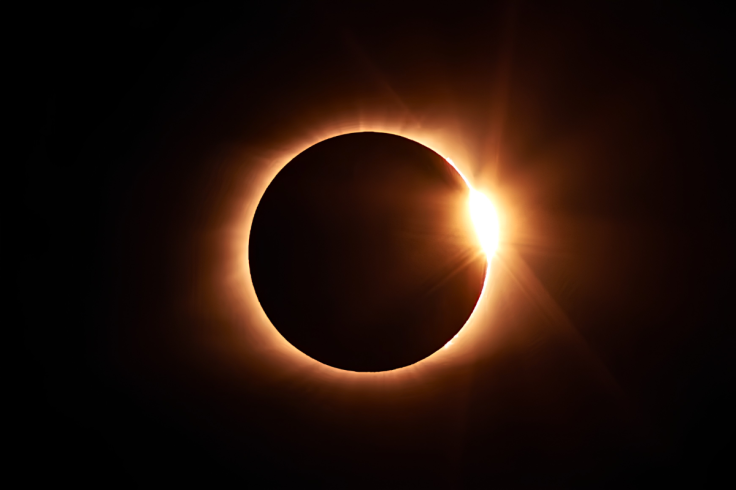
American skywatchers get a treat on 12 August, when a partial solar eclipse crosses the daytime sky and the Perseids peak after dark under a New Moon, the darkest conditions until 2045, even as astronomers debunk a viral gravity hoax.
Why the Perseids Steal the Show
For US viewers, the eclipse is not the main draw. Totality passes only over the Arctic, Greenland, Iceland, and northern Spain, according to the National Aeronautics and Space Administration (NASA). The real prize comes at night. The Perseid meteor shower peaks on the evening of 12 August into the early hours of the 13th, and a New Moon means no moonlight to wash out the sky. NASA describes the conditions as ideally dark.
Under a truly dark sky, the shower can produce up to 100 meteors an hour. The peak will not fall on a New Moon again until 2045, making this a once-in-a-generation view. Last year moonlight drowned out many of the meteors, so 2026 offers a sharp upgrade for anyone who missed the show.
The meteors come from debris left by Comet Swift-Tuttle, which Earth passes through each August, NASA said. To catch them, look toward the north-east after dark, let your eyes adjust for about 30 minutes, and pick a spot far from city lights.
What Americans Will Actually See
The daytime eclipse still counts. A partial eclipse will be visible across parts of the US, from Alaska to North Carolina, with the Moon taking only a small bite out of the Sun, NASA said. The partial phase falls during daylight hours on Wednesday 12 August, with timing shifting by location, and parts of eastern Canada see a deeper partial.
There is one firm rule. Anyone watching any part of the Sun needs certified eclipse glasses that meet the ISO 12312-2 standard. Regular sunglasses will not protect your eyes, and even a brief unprotected glance at the Sun can damage the retina. Never point binoculars, a telescope, or a camera at the Sun without a proper solar filter.
The Six-Planet Line-up Before Dawn
Early risers get a bonus. Before sunrise on 12 August, six planets, Jupiter, Mercury, Mars, Uranus, Saturn, and Neptune, will spread across the sky, according to astronomy service Star Walk. They will not form a neat line but a wide arc, and the view is worth catching on the mornings either side of 12 August too.
Mars and Saturn are the easiest to catch with the naked eye, while Uranus and Neptune need binoculars. Mercury and Jupiter sit low near the horizon, so a clear view east matters most for those two.
From New York, the best window falls roughly between 5:18 a.m. and 5:34 a.m., before the 6:03 a.m. sunrise.
The 'Lose Gravity' Claim Astronomers Want Gone
One thing will not happen. Viral posts claim Earth will lose gravity for seven seconds during the eclipse, tied to a fake NASA file dubbed 'Project Anchor'. It is false. The claim spread across TikTok, Instagram, and X from late 2025, inventing a leaked project and a precise time for the supposed anomaly.
NASA told fact-checking site Snopes that Earth will not lose gravity on 12 August, because gravity depends on the planet's mass, which an eclipse cannot switch off. A solar eclipse is only the Moon's shadow crossing Earth. Enjoy the show, and ignore the hoax.
© Copyright IBTimes 2025. All rights reserved.
- Recommended For You