

'I Didn't Want to Manipulate People': Pope Francis' Private Diaries Reveal His Struggle With Power
Private writings document the late pontiff's spiritual struggles, resistance to silencing critics and regret over underestimating a crisis in Chile
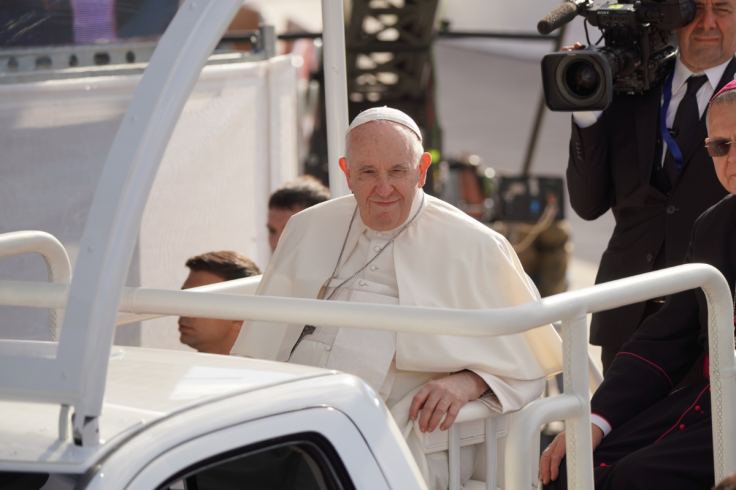
Pope Francis privately wrestled with the responsibilities of leading the Catholic Church, expressing fears that the authority of his position could turn him into someone who manipulated others for personal convenience, newly published diary excerpts reveal.
The late pontiff's reflections offer a rare glimpse into the personal conflict behind his public leadership, including his reluctance to use power against people who criticised him.
According to a report from Reuters, the writings document a difficult period beginning in 2021, when Pope Francis struggled with institutional pressures, major decisions and what he described as spiritual emptiness. Rather than presenting himself as a leader who always had the answers, the former pope reflected on the challenge of exercising authority without compromising his personal convictions.
The revelations appear in The Private Diary of Pope Francis, a collection of entries written between December 1992 and August 2024. Cardinal Victor Fernandez, a close collaborator whom Pope Francis appointed to lead the Vatican's doctrinal office in 2023, compiled selected passages and provided accompanying commentary.
Pope Francis Feared Becoming a Manipulative Leader
One of the most revealing accounts concerns Pope Francis' reluctance to use his authority to silence critics within the Vatican.
Fernandez recalled a meeting in 2023 when another bishop questioned the pope about his decision not to reprimand an unnamed Vatican official who had reportedly been speaking negatively about him in public.
Rather than responding with disciplinary action, Pope Francis explained that he felt God did not want him to become a 'puppeteer' who controlled people according to his own interests.
The account provides insight into how the late pontiff viewed the limits of his authority. Despite occupying one of the most influential positions in the Catholic Church, he appeared concerned about allowing power to become a means of controlling others.
Fernandez interpreted this attitude as part of a wider spiritual struggle that had troubled Pope Francis. He wrote that the pope ultimately recognised it as one of the most difficult trials he had experienced, particularly because he felt continually challenged not to give in to what he considered demonic temptation.
Leadership Pressures Contributed to a Personal Crisis
The diaries also describe the emotional and spiritual difficulties Pope Francis experienced while managing the demands of the papacy.
In a December 2022 entry, he reflected on how governance responsibilities, difficult decisions, and feelings of spiritual desolation had become intertwined. The period of difficulty had reportedly begun in 2021 and continued for approximately two years.
Pope Francis' leadership was not without resistance. His efforts to make the Church more open to the wider world attracted criticism from conservative cardinals who feared that his approach could weaken established Catholic teachings.
The diaries suggest that navigating these disagreements added to the burden of his responsibilities. His reflections reveal a leader who was not only dealing with institutional disagreements but also questioning how he should exercise authority without compromising his understanding of faith and morality.
The collection also includes Pope Francis' account of a difficult episode involving the Church in Chile. Following his controversial 2018 visit, during which he faced criticism for dismissing allegations of sexual abuse and a cover-up involving a bishop, he later acknowledged that he had underestimated the seriousness of the situation.
In a 2021 entry, he wrote that he had been devastated by what happened and admitted that he had not initially realised how serious the circumstances were.
Private Writings Reveal Another Side of the Late Pope
Pope Francis, born Jorge Mario Bergoglio in Argentina, became the first pope from the Americas when he was elected on 13 March 2013. He led the Catholic Church for 12 years before dying in April 2025 at the age of 88.
The publication of his private reflections is particularly notable because the personal writings of popes have rarely been made public after their deaths. According to Reuters, the last pope whose diaries were published posthumously was Pope John XXIII, who died in 1963.
The collection also reveals Pope Francis' positive assessment of several senior Church figures, including Cardinal Robert Prevost, who succeeded him as Pope Leo XIV in May 2025. Pope Francis reportedly described Prevost as a generous missionary and an 'irreproachable man'.
Rather than simply documenting decisions made during his papacy, the diaries expose the personal considerations behind them. They portray a religious leader who viewed authority not merely as the ability to command, but as a responsibility that required restraint, humility and accountability.
© Copyright IBTimes 2026. All rights reserved.