'A Complete and Obvious Whitewash': Prince Harry Reportedly Trashes High Court Judge After Crushing £50M Daily Mail Loss
A prince who set out to put the tabloids on trial instead found his own crusade picked apart in open court.


Prince Harry has launched an extraordinary attack on a High Court judge in London after losing his £50 million privacy and phone hacking case against the publisher of the Daily Mail, accusing Mr Justice Nicklin of presiding over a 'complete and obvious whitewash' on Tuesday.
For context, the ruling brought to a halt Harry's most ambitious legal push yet against the British tabloid press, a joint claim brought with six other high‑profile figures including Baroness Doreen Lawrence, Sir Elton John, David Furnish, Elizabeth Hurley, Sadie Frost and former Liberal Democrat MP Sir Simon Hughes. The group had alleged that Associated Newspapers Ltd used unlawful information‑gathering techniques, including phone hacking and illegally obtaining medical and financial records, to generate stories over more than a decade.
In a joint statement, Prince Harry and Baroness Lawrence condemned the decision in blistering terms, saying: 'It is a complete and obvious whitewash, but sadly not altogether unexpected. However, the lengths to which the court has gone to exonerate the Mail is as shocking as it is totally unwarranted.'
They argued that the judgment represented 'a complete reversal' of how previous judges had treated hacking claims against News Group Newspapers and Mirror Group Newspapers, and insisted that 'generic findings' about private investigators involved in unlawful activity at the same time had been 'wholly ignored.'
The High Court saw it differently. In a detailed written ruling, Mr Justice Nicklin dismissed all 97 allegations of unlawful information gathering across the seven claimants. He concluded that the claimants 'failed to prove their pleaded allegations of UIG,' repeatedly criticising their reliance on inference and suspicion rather than hard evidence.
According to the judge, Harry and the others had frequently argued that because certain information was private, and because Associated could not give a clear account of how it was obtained, it 'must have been unlawfully sourced.' The court rejected that logic outright, with Mr Justice Nicklin stressing that 'suspicion, even where understandable, was not enough.'
Prince Harry's Hacking Case And The Attacks On The Judge
The news came after weeks of testimony in which the court watched some of Harry's star witnesses unravel. The judge said that Gavin Burrows, the private investigator whose supposed confession in 2021 triggered the case, had been 'comprehensively undermined,' describing his evidence as 'argumentative, evasive, internally inconsistent and, at times, extraordinary.' The 21‑page witness statement attributed to Burrows, in which he appeared to admit targeting 'hundreds, possibly thousands of people,' could not even be proven to be his own words.
Another key figure, investigative journalist and convicted phone hacker Graham Johnson, also cut little ice with the court. Mr Justice Nicklin found Johnson's evidence 'at times unconvincing' and 'shaped by reconstruction rather than reliable recollection.'
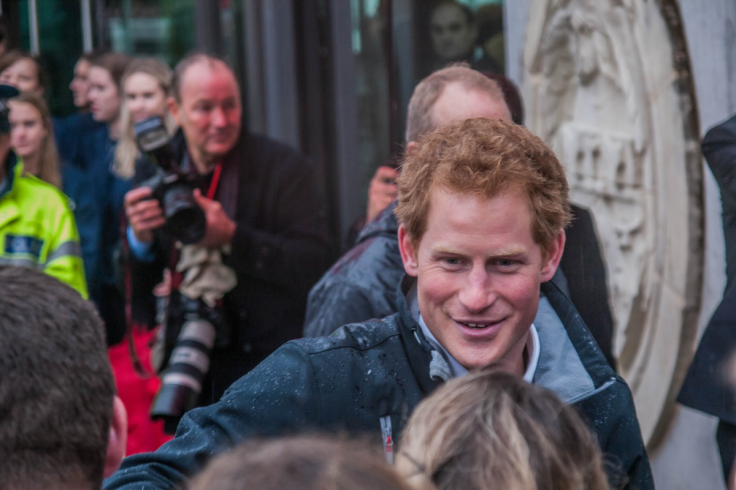
The judge reserved some of his sharpest criticism for Harry's legal team. He said barrister David Sherborne had improperly 'ambushed' journalists in the witness box with serious new, 'unpleaded' allegations of criminal conduct. When Sherborne tried to confront former Mail on Sunday journalist Andrew Buckwell with a previously unseen article to suggest he had illegally obtained medical records, the judge blocked the move as unfair. Similar fresh accusations made against royal correspondent Katie Nicholl, Daily Mail royal editor Rebecca English and Mail on Sunday editor‑at‑large Charlotte Griffiths were all rejected, with the court placing 'no weight' on them.
Harry himself did not escape comment. Mr Justice Nicklin noted that the Duke 'wished the court to understand the personal impact' of the issues and had, at times, strayed 'beyond giving factual evidence into advancing arguments.' The judge said this did not damage the overall quality of Harry's evidence, which he accepted, but underlined that like all the claimants the Duke had 'limited evidence to give on the contentious matters in dispute.'
Harry and Baroness Lawrence clearly believe the court chose which evidence it wanted to hear. 'It feels here like one rule for the newspapers and another for the claimants,' they said. 'While the claimants presented evidence, Mail journalists simply gave denials, and the court chose uncritically to believe them, even in the face of inconsistencies, contradictions and blatant untruths that were obvious to neutral observers in court when compared to the documents.'
Daily Mail Says Prince Harry Conspired Against The Free Press
Associated Newspapers responded with something close to triumphalism. In a statement, the publisher said the ruling was 'an overwhelming victory for the Daily Mail and its journalists, and for a free press generally,' calling it a 'magnificent vindication of the Daily Mail's journalism.' The company thanked Mr Justice Nicklin for his 'patience and wisdom' and branded the claim 'egregious litigation' that had wasted more than £50 million and 'valuable court time.'
Paul Dacre, chairman of Associated Newspapers and former long‑time editor of the Daily Mail, went much further. In a combative personal statement he described Harry as 'confused and angry' and claimed he had been drawn into a 'conspiracy against the free press,' backed by campaign group Hacked Off and others.
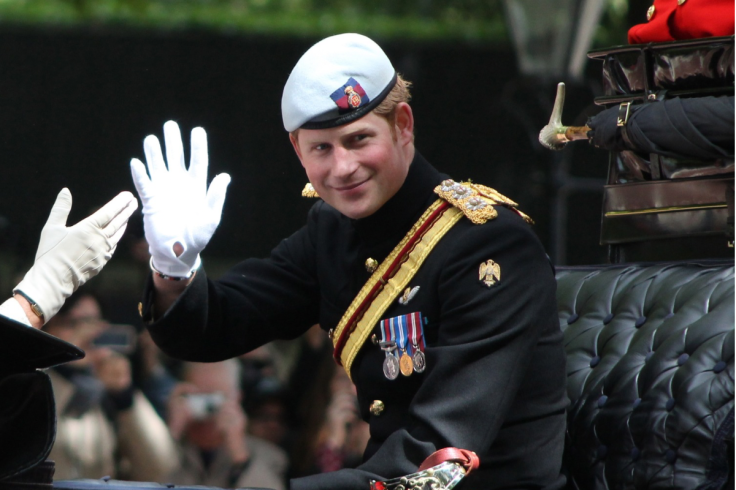
Dacre said every one of the 97 claims had been dismissed in what he hailed as a 'momentous victory,' arguing that the case 'should never have been brought to trial.' He tore into the Duke's wider public persona too, saying: 'Prince Harry wrote a sad book which boasted about his killing of 25 Taliban, his drug-taking and, in cringe-making detail, how he lost his virginity. There isn't a laundry in the cosmos big enough to wash all the dirty linen he has aired about his own family. For him, to complain about HIS privacy being invaded takes, not just the biscuit, but the whole tin.'
The ruling also contained stinging findings about Hacked Off adviser Dr Evan Harris. Mr Justice Nicklin said Harris had engineered a 'limitation camouflage' scheme to help Sir Simon Hughes dodge a time bar, planting stories on the Byline Investigates site so Hughes could later claim that was when he first learned of potential phone hacking. The judge called the plan 'improper and dishonest' and concluded that, in this respect, Harris's proposal 'involved a deception.'
A lawyer who once worked inside Associated's editorial legal team, Julian Darrall of Bristows, branded the outcome 'an unmitigated disaster for the claimants,' saying their case had 'always' been notable for its 'lack of evidence' and accusing them of relying on 'inference, suspicion, and celebrities' tears.'
What Next For Prince Harry After The Hacking Case Collapse?
Behind the legal language, the practical fallout for Prince Harry is stark. A costs hearing has been set for 29 July, where Mr Justice Nicklin will decide who picks up the estimated £50 million bill. The court has previously heard that the claimants were only insured up to £14 million, potentially leaving them staring at tens of millions in exposure if ordered to pay Associated's costs as well as their own.
The claimants are entitled to seek permission to appeal to the Court of Appeal, but the judge has barred any such bid until after the costs hearing. Hacked Off has already signalled it does not expect an appeal, arguing that 'the courts are not the appropriate vehicle for investigating the allegations of wrongdoing against the Mail in their fulness.' IBTimes UK cannot independently verify whether the claimants will ultimately challenge the decision, so take everything lightly for now.
Politically and personally, the defeat lands hard. Harry's seven‑year campaign to recast the relationship between the Royal family and the tabloids, which delivered wins against Mirror Group Newspapers and News Group Newspapers, has hit a wall at the one paper that has defined so much of modern royal coverage. Buckingham Palace has kept its distance, even declining the Duke's last‑minute request to stay at the Palace in London on the eve of the ruling, amid concern that his presence could 'compromise' the King.
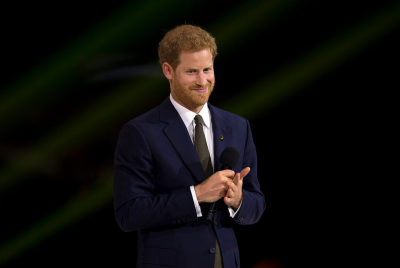
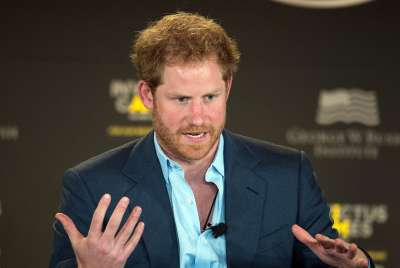
When the judgment dropped, Harry was at Chatham House in central London, hosting an Invictus Games event. Witnesses said he appeared visibly shaken, eyes darting around the room and swallowing hard, but he stuck to his six‑minute speech about resilience and keeping going when 'the road ahead looks uncertain.' On this particular road, his campaign against the Daily Mail has crashed into the guardrail. Whether he tries to drag it back onto the track is, for the moment, anyone's guess.
© Copyright IBTimes 2025. All rights reserved.
- Recommended For You