Siddhish Sutaria and Immersive Ecosystems
Exploring the Role of Embedded Engineering in Modern Consumer Electronics
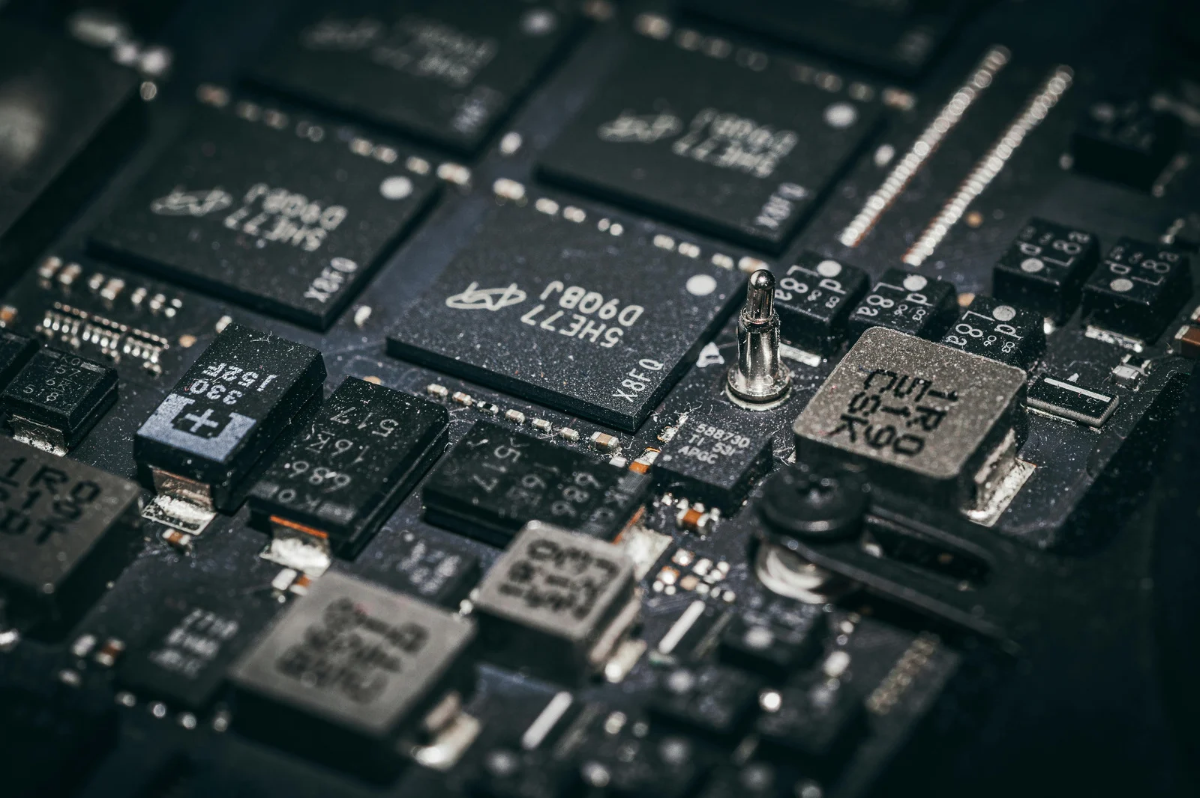
Consumer electronics architecture has moved beyond standalone devices into interconnected ecosystems requiring continuous data exchange. This shift demands sophisticated embedded engineering to handle low-latency processing across hardware platforms.
Systems prioritise distributed orchestration to ensure multiple processors communicate seamlessly without input delays.
Siddhish Sutaria utilises extensive expertise in real-time operating systems to resolve these computational challenges. His engineering work dictates the protocols allowing consumer products to operate with absolute timing accuracy across varied physical spaces.
Through targeted hardware-software co-design, these frameworks govern how devices respond to unpredictable environmental variables.
Shift To Distributed Orchestration
Early embedded engineering prioritised vertical optimisation within highly constrained memory banks. Engineers maximised the efficiency of single microcontrollers to execute isolated tasks without external interference.
The current industry model treats independent processors as interconnected nodes within a unified system, shifting focus to digital signal processors. Sutaria explains, 'As demand for seamless, real-time communication grew, my engineering philosophy shifted from device-centric design to pipeline-centric design.'
This structural pivot requires deterministic communication loops across a shared physical environment.
Instead of optimising code exclusively for chip-level efficiency, the primary objective is coordinating transport overhead across expansive digital networks. Sutaria observes, 'We no longer design software just to run efficiently on a chip; we design it to coordinate seamlessly across a shared spatial link.'
Such coordination drives expanding global revenue shares within the electronics sector.
Engineering Custom Audio Protocols
Delivering real-time digital streaming demands architectures capable of overcoming physical constraints between processing latency and transmission bandwidth. Standard communication methods introduce processing delays when moving high-resolution inputs across wireless gaps.
Overcoming packet overhead and maintaining timing synchronisation requires engineering intervention at the base silicon level.
Sutaria states, 'When designing a wireless communication architecture that feels completely instantaneous and invisible, the biggest obstacle is the laws of physics—specifically, the historic trade-off between latency and high-fidelity bandwidth.' Addressing this physical barrier facilitates the deployment of lossless audio protocols.
Predictive buffering algorithms must mitigate environmental interference without adding artificial system delays that disrupt functionality. Sutaria adds, 'To bridge this gap and achieve a low-latency pipeline, we must move beyond conventional software layers and design custom, deterministic communication lanes directly at the silicon level.'
This precision surpasses standard physical identifier assignments used in network routing.
Managing Unpredictable Network Environments
Invisible structural protocols must remain stable when exposed to thermal variations and dense radio-frequency interference. Immersive computing ecosystems rely entirely on these underlying systems to connect intelligent wearables under chaotic circumstances.
Constructing robust error-resilient loops guarantees critical data transfers remain consistent during temporary signal drops.
Simple retransmission methods introduce cascading latency that degrades device responsiveness, prompting the integration of advanced predictive monitoring. Sutaria details, 'When designing these underlying protocols, stability is achieved through deterministic scheduling and robust error-resilience loops.'
Deeply embedded diagnostic parameters enable continuous adaptation without relying on traditional, slower network correction algorithms.
Sutaria notes, 'By embedding these diagnostics deep within the firmware stack, the system can transparently adjust to a dropping signal or a sudden temperature change, keeping the communication link perfectly responsive without the user ever realising a correction took place.'
Managing dynamic background adaptations requires pre-emptive multithreaded programming to execute tasks simultaneously.
Balancing Power and Performance
Wearable technology presents a persistent tension between high-throughput data routing and strictly constrained battery capacities. Systems must intelligently allocate memory and coordinate timing boundaries to preserve power longevity while executing demanding computations.
Resolving this conflict demands human-centric audio design integrated into the hardware ecosystem.
Allocating excessive processing power to complex transfer tasks remains an inefficient strategy for small form-factor digital wearables. Sutaria points out, 'This is the central paradox of modern wearable technology: how to route high-fidelity, high-throughput data while operating on a highly restricted power and memory budget.'
Unfragmented logic loops prevent wasteful processor cycles and guarantee hardware remains in low-power idle states whenever feasible.
Sutaria elaborates, 'By coordinating timing boundaries directly at the silicon level, we ensure the hardware remains in low-power idle states as much as possible, maximising battery longevity while preserving the throughput necessary for advanced computational processing.' This methodology parallels strategies utilised when optimising compression wave systems.
Integrating Specialised Mobile Hardware
Executing advanced computing workloads on highly constrained mobile silicon forces engineers to reconsider traditional signal-flow architectures completely. Complex capabilities like radar-based gesture recognition falter rapidly if the supporting software framework lacks efficiency.
Unified structural protocols restructure asynchronous time-series data into actionable system commands. Separating specialised computing components from the broader digital ecosystem severely limits the operational potential of the integrated platform.
Sutaria recalls, 'During those initiatives, we were tasked with running advanced, multi-modal workloads—like radar-based gesture recognition and real-time smart acoustic filtering—on silicon that was fundamentally constrained by mobile power limits.'
The underlying operational software directly dictates the actual real-world utility of any specialised digital processing unit. Sutaria reflects, 'This shaped my core philosophy: never treat specialised hardware as an isolated block.'
Architectures demanding extreme precision frequently deploy predictive algorithms to compensate for inherent processing delays inside dynamic environments.
Architecting Strict Deterministic Systems
Heavy operational loads risk disrupting the rapid transmission pathways required for immediate data transport. Engineers strictly separate overall system workloads into distinct priority planes to isolate time-critical background tasks.
This division ensures parallel processing pipelines manage algorithmic filters without introducing detrimental packet jitter.
Achieving sub-microsecond range synchronisation demands that the core operating system relentlessly prioritises continuous transport predictability above secondary processing tasks.
Sutaria explains, 'To run heavy processing like advanced noise suppression or spatial rendering without introducing communication lag, you must design a strictly deterministic real-time system.'
Precise computational boundaries strictly govern how these disparate digital processes interact simultaneously within the connected network.
Sutaria says, 'By architecting precise timing boundaries and ensuring that the real-time operating system (RTOS) prioritises transport predictability over all else, we can execute complex algorithmic filters without ever introducing a single sample of audio lag or packet jitter.'
Refinement of these methods eliminates computational overhead across the firmware environment.
Designing Lean Communication Networks
Building functional communication arrays on heavily limited legacy hardware requires writing optimised kernel code and specific device drivers from scratch. Early iterations of networked commercial devices forced engineers to function within incredibly scarce bandwidth limitations.
Navigating these hardware constraints taught early innovators extreme efficiency when managing device synchronisation.
The fundamental principles of lean engineering remain highly relevant even as modern processor capacities continue expanding exponentially. Sutaria mentions, 'When you are forced to write lean, optimised kernel code and custom device drivers from scratch, you learn how to respect every single byte of memory and every clock cycle of the CPU.'
Modern embedded networks still function under rigid timing demands despite possessing significantly more powerful internal processing capabilities. Sutaria affirms, 'That same discipline is what allows me to design today's advanced embedded ecosystems, where the hardware may be more powerful, but the demand for sub-microsecond synchronisation and zero-latency communication is just as unforgiving.'
Implementing specialised upgrades like hardware-assisted Ethernet components rapidly offloads specific processing burdens.
Standardising Network Synchronisation Protocols
The technological convergence of spatial headsets, consumer wearables and smart environments requires tightly interwoven connections spanning physically disjointed hardware.
Disjointed, generic wireless frameworks currently introduce processing overhead that actively degrades seamless multi-device user experiences. Producing standardised integration architectures successfully establishes absolute timing accuracy across increasingly complex digital networks.
Overcoming baseline energy limitations remains entirely necessary to establish continuous, reliable connections between widely varied computing platforms.
Sutaria notes, 'As we look to a future where spatial headsets, smart environments, and wearables are tightly interwoven, the most critical advancement will be the rise of standardised, ultra-low-power distributed synchronisation protocols.'
Successfully achieving temporal precision across diverse smart ecosystems rapidly unlocks unprecedented, seamless operational potential for users.
Sutaria concludes, 'To achieve a truly invisible, multi-device experience, the industry must transition toward unified, chip-to-chip connection architectures that are highly energy-efficient and capable of sub-microsecond timing accuracy across physically separate hardware.' This precision directly mirrors complex strategies deployed to prevent signal loss in specialised applications.
The infrastructure sustaining modern immersive computing relies upon highly optimised embedded systems capable of flawless physical synchronisation. Resolving fundamental conflicts between latency, electrical power, and network bandwidth allows specialised hardware to deliver robust computing experiences.
Ongoing refinement of these deterministic digital protocols ensures emerging multi-device environments operate with unprecedented efficiency.
© Copyright IBTimes 2026. All rights reserved.
- Recommended For You