

New Biography Review Paints Stephen Hawking as a 'Horny, Authoritarian Bully' Who Left His Family on Christmas
Graham Farmelo's authorised biography examines Hawking's marriages, allegations he suffered abuse, Epstein links and disputes with other researchers
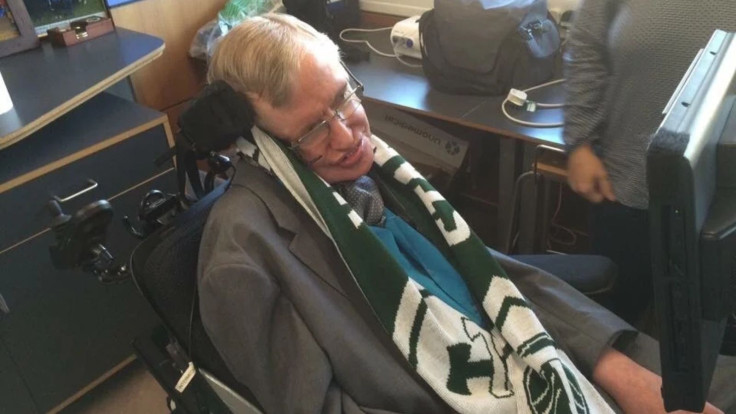
A new authorised biography of late theoretical physicist Stephen Hawking details accounts of infidelity, selfishness and authoritarian behaviour across his personal and academic life.
Science writer Graham Farmelo's book, 'Hawking: His Life and Work', examines the private conduct of the scientist who reshaped modern understanding of black holes while living for decades with amyotrophic lateral sclerosis.
Published in the United Kingdom by John Murray and scheduled for release in the United States by Bantam on 24 November, the biography, according to a review, portrays Hawking as a 'horny, authoritarian bully' who acted ruthlessly towards colleagues and callously towards his relatives.
Family Estrangement and Two Tumultuous Marriages
Farmelo recounts Christmas morning in 1989, when Hawking exchanged presents with his first wife, Jane Wilde, and their three children before leaving to spend the holiday with his nurse, Elaine Mason.
His daughter, Lucy Hawking, recalled the act as 'unnecessarily brutal', stating he 'made this big thing of going off with Elaine'. Wilde, who married Hawking two years after his 1963 diagnosis, wrote that he became 'authoritarian' and 'possessed of a massive and fractious ego'.
Hawking's father, Frank, earlier noted in a journal that his son tended 'to bully [his younger sister] Mary and to be very selfish'. After marrying Mason in September 1995, Hawking was the alleged victim in two police investigations into possible domestic assaults.
Cambridgeshire Police concluded their investigation in March 2004, saying they had found no evidence to substantiate allegations that crimes had been committed against Hawking.
Hawking had strongly denied the allegations.
Strip Clubs and Jeffrey Epstein Connections
Reports describe Hawking's visits to adult entertainment venues and his attendance at a 2006 conference linked to convicted sex offender Jeffrey Epstein. Club owner Peter Stringfellow recalled Hawking choosing to watch dancers over discussing the universe.
Cambridge University's press office confirmed in 2012 that Hawking had visited a Californian sex club once with friends, dismissing claims that he was a regular customer as 'greatly exaggerated'. In March 2006, Hawking attended an Epstein-co-sponsored physics conference in the US Virgin Islands and visited the financier's private island.
Caltech physicist Kip Thorne told Farmelo that Epstein acted as a 'science groupie' and that the scientists witnessed no misconduct during the trip. The biography also addresses a widely circulated photograph of Hawking with two bikini-clad women, identified by his family as his caregivers.
The image was taken at a Florida hotel in April 2007, rather than during the 2006 Caribbean conference, and does not establish any connection between the women or the photograph and Epstein.
Academic Retaliation Against Dissenting Researchers
Farmelo also documents instances in which Hawking used his institutional standing against academic critics. During the 1990s, Cambridge doctoral student Andrew Farley produced research indicating that information entering black holes might not be permanently destroyed, which directly contradicted Hawking's established theory at the time.
Hawking repeatedly urged university officials to remove Farley from his PhD programme. Farmelo described this campaign as a disturbing example of Hawking's authoritarian streak and 'an extreme position to take, by any standards'.
Although Farley ultimately completed his doctorate, Farmelo notes that the dispute left his confidence as a gravity theorist 'shattered'.
Hawking eventually changed his position in 2004, conceding that information could be recovered from black holes and acknowledging that his earlier argument was wrong. The reversal came years after Farley had challenged his position, although the wider scientific debate involved numerous researchers.
© Copyright IBTimes 2026. All rights reserved.