

Thailand Orders 1,203 Care Facilities Inspected After Photos Allegedly Show Residents Confined in Metal Cages
The government launched a two-month review after a Kanchanaburi nursing home was found to be overcrowded and using barred rooms and steel bed enclosures
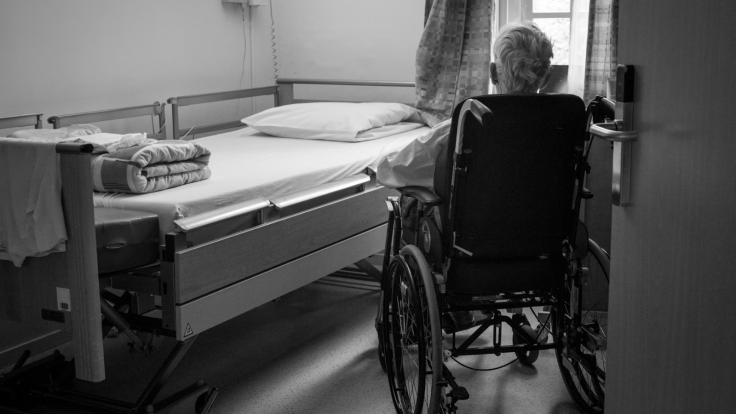
Thailand has ordered urgent inspections of all 1,203 registered care facilities after a nursing home in Kanchanaburi province was shut down when inspectors found residents' beds enclosed in steel cages and more than twice the number of beds it was licensed to hold.
Health officials revoked the licence of the Sothornchai Nursing Home on 7 October 2026 after inspectors reported finding 129 beds in a home approved for 50, rooms with barred doors that could be locked from the outside and wire fencing around parts of the property.
The government has given inspectors two months to check every registered facility. Human Rights Watch says the case highlights serious failings in how Thailand cares for its rapidly ageing population.
'Caged' Beds and Locked Rooms
The case came to light after a 63-year-old woman described her ordeal on the Thai television programme Hone-Krasae, the Thai Examiner reported. She said her son and daughter-in-law had placed her in the home in Tha Muang district against her wishes. Images of beds covered in steel frameworks followed.
The woman, identified by Human Rights Watch as Mae Phat and in other reports as Pat, said she had been involuntarily committed, made to take medication against her will and physically restrained, sometimes for hours, Human Rights Watch said.
She told Thai PBS that her son had placed her there by falsely claiming she was mentally ill, an allegation that has not been independently established. She has filed police complaints against him and the facility. Police are investigating her allegations of assault, confinement and forced medication, which the owner disputes.
Animal like cage disguised as ‘Old Age Home’ in Kanchanaburi
— Thai Enquirer (@ThaiEnquirer) October 6, 2026
An elderly and psychiatric care facility in Kanchanaburi, which was officially approved by relevant authorities, has been inspected by Thailand’s Central Investigation Bureau (CIB) following disturbing allegations of… pic.twitter.com/PKXgeLSe56
Inspectors reported finding 129 beds in a home licensed for 50 during a visit on 6 October, Thai PBS World reported. Some mattresses were fully enclosed by steel frames, some rooms had barred doors that could be locked from outside, and concertina wire surrounded parts of the site. The home had an inadequate ratio of nurses to residents and too few toilets, leaving residents to use buckets, according to the report.
Although licensed to care for older and dependent people, the home had taken in psychiatric patients and people with drug addictions. More than 90 per cent of its residents were psychiatric patients, most of them aged between 18 and 59, according to the Thai Examiner. A 15-year-old boy was also found there and collected by his mother.
Owner Defends Steel Enclosures
The owner, a former nurse named in Thai media as Ying 'Maew' Pornsermsiri, has defended the enclosed beds as a way to protect difficult patients from falls and self-harm. She denies assaulting the complainant and says the woman's son repeatedly delayed collecting her. Her son, Teerapop Rangsisukanon, said he designed the beds but acknowledged possible failures in assessing residents and checking their medical histories.
Health officials rejected that defence. 'Using cages to confine or cover beds, as seen at this centre, is not a medical standard,' said Dr Kittisak Aksornwong, director-general of the Department of Mental Health.
The Department of Health Service Support revoked the licence on 7 October, and Public Health Minister Pattana Prompat ordered closure documents prepared. Officials said the owner could face legal action, and the Thai Examiner reported that the operator has 30 days to appeal.
Residents are being collected by relatives, moved to other facilities or placed in government care, with at least five transferred for medical treatment. The steel bed enclosures have since been dismantled, according to the Thai Examiner.
A separate allegation is also under investigation. Police and provincial health officials inspected a care home in Nonthaburi, near Bangkok, after a former resident alleged he had been chained to his bed. Those claims have not been verified.
Widespread Checks in an Underregulated Sector
The government has ordered the Department of Health Service Support, its 12 regional centres and provincial health offices to inspect all 1,203 registered care facilities within two months, UA.NEWS reported, citing the Bangkok Post. Inspectors will check compliance with the 2016 Health Establishment Act, including safety, staffing and licensing.
The number of registered facilities may understate the scale of the sector. Thai PBS World reported that only about 1,200 of nearly 4,000 nursing homes operating in Thailand are licensed, which would leave almost 70 per cent outside the system. DHSS chief Dr Phuwadet Surakhot said 'the quality of service at licensed facilities deteriorated significantly.'
The pressures are demographic. According to Thai PBS World, Thailand became an 'aged society' in 2023 and now has about 14.2 million people aged 60 or over. The UN projects that about 28 per cent of the population will be 65 or older within a decade.
Around 170,000 older people are bedridden and more than 800,000 live with dementia. Thai PBS World reported that small or unlicensed homes typically charge 12,000 to 22,000 baht (about £280 to £510) a month. Thailand's National Statistical Office put average monthly household income at about 28,300 baht in 2025.
Human Rights Watch said responsibility for elder care is spread across several ministries, while shortages of care workers leave many older people dependent on relatives who cannot always cope.
Audrey Gregg, its senior Asia coordinator, called for a time-bound plan to move older people and people with disabilities out of institutions, unannounced inspections with confidential interviews, and a hotline to investigate abuse. 'Thailand should move beyond institutional care,' the group said.
In Thailand, abuse can be reported to the government's 1300 hotline. In the UK, Hourglass supports older people experiencing abuse on 0808 808 8141.
© Copyright IBTimes 2026. All rights reserved.