

Trev Alberts Walked Away From a Reported $19.2M Texas A&M Deal for Michigan: Who Pays His $4M Exit Fee?
The University of Michigan backed out of hiring Trev Alberts, as its athletic director and now owes the former football linebacker $17.2 million
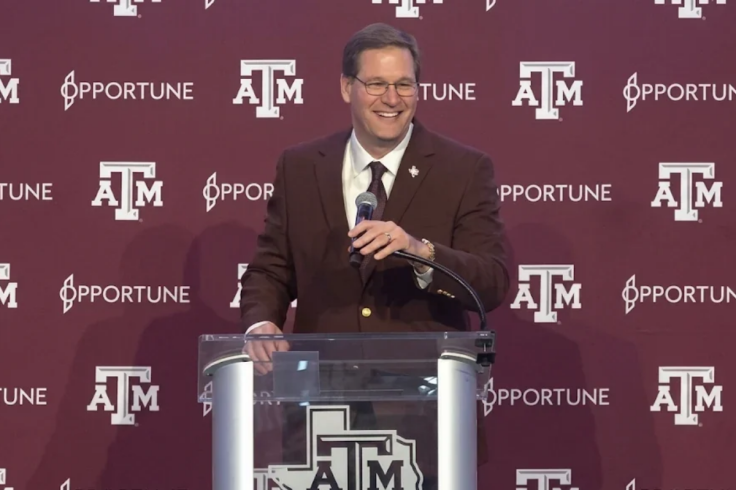
Trev Alberts' proposed appointment as the University of Michigan's athletics director has collapsed a week after he signed a memorandum of understanding and resigned from Texas A&M.
His lawyers say Michigan remains contractually bound to pay $17.2 million (about £13 million) under the agreement, while the university says a background check gave it grounds to withdraw.
The reversal also leaves a separate $4 million (about £3 million) departure charge under Alberts' Texas A&M contract, which Michigan had reportedly agreed to cover.
Michigan Withdraws After Signing the MOU
Alberts signed the memorandum of understanding (MOU) on 17 November with Michigan president Domenico Grasso and incoming president C. Cybele Raver. He was expected to take up the role on 1 December, replacing Warde Manuel.
Michigan informed Alberts on 23 November that it would not proceed, Mars said. In a letter dated 24 November, Grasso and Raver said the MOU contemplated customary employment conditions, including a successful background check. They described the information obtained as unacceptable and said it provided grounds to terminate the memorandum.
Texas A&M AD Trev Alberts agreed to a new six-year, $19.2 million contract last November through January 2032, and he'd owe A&M $4 million for leaving before Feb. 1, 2027, per my previous reporting about his deal. https://t.co/1YOKenvZRD
— Carter Karels (@CarterKarels) November 18, 2026
Mars disputes that interpretation. He argues that the MOU contains no background-check contingency and remains binding because both university presidents signed it. The dispute remains unresolved.
Two Separate Financial Obligations
Alberts' Texas A&M contract was reportedly worth $19.2 million over six years, including incentives, and ran through 31 January 2032, according to Aggie Yell, which obtained the agreement through an open-records request.
The contract required him to pay $4 million if he left before 31 January 2027. His departure was scheduled to take effect on 30 November, within that period.
The MOU also specifies that Michigan will pay Texas A&M the $4 million buyout, according to Front Office Sports, which reviewed the agreement. Alberts' Michigan compensation was reportedly set to exceed $4 million annually, including bonuses and deferred compensation, with the agreement due to run through June 2031.
The $4 million departure charge is separate from the $17.2 million claim against Michigan. Mars and fellow lawyer Bennett Speyer say the MOU obliges the university to pay $17,205,352. That is their claimed contractual amount, not a court-ordered payment.
Deposition Remarks and the Nebraska Lawsuit
The controversy surrounding Alberts' proposed appointment intensified after reports emerged about testimony he gave on 4 December 2025 in a federal lawsuit brought by former Nebraska women's basketball player Ashley Scoggin.
During the depositions, Alberts was questioned about whether college coaches should have sexual relationships with student-athletes. He initially said he did not know before responding, 'it depends'. He referred to pandemic-era eligibility extensions, explaining that some student-athletes could be 25 or 26 while coaches might be 27 or 28.
Reports that Michigan officials had discussed Alberts' deposition testimony before withdrawing the proposed appointment brought renewed attention to his remarks.
Scoggin's lawsuit concerns her relationship with former Nebraska assistant coach Chuck Love. She alleges that university officials, including Alberts and head coach Amy Williams, mishandled the situation.
Trev Alberts issues a statement...
— James T. Yoder (@JamesYoder) November 24, 2026
Michigan should be absolutely ASHAMED. Disgusting way to operate. pic.twitter.com/L5ms12wVUs
The allegations against Alberts concern his administrative handling of the matter. Scoggin has not accused him of having a sexual relationship with her. Alberts, Williams and Nebraska's regents have said they lacked sufficient information to admit or deny that the relationship occurred, while Love separately described it as consensual in court filings.
Alberts has disputed the characterisation of his deposition remarks. Following Michigan's decision, he said the university's general counsel had consulted legal representatives at Texas A&M and Nebraska, who he was told had concluded that he had done nothing wrong or inappropriate and had followed applicable university policies and procedures.
Michigan's letter to Alberts identified the background-check findings as the reason it would not proceed with the employment agreement. However, it did not publicly detail the specific information that led to its decision.
The lawsuit remains ongoing, and the allegations against Alberts have not been established.
Michigan's Financial Exposure Remains Disputed
The collapse could leave Michigan facing more than $20 million in financial commitments, according to the Associated Press. The figure includes the $16 million base salary under Alberts' proposed five-year agreement, additional bonuses and a separate $4 million payment to Texas A&M.
Alberts' lawyers have put his contractual claim against Michigan at $17,205,352, arguing that the signed MOU obliges the university to honour the agreement. Michigan disputes that interpretation, maintaining that information uncovered during the background check provided grounds for termination.
Whether Michigan must honour the MOU's compensation provisions remains unresolved. No court has yet determined whether the university is liable for the payments.
© Copyright IBTimes 2026. All rights reserved.