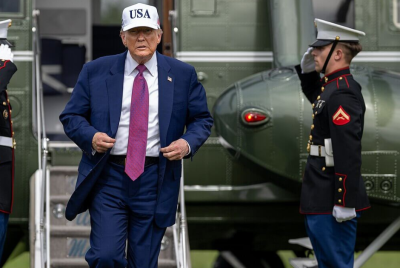
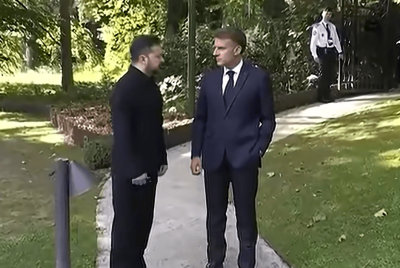
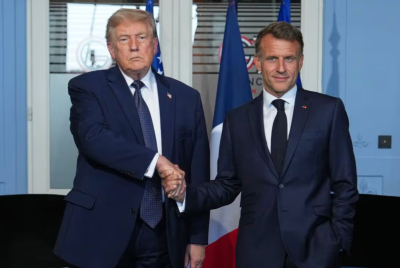
Donald Trump Humiliated: Giorgia Meloni Cancels US Trip After POTUS Claims She 'Begged' for Photo
A photograph dispute escalates into a diplomatic rift between Trump and Meloni, affecting US-Italy relations.
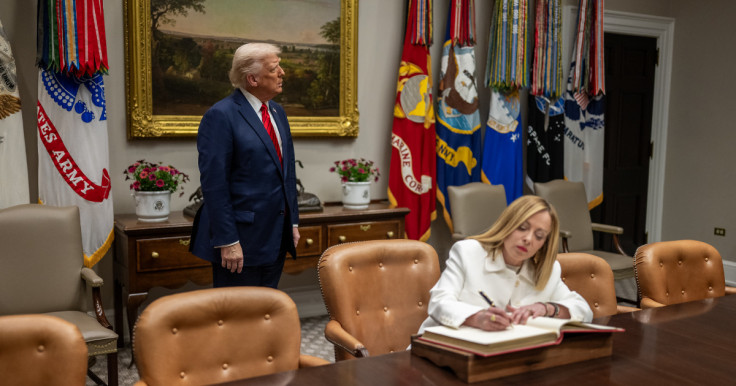
Donald Trump's relationship with Italian Prime Minister Giorgia Meloni has suffered its most public rupture yet after a dispute over comments he made about their interaction at the G7 summit. The row escalated quickly, with Meloni publicly rejecting Trump's account, Italy's foreign minister cancelling a planned visit to the United States and a business forum in Miami being called off.
Italy's foreign minister on Friday said he was cancelling a visit to the United States over reported comments by US President Donald Trump
— Prafull Singh (@prafullsingh97) June 19, 2026
"The grave and offensive words of President Trump... offend the whole of Italy," Foreign Minister Antonio Tajani, who had been due to visit… pic.twitter.com/lhQJXBoYW0
The dispute carries wider significance because Meloni was once viewed as one of Trump's closest political allies in Europe and a potential bridge between Washington and the European Union. Instead, a disagreement over a photograph has exposed tensions that have been building between the two leaders over foreign policy and diplomacy.
Meloni Rejects Trump's Version of Events
The controversy began after Trump told Italian broadcaster La7 that Meloni had 'begged' him for a photograph during the recent G7 summit and that he agreed only because he 'felt sorry for her.' The remarks quickly drew attention in Italy, where they were widely reported as an insult to both the prime minister and the country she represents.
Italian Prime Minister Giorgia Meloni on Friday hit back at US President Donald Trump after he claimed she had “begged” him for a photograph during the recent G7 summit, calling his account “completely made up” and expressing shock at his remarks.
— Hindustan Times (@htTweets) June 20, 2026
Swipe 👈to watch!
More… pic.twitter.com/TG4okPxW4w
Meloni responded directly through a video posted on social media, dismissing Trump's account as 'completely made up'. She described the comments as astonishing and questioned why a US president would speak in such terms about an allied nation.
Her most forceful response came at the end of the statement. 'There is one thing he should remember: neither I nor Italy ever beg,' she said. The exchange transformed a personal disagreement into a public diplomatic dispute.
Diplomatic Fallout Arrives Quickly
The first concrete consequence followed almost immediately. Italian Foreign Minister Antonio Tajani cancelled a planned visit to the United States scheduled for June 21 and 22, describing Trump's remarks as 'serious and offensive' and arguing that they insulted Italy as a whole.
The decision also forced the cancellation of a business and science forum in Miami that had been due to take place during the visit. Italy's foreign ministry later confirmed the event would not proceed, while the country's business federation, Confindustria, also withdrew.
The dispute had now moved beyond rhetoric. A disagreement that began with comments about a photograph was affecting ministerial travel, business engagement and the tone of relations between two allied governments.
From Political Partners to Public Friction
The episode is particularly striking because of how closely Trump and Meloni were once associated politically.
Reuters and other international outlets previously described Meloni as one of the European leaders best positioned to work with Trump and help bridge differences between Washington and Brussels. Trump allies frequently portrayed her as a valuable interlocutor between the United States and the European Union.
For a period, that assessment appeared justified. The two leaders exchanged public compliments and often presented themselves as politicians with similar nationalist instincts and priorities.
However, divisions have become increasingly visible in recent months. Meloni criticised Trump's remarks about Pope Leo XIV as 'unacceptable' and has also voiced concerns about aspects of his approach to Iran. Those disagreements have contributed to a cooling relationship that once appeared politically advantageous for both sides.
Why the Dispute Resonated
The reaction was shaped partly by timing. During the G7 summit, both leaders had publicly projected a cordial relationship, smiling for photographs and emphasising their ability to work together despite policy differences.
On the sidelines of the G7 summit in France on Tuesday, EU Council President António Costa jokingly commented to U.S. President Donald Trump and Italian Prime Minister Giorgia Meloni: “You are friends again!” To which Meloni responded: “We have always been friends!” pic.twitter.com/gRTHKnW96d
— NTD News (@NTDNews) June 16, 2026
That backdrop made Trump's later comments particularly notable. Opposition politicians in Italy and several Italian media commentators argued that the remarks diminished a close ally for domestic political effect, while Meloni's supporters viewed her response as a defence of both her office and national dignity.
The dispute also highlights the balancing act Meloni faces. While she shares ideological ground with parts of Trump's political movement, she must also manage Italy's commitments within the European Union and maintain stable ties with Washington.
An Alliance Facing New Strains
The larger significance of the episode extends beyond a single exchange of insults. The Trump-Meloni relationship was once presented as a potential asset for both leaders, offering a channel between a nationalist administration in Washington and one of Europe's most influential conservative governments.
That narrative now looks considerably less certain. A disagreement over a photograph has evolved into cancelled diplomatic engagements, public criticism and renewed questions about the future of a relationship once viewed as strategically important on both sides of the Atlantic.
Whether the fallout proves temporary or marks a deeper shift in relations remains unclear. But for a partnership once held up as a model of transatlantic conservative cooperation, the speed with which tensions have surfaced may be the most striking development of all.
© Copyright IBTimes 2025. All rights reserved.
- Recommended For You