State Pension Now £241.30 a Week: How Many National Insurance Years Are Needed for the Full Amount
The 35-year rule only applies to newer records, as older ones often require more, and few people realize this

The full new State Pension is now worth £241.30 a week, or a little over £12,500 a year. Reaching that figure depends on one thing above all: how many qualifying years sit on a National Insurance record.
The rule most people have heard is 35 years. That is broadly right, but only for those who started paying National Insurance after April 2016. For millions of older workers, the number is higher, and the reason catches people out.
The Two Numbers That Matter
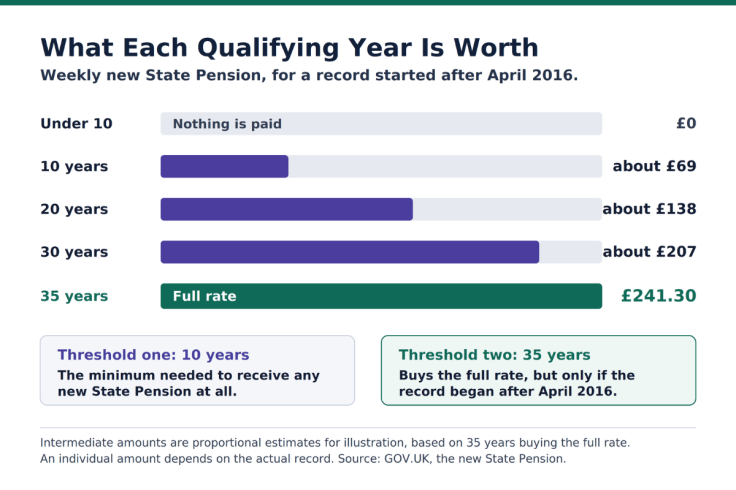
There are two thresholds. The first is 10 qualifying years, which is the minimum needed to receive any new State Pension at all. Anyone with fewer than 10 gets nothing from this scheme.
The second is 35 qualifying years, which buys the full rate for someone whose record began after April 2016. Between those two points, the pension is worked out roughly in proportion, so 20 years produces well under half the full amount. The steps are set out below.
A qualifying year is not the same as a year of work. It counts if National Insurance was paid through a job, if credits were awarded or if voluntary contributions were made. Credits cover periods of unemployment, illness, and time spent raising children or caring for someone.
That last point matters more than it sounds. Parents and carers who were out of paid work for years may still have built qualifying years without realising, provided the right credits were claimed at the time.
Why 35 Years Is Not Always Enough
Here is the part that surprises people. The 35-year figure applies cleanly only to records that started after April 2016. Anyone whose record began earlier may have been contracted out.
Contracting out was common before 2016. Workers in many company pension schemes paid a lower rate of National Insurance. The difference went into a workplace or private pension instead of towards the State Pension. Those years still count, but they were bought at a discount.
So anyone with contracted-out years on their record typically has to build up beyond 35 before the full rate is reached. The government does not publish a single alternative number, because it depends on the record. The two routes are compared below.
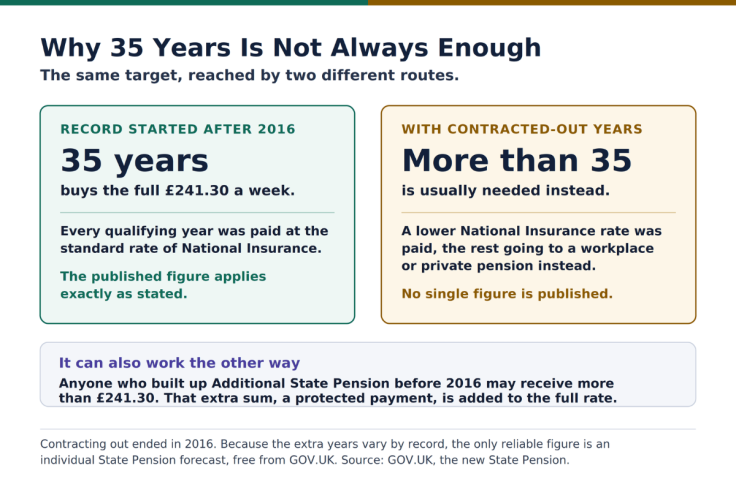
The reverse also happens. Anyone who built up Additional State Pension under the pre-2016 system may be entitled to more than £241.30. That extra sum is known as a protected payment, and it is added to the full rate rather than replacing it.
Both cases point to the same conclusion. The headline figures are a guide, not a personal calculation, and the only reliable answer comes from an individual forecast.
How to Check and Fill the Gaps
The government provides a free State Pension forecast. It shows the likely amount at State Pension age, the qualifying years already banked, and any gaps in the record. It is the most useful thing anyone under retirement age can look at.
Where gaps exist, voluntary contributions can sometimes fill them, though not every year can be bought back and the cost varies. Missing credits are worth checking too, particularly for anyone who raised children or cared for a relative and may never have claimed them.
The pension also rises each year under the triple lock, increasing by whichever is highest out of average wage growth, price inflation or 2.5%. That protects the value over time, but it does not compensate for a short record.
© Copyright IBTimes 2025. All rights reserved.
- Recommended For You