Erika Kirk Walks Out as Gunshot Audio of Charlie Kirk Assassination Plays Feet From Expressionless Tyler Robinson
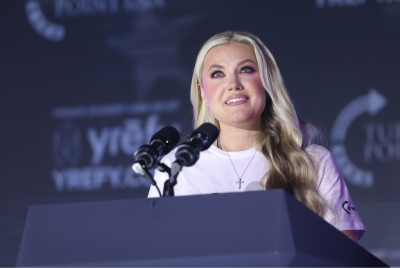
Erika Kirk left a Provo courtroom during the hearing of Tyler James Robinson, accused of killing her husband, Charlie Kirk.
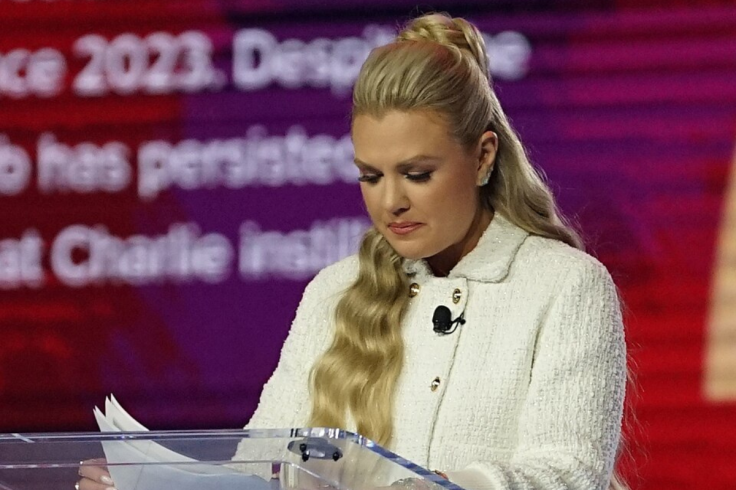
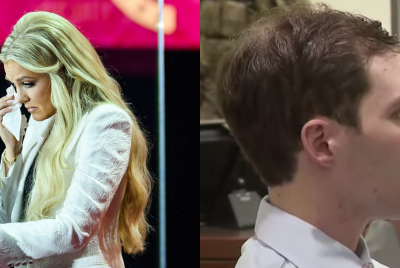
Erika Kirk rose and walked out of a Provo courtroom before the audio of her husband's killing filled the room, while the man accused of firing the shot sat motionless a few feet away.
The widow of conservative activist Charlie Kirk attended the opening day of Tyler James Robinson's preliminary hearing on 6 July 2026, the first time she and Robinson had shared a room since the assassination at Utah Valley University last September.
Prosecutors from the Utah County Attorney's Office spent eight hours laying out surveillance footage, forensic evidence, and graphic video as they sought to prove there is enough evidence for Robinson to stand trial on a capital charge. Robinson, now 23, faces the death penalty if convicted, and he has yet to enter a plea.
A Widow's Exit and a Defendant's Stillness
Kirk's widow sat between her mother and her mother-in-law as the hearing began, according to courtroom reporting from the Deseret News. When former Utah Valley University police officer Chris Bagley began describing the moments before the fatal shot, Kirk and her husband's parents, Robert and Kathryn Kirk, quietly stood and left the room.
They returned after a break, then left again before prosecutors played three graphic videos of the shooting. Judge Tony Graf ruled the footage too disturbing to broadcast, so the videos were shown only on private monitors at the judge's podium and the attorneys' tables. The audio, however, carried across the courtroom, including the sound of a single gunshot followed by screaming.
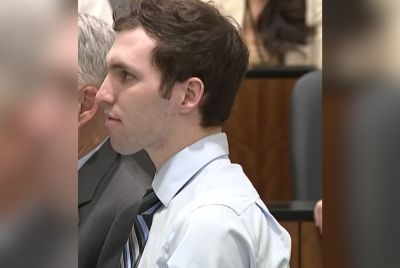
Robinson sat expressionless between his attorneys as that audio played, his wrists shackled to a chain around his waist, and the monitor at his own table was apparently switched off. His parents sat several rows behind the Kirk family, watching in silence.
President Donald Trump's eldest son, Donald Trump Jr., occupied a seat in the gallery, a reflection of how closely the case remains tied to national politics.
The Rooftop, the Rifle, and the Sworn Evidence
The state's case rests heavily on physical evidence detailed in its sworn charging Information, a document signed by Utah County Attorney Jeffrey Gray. According to that filing, a police officer heard the shot, judged from its sound that it came from a rifle, and rushed to a rooftop roughly 160 yards from where Kirk was seated. There he found impressions in the gravel consistent with someone lying in a prone shooting position.
Investigators recovered a bolt-action .30-06 rifle wrapped in a towel in a wooded area near the campus, the Information states. The weapon held one spent round and three unspent rounds, each etched with a message, and forensic testing found DNA consistent with Robinson's on the trigger, the fired cartridge casing, two of the unfired cartridges, and the towel.
Surveillance cameras tracked a figure in dark clothing walking with an unusual, stiff-legged gait that the filing describes as 'consistent with a rifle being hidden in his pants.'
The defence has pushed back hard on the forensics. Robinson's attorney, Kathryn Nester, has argued that a fuller analysis is needed because reports indicate DNA from up to five or more people was found on some items, and court documents note that a federal analysis of bullet fragments recovered from Kirk's body 'could not be identified or excluded' as fired by the recovered rifle. On day one, Nester objected to nearly every exhibit, arguing much of it amounted to hearsay.
A Note Under a Keyboard and a Confession in Text
The most damaging material against Robinson is not the ballistics but his own alleged words. The charging Information reproduces a text exchange in which Robinson directed his roommate and partner, Lance Twiggs, to 'look under my keyboard,' where police later photographed a note reading, 'I had the opportunity to take out Charlie Kirk and I'm going to take it.'
When Twiggs asked whether Robinson was responsible, the filing records show Robinson replying, 'I am, I'm sorry.' Asked why, he allegedly wrote, 'I had enough of his hatred. Some hate can't be negotiated out.' The same document alleges Robinson then instructed his partner to 'delete this exchange' and, if questioned by police, to 'ask for a lawyer and stay silent,' the basis for two witness-tampering counts.
Those messages sit at the centre of the seven counts Robinson faces: aggravated murder, felony discharge of a firearm causing serious bodily injury, two counts of obstruction of justice, two counts of witness tampering, and committing a violent offence in the presence of a child. The murder count carries a victim-targeting enhancement alleging Robinson selected Kirk 'because of' his political expression. The day Robinson was charged, Judge Graf also granted Erika Kirk a pretrial protective order describing Robinson as 'a credible threat to the physical safety of the protected person.'
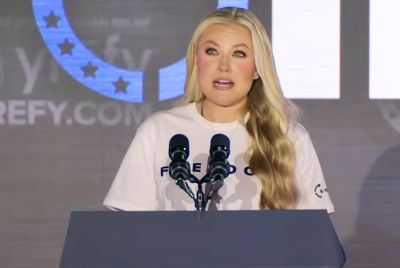
In a statement released through Erika Kirk's social media as the hearing opened, the family said, 'Every court proceeding serves as a painful reminder of his death and the loss that has irrevocably impacted our lives and the lives of his children,' adding that the support they had received 'sustained us during the darkest days of our lives.' The recorded testimony of Twiggs, expected later in the week, may prove the hearing's pivotal moment.
For a widow who has already buried her husband, this week offers no closure, only the slow, public reconstruction of the worst day of her life.
© Copyright IBTimes 2025. All rights reserved.
- Recommended For You