Why Did Judge Enjolique Lett Order Donald Trump Financial Scrutiny? BBC Lawsuit Dispute Detailed
The case, filed in South Florida, has since evolved from a standard media-defamation dispute into something more invasive for Trump's business empire.
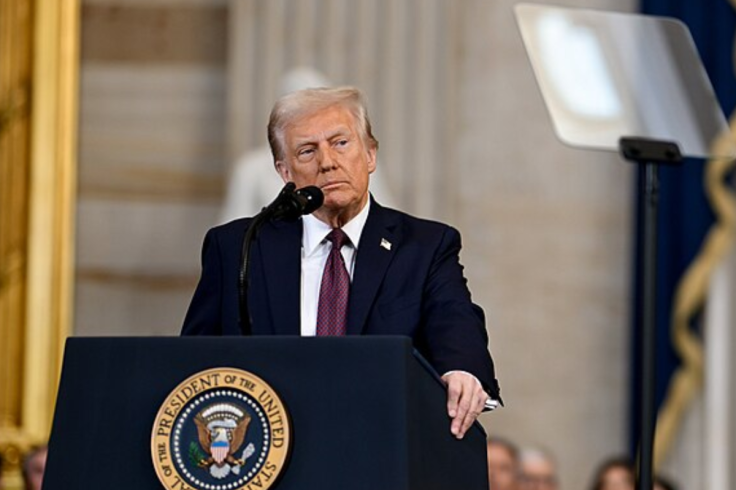
Donald Trump's $10 billion defamation lawsuit against the BBC took an unexpected turn in a Miami federal court on Tuesday, when a judge ruled that the President's sweeping claims of damage would allow BBC lawyers to dig into his financial records across hundreds of companies.
Trump sued the British broadcaster in December 2025, alleging that the BBC deceptively edited his 6 January 2021 speech in Washington, D.C., to make it sound as though he had called for violence.
The complaint accuses the BBC of misrepresenting his words in coverage linked to the storming of the US Capitol by his supporters later that day. The case, filed in South Florida, has since evolved from a standard media-defamation dispute into something more invasive for Trump's business empire.
The latest ruling came from US Magistrate Judge Enjoliqué Lett after a three-hour hearing in Miami. Lett concluded that because Trump has claimed that the broadcast impugned not only his reputation but also his brand, properties and businesses, he has effectively placed his finances at the centre of the litigation.
'All of President Trump's brand, properties and businesses are impugned or said to have been impugned. Reputational, economic damages, all of that is now at issue in this case,' Lett observed, according to reports. Once those economic claims were in the complaint, she suggested, there was no realistic way to wall off the financial side of his life from scrutiny.
Judge's Order Opens Door on Donald Trump Finances
The practical result of Lett's ruling is that BBC lawyers are now entitled to seek detailed financial records tied to more than 400 Trump entities, Politico reported. For a man who has fought for years to keep his finances out of court and out of the public eye, it is an unusually self-inflicted vulnerability.
Trump's lawyer, Al Brito, tried to pull things back. He told the judge that the lawsuit had 'evolved' and that Trump was now pursuing only reputational damages, not economic ones. That narrower focus, Brito argued, should make extensive financial discovery unnecessary.
Lett was unpersuaded. She said she did not have the authority simply to erase economic-damage claims from a complaint that Trump himself had filed. If Trump wanted to abandon those claims formally, the implication was that he would need to move to amend his lawsuit properly rather than verbally recast it in a hearing. Until then, his own allegations kept the door open.
Attorney Chuck Tobin leaned into that logic. 'He ran for president of the United States on a platform of the art of the deal,' Tobin told the court, in a pointed reference to Trump's long-standing self-promotion as a master businessman. 'You cannot separate the man and his reputation from his operation of his businesses.'
That line crystallised the BBC's position: Trump cannot claim that the broadcaster damaged his entire commercial persona and then insist his accounts are off limits.
6 January Limits and the Stakes for Donald Trump
The hearing also tackled a more politically charged issue: how deeply the BBC can probe Trump's conduct surrounding 6 January. The network wants to test whether its editing of his speech fairly reflected how audiences heard his words on the day supporters stormed the US Capitol.
Lett drew a line, but not one that will comfort Trump entirely. She ruled that BBC lawyers may explore 'how people heard his words,' placing the perception of his 6 January remarks squarely at issue. However, she cautioned that 'the full relitigation of Jan. 6 is not at issue,' signalling that the court does not intend to turn the defamation case into a broad inquiry into the riot itself.
That still leaves significant room for questioning and potentially for testimony about the impact of his speech. According to a report, the BBC is also pressing to have Trump questioned under oath and has complained that his legal team is 'dragging their feet on giving me a date for the president's deposition,' as Tobin put it. A sworn deposition would represent another risky moment for Trump, who is already entangled in multiple legal battles.
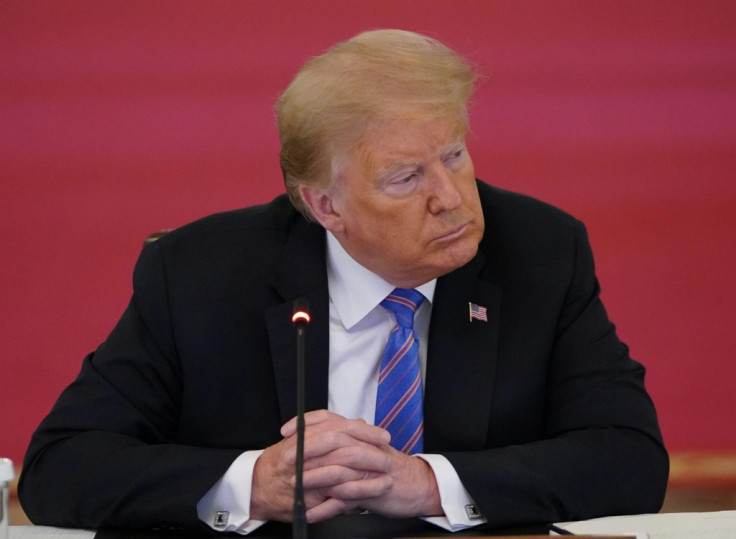
Lurking in the background is an even more existential threat to the lawsuit. BBC has asked US District Judge Roy Altman, a Trump appointee, to dismiss the case outright. The corporation argues that it does not have a sufficient presence in South Florida for the court to exercise jurisdiction over it, a threshold issue that could end the case before it reaches a jury. Politico reports that Altman has not yet ruled on that jurisdictional challenge.
Nothing in the current filings confirms how extensive or public any eventual financial disclosures would be. Until more detailed orders are issued or documents are filed on the public docket, the scale of any exposure remains uncertain and should be taken with a grain of salt. What is clear, though, is that a $10 billion gambit aimed at defending Trump's image has now positioned that image and the money behind it under far more intense legal inspection than when he first went after the BBC.
© Copyright IBTimes 2025. All rights reserved.
- Recommended For You