'You're a Failure': Pete Hegseth Slammed Over $37.5bn Cost of Iran War, Requests $80bn for More Funding
US Defence Secretary faced intense questioning in Congress over a $80 billion military funding request, amid concerns about rising costs and unclear strategy in the ongoing conflict with Iran.
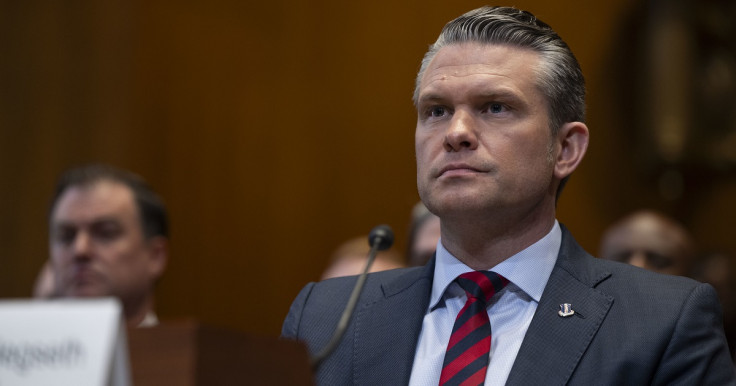
US Defence Secretary Pete Hegseth was slammed after enduring a confrontational appearance before Congress, revealing that the war with Iran has already cost an estimated $37.5 billion (£27.8 billion). His plea for another $80 billion in military funding quickly turned into a bruising hearing dominated by questions over strategy, leadership and whether the conflict is becoming another prolonged US war.
The tense session before the Senate Appropriations Committee exposed widening divisions in Washington as the Trump administration presses lawmakers to approve a broader $95 billion spending package. While Republicans argue the money is needed to sustain military operations and other White House priorities, Democrats questioned both the rising cost of the conflict and the absence of a clearly defined endgame.
War Costs Continue To Rise
Hegseth disclosed that military operations against Iran have so far cost approximately $37.5 billion, marking a notable increase from previous public estimates. The updated figure emerged just days after the Pentagon confirmed the deaths of three more American service members, bringing the total number killed since fighting intensified in early July to 17. More than 100 personnel have also been injured, according to Pentagon figures.
Calling the supplemental funding request 'urgent' and 'necessary', Hegseth argued the additional money would prevent critical capability gaps while supporting President Donald Trump's proposed $1.5 trillion defence budget.
'Without these funds, we face critical shortfalls,' he told senators.
Democrats were unconvinced. Senator Patty Murray warned that the United States risks being drawn into 'another forever war', accusing the administration of asking Congress to continue financing a conflict without presenting a convincing path towards ending it.
She reminded the committee that Trump has repeatedly insisted 'a deal is near, and the war will be over soon', yet is now seeking tens of billions of dollars more to continue military operations.
Lawmakers Press Pentagon Over Strategy
As questioning intensified, Hegseth found himself defending not only the administration's war plans but also his own leadership of the Pentagon.
Republican committee chair Susan Collins criticised the department over decisions to block or delay military promotions, particularly involving women and minority officers, adding another politically sensitive issue to an already difficult hearing.
Democratic Senator Jeanne Shaheen questioned why the Pentagon was requesting another major funding package when roughly half of the $150 billion previously approved by Congress has yet to be spent.
'Why are you asking the American people to absorb the cost of a war they don't support?' she asked.
When Hegseth attempted to defend what he described as Trump's 'historic' military strategy, Shaheen interrupted before he could expand further. The defence secretary later responded that the remaining funds authorised in last year's budget would be allocated by September.
General Dan Caine, Chairman of the Joint Chiefs of Staff, also appeared before the committee. When Republican Senator Mike Rounds asked whether the latest request would be sufficient to complete the mission, Caine declined to offer any estimate.
'I can't answer the question on what it will cost, because the enemy has a vote,' he said.
Hearing Descends Into Bitter Exchanges
The atmosphere deteriorated further during the hearing's final stages as senators challenged the administration's military claims. Republican Senator John Kennedy repeatedly pressed military leaders over whether Iran could impose tolls on vessels passing through the Strait of Hormuz, one of the world's most strategically important oil shipping routes. Caine declined to speculate, describing the question as hypothetical.
Kennedy replied bluntly: 'Guys, we need straight answers.'
The sharpest confrontation came when Democratic Senator Gary Peters criticised the administration's overall conduct of the war.
Calling the campaign a 'failure', Peters argued the United States lacked a coherent long-term strategy.
'Shame on you and others who call this a quagmire and a failure,' Hegseth said.
Peters responded with perhaps the hearing's defining moment. 'You, sir, are the failure.'
The Michigan senator stressed that his criticism was directed at political leadership rather than US service personnel.
'You don't have a strategy,' Peters said. 'You don't have a long-term plan to actually win this war.'
Hegseth accused Democrats of suffering from 'Trump Derangement Syndrome' and argued they were refusing to provide the military with the resources needed to succeed. Peters rejected that characterisation, insisting the central issue was leadership rather than funding.
Budget Battle Heads To Congress
The confrontation arrives as Republicans attempt to advance the $95 billion package through the budget reconciliation process, allowing legislation to pass the Senate with a simple majority rather than the usual 60 votes.
The proposal combines military funding with support for agriculture and voting law changes, while the White House has urged lawmakers to approve the resolution without amendment.
Public opinion, however, presents a growing challenge. Recent AP-NORC polling indicates that most Americans disapprove of Trump's handling of the conflict with Iran. Rising fuel prices linked to disruption around the Strait of Hormuz and growing concerns over the cost of military operations have added pressure as Congress prepares for another debate over US war powers.
© Copyright IBTimes 2025. All rights reserved.
- Recommended For You