UK Far-Right Protests Turn Violent With Rise of Nazi Salutes And Sikh Abuse After Henry Nowak Verdict
Tensions rise in Southampton as far-right groups exploit murder case, sparking fear and unrest among Sikh community.
The murder of 18-year-old Henry Nowak and the subsequent conviction of 23-year-old Vickrum Digwa have triggered a wave of unrest in Southampton.
Demonstrations outside Southampton Central Police Station descended into violence as protesters marched towards Digwa's family home, with reports of missiles being thrown at police, vehicles damaged, and some individuals performing Nazi salutes while chanting racist slogans.
Community leaders, residents, and campaigners say the fallout has left many people fearful, particularly members of minority communities who have reported an increase in abuse and intimidation.
Henry's father has also urged people not to use his son's death to deepen divisions, insisting that the case should be understood as a murder rather than a reflection of any religion or race. Although Sikh organisations were quick to condemn the killing and distance the faith from Digwa's actions, tensions have escalated in the days following the verdict.
Sikh Community Faces Growing Fear After Verdict
Sikh leaders say anxiety has spread rapidly through the community following both the verdict and the demonstrations that followed.
Jas Singh, principal adviser to the Sikh Federation UK, said there was shock within the Sikh community when details of the murder first emerged. Speaking about Digwa's actions, Singh questioned how someone from the Sikh community could carry out such a violent attack.
The worries intensified after hundreds of protesters gathered in Southampton on Tuesday. Several prominent far-right figures addressed the crowd before violence broke out.
According to reports, some demonstrators performed Nazi salutes and shouted 'white power' during the unrest. The reaction has left many Sikhs worried about their safety. Singh said he spent much of the day speaking with people connected to local gurdwaras, who asked whether it was safe to leave their homes or attend places of worship. He said attendance at some congregations had already fallen.
Reports of anti-Sikh incidents have also emerged. Singh described a case involving a priest who suffered verbal abuse before being assaulted in a supermarket. He also spoke of a care worker in Southampton who had spent years supporting elderly residents but was reportedly refused entry by a client because he wore a turban and beard.
According to Singh, concerns are not limited to Southampton. He said Sikhs in other parts of Britain have also reported incidents in recent days, including people being spat on in Kent and a man in Birmingham being subjected to abuse while travelling to work.
Singh criticised politicians who highlighted Digwa's religion and references to a kirpan during discussions of the case. He argued that this created misconceptions about Sikhism. The court heard that the murder weapon was not a kirpan but a separate Persian-style dagger carried by Digwa.
A judge told Southampton Crown Court that Digwa had brought 'shame' upon his religion and contributed to racial tension.
Murder Case Fuels Debate Over Policing And Community Relations
The case has also reignited debate about policing and race relations in Britain.
On 3 December, Henry Nowak had been celebrating the end of his first term at the University of Southampton with friends when he was stabbed five times by Digwa.
The court heard that Digwa falsely claimed Henry had racially abused him before the attack.
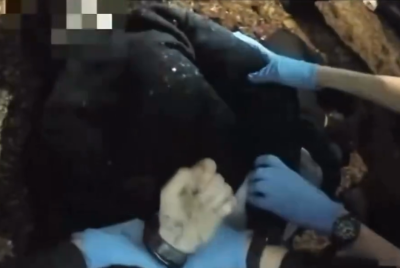
Police officers initially treated Henry as a suspect rather than a victim after accepting Digwa's account. Body-camera footage showed the teenager repeatedly telling officers that he had been stabbed and was struggling to breathe while he lay handcuffed on the ground.

Following the sentencing, Henry's father, Mark Nowak, expressed anger over police failures but urged people not to use his son's death to spread hatred.
'This is not a case about Sikhism. This is not a case about racism. This is a case about murder,' he said outside court.
Despite those comments, the case has become central to arguments about what some politicians describe as 'two-tier' policing.
Reform UK leader Nigel Farage claimed Britain had become a place where 'the rights and privileges of white people matter less than those of ethnic minorities' and urged the public to react with 'pure, cold rage'.
The debate widened further when the United States State Department criticised what it described as 'ideological conditioning and two-tiered policing'.
Others have strongly rejected those claims. Shabna Begum, head of the Runnymede Trust, argued that the current atmosphere makes political exploitation of murder cases particularly dangerous. She said there was no evidence that anti-racism guidance had caused police to favour minority communities and warned against undermining decades of equality work.
Andrew George, president of the National Black Police Association, also challenged suggestions that policing had gone too far in addressing race and inclusion. He said public trust remained essential to effective policing and argued that engagement with minority communities was fundamental to maintaining that trust.
Meanwhile, residents in Southampton say their daily lives have already been affected. Anti-racism campaigner Jayanti Shah said recent demonstrations had frightened many local people. Taxi driver Ali Haydor described the latest unrest as more confrontational than previous far-right protests in the city and said it felt as though people were being directly targeted.
According to Haydor, families are increasingly changing their routines, children are being collected from school rather than walking home, and some residents are avoiding public transport where possible as fears continue to grow in the aftermath of Henry Nowak's murder and the unrest that followed.
© Copyright IBTimes 2025. All rights reserved.
- Recommended For You