Elon Musk Heartbreak: SpaceX Stock Officially Drops Into The Low $170s Just Days After Wall Street Debut
A week after its euphoric launch, SpaceX's first real test is not in orbit but on the trading screen.
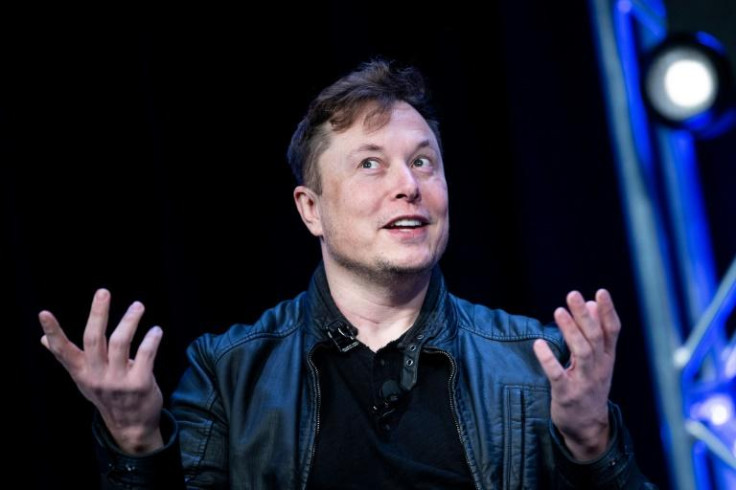
The newly listed SpaceX stock sank into the low $170s in New York trading by Thursday afternoon, just days after Elon Musk's rocket company made its hotly anticipated Wall Street debut and briefly surged into the $220s per share.
The stock's early sessions were treated like an event rather than a routine IPO. SpaceX shares, turbocharged by years of pent-up demand and Musk's celebrity pulling power, jumped into the $220 range on Friday before touching an all‑time high on Tuesday. Since then, the mood has shifted sharply, with the gravity of uncomfortable questions about valuation, losses and risk beginning to assert itself.
Elon Musk Hype Meets SpaceX Stock Reality
The news came after a blistering start that looked, for a moment, like a textbook Musk market moment. Investors piled in on the first trading day, betting that the world's most famous rocket company would translate its engineering feats into equally stratospheric financial returns.
Instead, the rally ran out of fuel with surprising speed. According to trading figures cited in the Futurism report, SpaceX shares slipped by almost five per cent on Wednesday. By around noon on Thursday, they had slumped nearly another ten per cent after what was described as a bruising night for the stock.
At the time of writing, shares were hovering around the 173‑dollar mark, more than 20 per cent below Tuesday's peak. For a company that only just floated, that is wild volatility, even by tech‑bro standards.
Underpinning the sudden wobble is a blunt problem. SpaceX carries an enormous, multitrillion‑dollar valuation, yet unlike most companies in that rarefied bracket, it is losing billions of dollars a year. Its recent merger with Musk's artificial intelligence venture xAI has only added to those losses, effectively bolting a money‑hungry AI lab onto an already capital‑intensive space business.
Put another way, buying SpaceX today is either a long‑term faith play on Musk's vision of the far future or a very risky get‑rich‑quick punt dressed up as high tech. There is not much middle ground.
'The Stock Is Called SpaceX, But It Might As Well Be Called Elon Musk'
That tension between the numbers and the narrative has not gone unnoticed on Wall Street.
'The stock is called SpaceX, but it might as well be called Elon Musk,' CNBC host Jim Cramer said earlier this week, in remarks reported by Futurism. He argued there was 'no way this company, which could see losses for many years, deserves such a high valuation on its own. It only gets there because it's run by Musk.'
It is a blunt assessment, but it echoes a quiet worry among more cautious investors. The current price tag rests less on straightforward cash‑flow projections and more on Musk's track record of defying odds and bending markets to his will.
Even analysts who still carry a buy rating on SpaceX are, as Bloomberg cited by Futurism suggested, openly wondering what is going on with the stock's early trading pattern. Volatility is expected in the first days after an IPO. A 20‑plus per cent slide in under a week, however, focuses the mind.
Nothing is confirmed yet so everything should be taken with a grain of salt.
Yet the story is not simply bearish. On Thursday, investment bank Oppenheimer raised its price target on SpaceX from 190 to 250 dollars per share, according to comments relayed by Investing.com. The bank cited SpaceX's acquisition of AI coding company Anysphere as a reason for its increased optimism.
Oppenheimer analyst Timothy Horan told the outlet that SpaceX 'owns every layer of the AI stack, giving it cost and quality advantages'. In his framing, the very thing that spooks some investors, the aggressive push into AI via xAI and Anysphere, is what could, in theory, make the company a dominant, vertically integrated player in AI‑driven infrastructure.
That is the split screen right now. On one side, a loss‑making business with a gravity‑defying valuation and a stock price that just fell back to Earth. On the other, a story about a company building rockets, satellites and AI tools that might underpin the next era of computing.
SpaceX Stock Slide Casts Shadow Over Tesla And The Musk Myth
There is also a second, more awkward question starting to surface. If so much of SpaceX's value is bound up with Elon Musk himself, what does this early turbulence say about investor confidence in his wider empire?
For starters, attention has already swung to Tesla, the electric carmaker that has long traded on Musk's promises at least as much as its profits. As Futurism noted, Tesla shares have been sliding since SpaceX went public, falling about 1.4 per cent over the past five days. That is not a crash, but it is not exactly a vote of fresh enthusiasm either.
Both companies are tethered to Musk's most audacious pitches. In recent months he has talked up humanoid robots moving into the labour market and laid out ideas for vast constellations of data centres. These are not modest, incremental projects. They are unproven, technically daunting and extremely expensive.
Investors have tolerated bold, even outlandish, ideas from Musk before and been rewarded, at least on paper. SpaceX's spectacular achievements in reusable rockets and satellite deployment have earned it genuine credibility. But the pattern is familiar. Massive long‑term visions first, the hard slog of making the numbers work later.
This time, the public market is in the room from day one, and it is already twitchy.
Nobody yet knows where SpaceX will trade in a month, let alone a year. The company's fundamentals have not changed dramatically in a week. What has shifted is the price investors are willing to pay to ride along with Elon Musk's latest adventure.
© Copyright IBTimes 2025. All rights reserved.
- Recommended For You