

Trump Voter Crashes Out After Giving Up His Car as Gas Prices Soar: 'I Got Duped and Feel Like a Dummy'
September's petrol-price surge added to inflation as voters weighed costs ahead of November's election
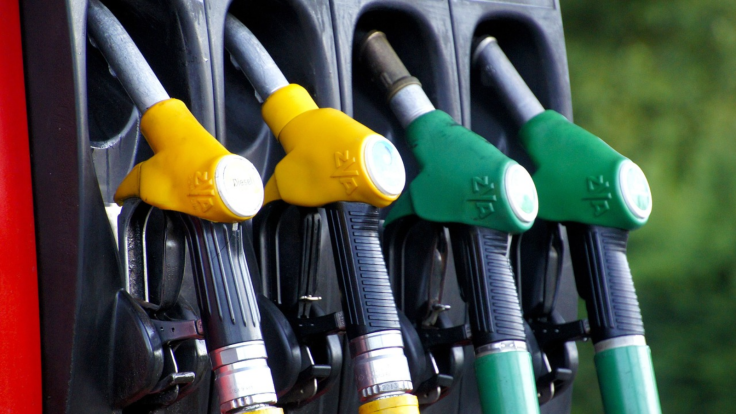
A Donald Trump voter in Arizona says he had to return one of his vehicles to his lender after rising petrol costs put pressure on his finances, raising questions about how economic frustration could affect Republican support in November's midterm elections.
Chris Martinez, a 28-year-old maintenance technician from Casa Grande, said he had also switched to a discount supermarket to manage his spending. He expected Trump's return to the White House to bring a stronger economy and fewer overseas conflicts, but now feels let down.
'He's doing nothing for us, to benefit us,' Martinez told the Associated Press. 'And it kind of sucks because I got duped and I feel like a dummy.'
His experience comes as official data shows a sharp monthly increase in US petrol prices and polling indicates that many Americans hold the president responsible for higher-than-usual costs. The figures do not establish why Martinez had to give up his vehicle, but they show the wider economic pressure facing households.
Petrol Prices Rose Sharply Before Easing in October
The US Bureau of Labor Statistics reported that its gasoline price index rose 9.1% in September on a seasonally adjusted basis, accounting for more than half of that month's overall consumer-price increase. Before seasonal adjustment, gasoline prices rose 6.5%. The increase contributed to a broader rise in inflation. The Consumer Price Index climbed 0.6% in September, while prices were 3.7% higher than a year earlier.
More recent weekly figures from the US Energy Information Administration show that the average price of regular petrol fell to $4.331 per gallon (£3.24) on 12 October, down from $4.465 (£3.34) on 28 September. The decline suggests some relief at the pump, although prices remained substantially higher than a year earlier.
Fuel prices are affected by global oil markets, refining costs, distribution, and other factors. The figures alone cannot establish how much of the increase resulted from the conflict with Iran or any particular government policy. For drivers who depend on a vehicle to reach work, even a temporary price spike can squeeze the money available for groceries and other essentials. Martinez's decision to return a vehicle illustrates the potential consequences when transport costs collide with other household bills.
Polling Reveals a Wider Cost-of-Living Problem
An AP-NORC Center for Public Affairs Research poll published on 1 October found that 65% of US adults believed higher-than-usual prices were the result of Trump's policies. Another 69% said his handling of the cost of living had been worse than expected.
The findings point to a gap between the economic improvement some voters anticipated and their assessment of the administration's performance. That dissatisfaction is particularly relevant among Hispanic voters, whose support for Trump increased during the 2024 election. An October AP-NORC poll found that about six in 10 Hispanic voters disapproved of his handling of the presidency, while more than seven in 10 disapproved of his performance on the economy.
The results do not mean Hispanic voters have uniformly switched allegiance to the Democrats. Some remain supportive of Republican policies, while others are dissatisfied with both major parties. Economic frustration may instead lead some voters to change their choices, become independent or stay away from the ballot box.
Arizona's Competitive Races Put Economic Discontent in Focus
Casa Grande sits largely within Arizona's 6th Congressional District, where Republican Juan Ciscomani is seeking a third term. He won the seat by 2.5 percentage points in 2024, while Trump carried the district by less than one point. Ciscomani has sought to present himself as an independent-minded lawmaker, saying in an advertisement that he is 'not a rubber stamp for anyone.' His Democratic challenger, JoAnna Mendoza, has emphasised her upbringing as the daughter of immigrant farmworkers.
The race highlights the challenge facing Republicans in competitive districts: defending the president's record without alienating voters concerned about their finances. However, economic dissatisfaction alone does not guarantee a Democratic victory, particularly where voters also prioritise immigration, public safety, or other issues.
Martinez has not decided whether he will vote in the midterms. His uncertainty matters because political disillusionment can have consequences beyond a direct switch in party support. If dissatisfied voters abstain, the effect on an election may differ from a shift towards an opponent.
With the 3 November elections approaching, household costs offer a test of whether Republicans can persuade voters that their economic circumstances will improve. For people balancing fuel, food, and other essential expenses, campaign promises will be judged against what they can afford in everyday life.
© Copyright IBTimes 2026. All rights reserved.