US Stocks Continue Downtrend, Gold Records Largest Weekly Decline Since '83 After Trump's Hormuz Ultimatum
Global stocks and commodities are in freefall as the White House threatens to 'obliterate' Iranian power plants unless the Strait of Hormuz is reopened by Monday night


US stock futures and commodity markets fell sharply on Monday as the world braced for the expiration of President Donald Trump's 48-hour ultimatum to Iran.
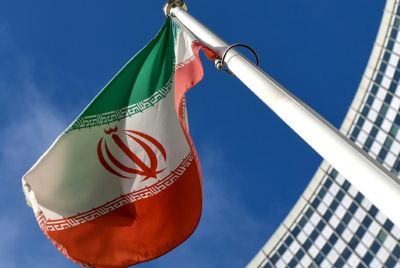
In a high-stakes gamble to end the Strait of Hormuz blockade, the President warned late on Saturday that the US military would 'obliterate' Iran's energy infrastructure unless the vital waterway is reopened 'without threat' by Monday night.
'If Iran doesn't FULLY OPEN, WITHOUT THREAT, the Strait of Hormuz, within 48 HOURS from this exact point in time, the United States of America will hit and obliterate their various POWER PLANTS, STARTING WITH THE BIGGEST ONE FIRST,' Trump wrote in a Truth Social post late Saturday.
Iran responded by saying that if the US causes further destruction of the country's fuel and energy plants, it will target all energy infrastructure belonging to the US in the Middle East, and on Monday, it launched fresh attacks after pledging retaliation.
The looming deadline has triggered a 'sell everything' contagion across global boards, with the gold price crash in 2026 marking the metal's most disastrous weekly performance in over four decades.
Furthermore, gold futures tanked 4%, on track to erase 2026 gains. Spot gold fell to $4,372 per ounce, after a more than 10% decline last week, marking its worst weekly performance since 1983.
'This is an extremely brutal flush,' said JPMorgan's Greg Shearer. 'But from our perspective, what it's telling us is more about gold getting caught up in a contagion risk of a sell-everything trade.'
Oil prices also climbed in tandem, with West Texas Intermediate crude futures rising to $98.93 per barrel and the global benchmark Brent crude futures topping $113 per barrel. Note that the global benchmark Brent has gained over 50% since the Middle East conflict began nearly a month ago.
'Now with this 48-hour deadline, Trump has put himself into a corner,' said Rory Johnston, founder of Commodity Context. 'It is highly unlikely that Tehran will agree to Trump's terms on such an accelerated timeline under the threat of attack. And Iran is clearly able and willing to match any escalation.'
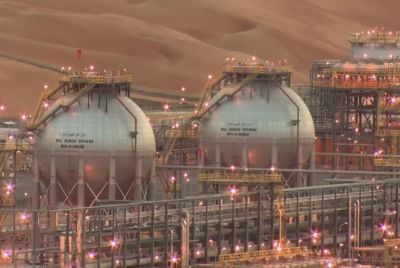
Dozens of Energy Assets Destroyed in Middle East
The International Energy Agency's executive director, Fatih Birol, said on Monday that at least 40 energy assets across nine Middle Eastern countries have been 'severely or very severely' damaged since the conflict began.
Birol stated at the National Press Club in Australia that the damage to oil and gas fields, refineries, and pipelines across the Middle East would take time to repair.
The blockade at the Strait of Hormuz is creating the largest supply disruption in the history of the global oil market. The global supply of liquefied natural gas has also sharply declined by around 20% since the onset of the conflict in late February.
Birol stated that the fallout from the Middle East war is equivalent to the two major oil crises of the 1970s and the 2022 gas crisis 'put together.'
'And, if I may, not only oil and gas. Some of the vital arteries of the global economy include petrochemicals, fertilisers, sulfur, and helium. Their trade is all interrupted, which would have serious consequences for the global economy,' Birol concluded.
Disclaimer: Our digital media content is for informational purposes only and not investment advice. Please conduct your own analysis or seek professional advice before investing. Remember, investments are subject to market risks and past performance doesn't indicate future returns.
© Copyright IBTimes 2025. All rights reserved.
- Recommended For You