Iran War Tests European Union Resolve as von der Leyen Warns Rules-Based Order is Failing
Europe confronts a new reality as Middle East war exposes limits of global rules and forces a shift toward hard interests.

Europe is facing a tough geopolitical challenge as the war involving Iran shakes the foundations of the global system the continent has long depended on.
Ursula von der Leyen, president of the European Commission, has warned that the conflict is exposing the limits of the international rules based order. For decades, European diplomacy leaned on that framework to protect trade routes, manage disputes and help prevent major wars.
Now the expanding Middle East crisis is forcing a difficult reassessment. Leaders across the European Union are asking a more uncomfortable question. Is the continent ready to protect its own interests in a world where rules alone may no longer hold.
Von der Leyen Calls For a More Realistic EU Foreign Policy
Von der Leyen said Europe must rethink how it approaches global politics. According to The Guardian, the European Commission president urged EU leaders to adopt a more realistic and interest driven foreign policy.
She warned that Europe cannot rely only on the traditional rules based international system to protect its security and economic interests. The remarks came as the Iran war deepens tensions across the Middle East and unsettles long standing diplomatic assumptions.
Von der Leyen said the crisis raises existential questions about whether the global rules based system can still function in a world shaped by growing power rivalries and regional conflicts.
Her warning reflects rising anxiety in European capitals. Many leaders fear the conflict could reshape global power structures in ways that leave Europe more exposed.
A Middle East War with Direct Consequences for Europe
Although the conflict is centred in the Middle East, its consequences are already reaching Europe. And energy security remains one of the most immediate concerns.
European economies rely heavily on shipping routes and energy supplies that pass through the Gulf region. Euronews reported that European officials are watching the situation closely as tensions grow near key maritime corridors. Disruptions in these routes could affect energy markets and trade flows that are vital to the European economy.
The Iran war has forced European governments to face the reality that conflicts far from the continent can quickly threaten European stability. Migration pressure, energy shortages and security risks could follow if the crisis deepens.
For many EU diplomats, the conflict has become a clear wake up call.
EU Weighs Stronger Role in Protecting Maritime Traffic
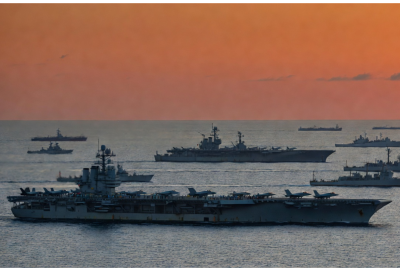
One of the immediate priorities for the European Union is protecting shipping in the Gulf, particularly in the Strait of Hormuz. As reported by RTÉ News, Antonio Costa, president of the European Council, along with von der Leyen, are considering stronger maritime operations to safeguard vessels travelling through strategic waterways in the region. These routes are essential for transporting oil and other goods to Europe.
Any disruption could carry serious economic consequences. European security officials believe closer naval coordination may be needed if attacks on shipping increase as the conflict escalates.
The bloc has traditionally relied on diplomatic engagement and international law. Now it is considering stronger operational roles to defend its interests abroad.
Diplomats Warn of Deeper Divisions Within Europe
The Iran war is also testing unity within the European Union itself. EU ambassadors have been meeting to assess the political and security implications of the crisis. Their discussions have revealed different views among member states about how Europe should respond.
Some governments favour a cautious diplomatic approach. Others argue the EU must act more decisively to protect its strategic interests.
Those divisions are not new, but the Iran crisis is bringing them into sharper focus. European diplomats acknowledge that reaching a common position may become harder as the conflict grows.
A Crisis that Questions the Future of Global Rules
For decades, European leaders advocated a rules based international order built on diplomacy, trade and multilateral institutions.
The Iran war is now challenging that vision. According to The Jakarta Post, von der Leyen warned that the crisis shows how fragile the global system has become when major powers pursue competing interests.
The conflict has already shown how quickly regional tensions can escalate into wider geopolitical confrontations.
For Europe, the challenge is no longer theoretical. The war is forcing the EU to reconsider how it protects its economy, its security and its influence in a world where global rules may no longer be enough.
© Copyright IBTimes 2025. All rights reserved.
- Recommended For You