Security Fears in the UK Grow: Nearly 4,000 Ministry of Defence Passes Were Reportedly Lost or Stolen Last Year
Rising Losses of MoD Passes and Devices Spark Security Concerns
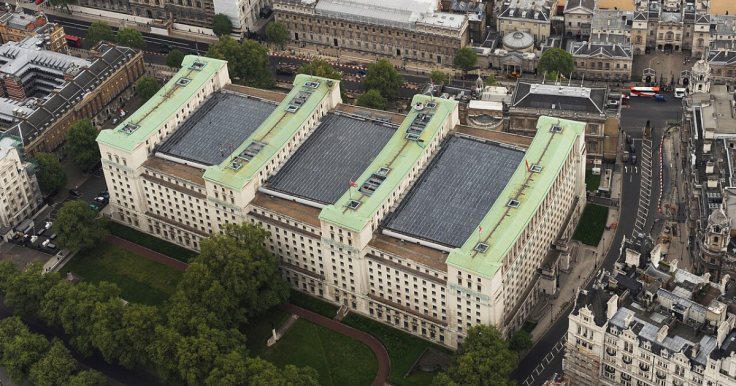
Nearly 4,000 Ministry of Defence passes were lost or stolen in 2025, triggering fresh concerns over the security of Britain's most sensitive military sites. Official figures show 3,921 passes went missing last year alone — including 281 believed to have been stolen — raising fears that access credentials used to enter restricted defence locations are being misplaced at an alarming rate.
Security experts have warned that the rising number of Ministry of Defence (MoD) passes being lost or stolen represents a growing security risk, particularly as modern access passes are increasingly embedded in, or accessed through, official devices such as laptops, tablets and mobile phones. Roughly 3,921 passes were reportedly missing in 2025, with 281 believed to have been stolen.
Scale of Losses 'Deeply Concerning'
According to security expert Prof Alan Woodward of Surrey, reports of MoD passes going missing are not new. However, the frequency and scale of the losses are deeply concerning.
'The scale suggests maybe lessons need to be re-learned,' Woodward said in a report by The Sun. 'It's obviously a security risk (...) especially as modern passes tend to grant access to restricted areas via swiping,' he added.
Woodward's concerns are heightened by figures dating back to 2020. According to data obtained under the Freedom of Information Act, the number of passes reported stolen spiked significantly, rising from 82 in 2020.
In that year alone, total losses were reported at 2,043. Those figures are now close to being doubled, with MoD pass losses reaching roughly 3,640 in 2025, fuelling fears that internal controls have failed to keep pace with the increasing reliance on digital access systems.
MoD Losses Spark Criticism
The security concerns extend beyond physical passes. Since January 2024, 545 laptops and tablets and 744 mobile phones used by MoD staff have also been reported lost or stolen, according to figures obtained by Sky News.
Many of these devices are understood to store or enable access credentials, making their disappearance particularly sensitive. None of the devices has been recovered, according to a Freedom of Information request.
Of those gadgets, 132 laptops and tablets are believed to have been stolen, along with 36 phones, according to the MoD. The remaining devices were believed to have been lost by staff.
In monetary terms, the cost of replacing the missing items is estimated at around £1,634,944, though critics warn the security implications may far outweigh the financial cost.
The losses have been branded unacceptable, with critics warning they amount to a security crisis. James MacCleary, the defence spokesperson for the Liberal Democrats, has called on Defence Secretary John Healey to address the issue, arguing that repeated losses of access-enabled equipment expose serious vulnerabilities.
'Every pound counts when our national security is at stake and the government's defence investment plan is still missing in action – yet the MoD is leaking money through basic incompetence,' MacCleary said.
'We cannot strengthen our national security if we cannot even keep track of the technology being used to defend it,' he added.
Shadow defence secretary James Cartlidge echoed those concerns, warning that the unexplained losses and thefts raised serious questions about oversight and internal safeguards.
'For 1,000 items to disappear in two years is a real concern and raises questions about security in our most sensitive government department,' Cartlidge said. 'Ministers must act now to ensure as few devices as possible go missing – and get on with delivering the funding our military needs to keep us safe,' he added.
Security Breaches Already Happening
Concerns over access control and physical security were further heightened by a reported breach at an RAF base by pro-Palestine activists in June 2025. The intruders were filmed breaking into RAF Brize Norton in a video shared by a group known as Palestine Action, underscoring fears that weaknesses in security systems could be exploited.
The perpetrators vandalised Royal Air Force assets, an act condemned as disgraceful by UK Prime Minister Keir Starmer.
Four suspects linked to the incident are due to stand trial in 2027, according to Reuters. They face charges of breaking into a British military air base and damaging two aircraft in protest against Britain's support for Israel.
The suspects were identified as Lewie Chiaramello, Jony Cink, Amy Gardiner-Gibson and Daniel Jeronymides-Norie. Muhammad Umer Khalid and Lara Downes were also charged, with Downes charged in May. It remains unclear whether further arrests will be made in connection with the break-in.
Healey said in September 2025 that new technology and surveillance systems had been installed at the Oxfordshire base following the breach. Additional security guards were also deployed, with officials claiming the measures had made the site much safer, BBC News reported. It remains to be seen whether these steps will be sufficient to prevent further unauthorised intrusions as scrutiny over MoD security practices intensifies.
© Copyright IBTimes 2025. All rights reserved.
- Recommended For You