78% of Britons Back Early Release for Foreign Nationals to Be Deported, While 64% Oppose New Rules
Public opinion divided on prison solutions amid overcrowding concerns

A majority of Britons oppose the administration's early-release program under the Sentencing Act 2026. According to the latest YouGov survey, the public is not too keen on reducing the sentences of inmates just to free up space in prison.
The sharpest divide in the survey was on the question of 'Reducing the proportion of their (inmate) sentence that some more serious offenders have to serve in prison from 67% to 50%.' Eighty-two percent of the respondents opposed the reduction, while 8% supported it.
Deportation Gains Public Backing
The public prefers 'releasing foreign nationals early so they can be deported' instead of reducing their sentence. Seventy-eight percent of respondents favoured the measure while only 11% are against it. Another 11% are neutral to it.
Opinion was split on whether older prisoners should be released early: 38% supported the idea while 39% opposed it. A majority of 59% rejected proposals to release female prisoners to free up space for male inmates, with 23% in favour.
Britain is currently experiencing a prison crisis with just 1,500 spaces available as of 1 September 2026. There were more than 3,000 spaces in June, according to the Ministry of Justice.
The government's early-release program was initially scheduled to begin this month, but following a review of guidelines, implementation has been pushed back to 1 October 2026.
Calls To Expand Capacity
Public opinion strongly favours building more prisons, with 81% supporting construction, while 11% opposing it. However, expanding capacity comes with financial costs and delays. In some cases, local towns object to the presence of a prison in the community.
Britons are also torn over the idea of renting prison spaces in other countries, as proposed by Reform UK. Around 40% support the idea but 41% oppose it. The remainder were undecided.

Alternative Measures Considered
Other ways to depopulate prisons include allowing low-risk offenders to serve their sentences under house arrest, which is supported by 54% of Britons while 33% oppose it. Delaying court hearings for those awaiting trial proved deeply unpopular, with 77% against and only 6% in favour.
In explaining the early-release programme, UK Parliament said: 'When a person in England and Wales is given a sentence of imprisonment for a period of time, they will not usually spend the whole of that period in prison. Legislation allows for prisoners to be released partway through their sentence to serve the rest of their sentence in the community; this is called being released "on licence."'
'If an offender breaches their licence conditions (such as by committing a crime or failing to keep in touch with their probation officer), they can be recalled to prison,' it continued.
Political Debate Intensifies
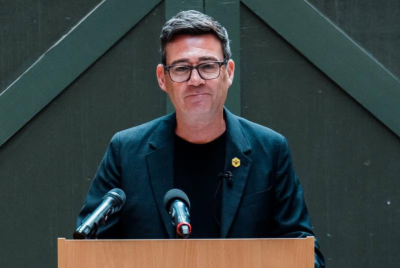
The administration's early-release programme to free up space in prison has become politically charged. 'I am doing all I can,' Prime Minister Andy Burnham said last month. 'But it is simply not possible to prevent all offenders from being released early without the prison system collapsing.'
Opposition parties have criticised the move. 'Labour's plan to stop the release of dangerous criminals is to release a whole new group of dangerous criminals,' said Shadow Justice Secretary Nick Timothy, who called for a delay to the early-release programme.
© Copyright IBTimes 2026. All rights reserved.
- Recommended For You